
Chedipe: Chedipe is a witch-vampire from the Godavari region of India, notorious for her nocturnal visits in which she casts spells, induces sleep, and drains the blood and vitality of men.

Chedipe
Chedipe - Represents the societal stigmatization of women who die unnaturally and serves as a cautionary tale about moral transgressions and the ensuing familial discord.
the legend in five swipes.
the legend in five swipes.
Chedipe: First Encounters and Early Records
The legend of the Chedipe has its roots in the mystic lore that pervades the banks of the Godavari River, where nocturnal whispers speak of a witch-vampire whose very name – meaning “prostitute” – lays bare the complex interplay between sin and supernatural retribution. Born from the tragic fates of women marked by unnatural death or ostracised by society, the Chedipe emerges as both a figure of terror and a mirror to cultural taboos. Her story is embedded in a rich oral tradition, with early attestations found in local folklore that assert her cursed existence following an untimely demise. In these narratives, she is portrayed as a spectral entity whose actions underscore a deep ambivalence toward sexuality and social purity. Local communities have long regarded her as an omen of disrupted harmony, where the mingling of passion, power, and punishment delineates her role. The multifaceted nature of her persona, straddling both the realms of the living and the dead, adds to the indelible mark she leaves upon the cultural consciousness. Her myth serves as a cautionary tale that illustrates the consequences of defying societal norms, whilst highlighting the inevitable intertwining of desire and damnation. Contemporary retellings maintain the eerie charm of her myth, ensuring that her dark presence continues to ignite both fascination and dread across generations. Her origins and evolution have been shaped by the collective anxieties of communities caught between tradition and change. Thus, the Chedipe remains a potent symbol of the blurred boundaries between morality, the natural world, and the supernatural.
The Documented Accounts of the Chedipe
The Chedipe is a creature whose narratives have been preserved primarily through the vibrant tapestry of oral traditions endemic to the Godavari region. Over centuries, recitations by village storytellers, ritualistic performances, and local folklore have all served to solidify her image as a witch-vampire of formidable repute. Variants of her tale have been documented in informal compilations of regional myth, each version adding layers of detail about her nocturnal prowls and uncanny methods. In some accounts, her predations are described with an almost ritualistic precision, where the closed doors of unsuspecting homes are undone by her magical prowess. Other narratives delve into her role as a seductress whose interventions in marital relationships are as devastating as they are mysterious. Though rarely found in formal ancient texts, her exploits are woven into the fabric of folklore dealt with by traditional healers and local mystics, reinforcing her connection with both the physical and supernatural realms. The diversity in her portrayals – where she may choose either the strongest man or one she despises – reflects a fluidity in storytelling that captures the imagination. Even as modern scholarship has begun to catalogue these narratives, the primary sources continue to be the vibrant, mutable traditions passed down orally. Each telling encapsulates both the horror and the dark allure that define her legend. Thus, the Chedipe’s mythos is as much a testament to the power of folk narrative as it is to the enduring enigma of the supernatural.
What could the Chedipe do?
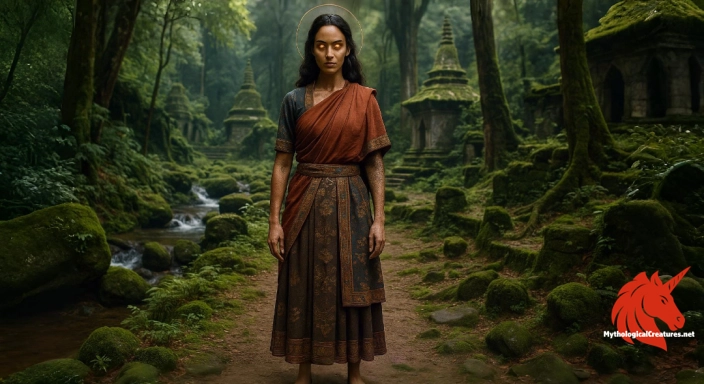
The physical depiction of the Chedipe is as unsettling as it is striking, combining a potent mixture of human frailty and feral animality. Most tellings present her as a boldly disreputable woman who traverses the night astride a formidable tiger, an image that amplifies her extraordinary and ominous essence. This spectral figure is often described in her natural state – unclothed and unashamed – a detail that underscores the raw, untamed aspect of her existence. Her face, both alluring and repulsive, is frequently cast in a pallid light, hinting at her undead condition and the decay of natural life. The image of her riding a tiger under the pale luminescence of the moon evokes a simultaneous sense of regal power and supernatural menace. Unique to her lore is the transformation she undergoes into Murulupuli, a tiger with a single human leg, which symbolically blurs the line between animal instinct and human malice. Her eyes, often depicted as glinting with wicked intelligence, complement the disarray of her unkempt hair and gaunt features. Every physical trait seems meticulously designed to provoke discomfort and awe in equal measure. These vivid descriptions serve not only to terrify but also to encapsulate the paradox of her nature – a being both attractive and abhorrent. In essence, the physical representation of the Chedipe is a dramatic and visceral illustration of her role as a spectral predator.
How did location shape the story of the Chedipe?
Across various localities within and around the Godavari region, the tale of the Chedipe takes on distinctive hues that reflect the unique cultural climates of different communities. In some parts, her narrative is imbued with a greater emphasis on retributive justice, portraying her as a restless spirit exacting punishment on those who transgress social and moral boundaries. Other areas soften her terrifying presence by infusing her character with elements of tragic misfortune, where her malevolent acts are seen as inevitable consequences of societal mistreatment. Variations in the story also highlight subtle differences in her methods of seduction and attack, such as targeting the most virile man or selecting a specific individual who has incurred her disdain. These regional adaptations reveal a shifting focus that mirrors local attitudes toward gender, honour, and spiritual purity. In some tellings, the narrative pivots towards an exploration of empathy for a woman cursed by destiny, while in others, the emphasis remains firmly on the terror she inspires. The cultural context in each community moulds the details of her appearance and actions, leading to a multifaceted myth that evolves with every retelling. Despite these variations, the central themes of nocturnal predation and supernatural retribution remain constant. Thus, the Chedipe’s legend serves as a canvas upon which regional values, fears, and taboos are vividly painted. Her enduring presence in local culture underscores the power of folklore to both unite and distinguish communities through shared mythic symbols.
Is the Chedipe unique, or found elsewhere?
The Chedipe occupies a unique niche within the global tapestry of mythical creatures, inviting comparisons with other legendary entities that embody themes of seduction and supernatural menace. Much like the succubi documented in European folklore, she is a nocturnal seductress whose ethereal allure masks a dangerous intent. This commonality is mirrored in the way both figures are associated with blood-drinking and the subversion of male virility, albeit through distinctly different methods and symbolic frameworks. Where European vampiric legends often centre on the sensual and forbidden, the Chedipe’s narrative is interlaced with the cultural condemnations of sexual deviance and social ostracism. Further parallels can be drawn with other Asian supernatural figures who blur the lines between human and beast, offering a rich field of comparison with creatures that defy conventional corporeal forms. The motif of a cursed female spirit exacting her revenge from the shadows resonates with themes found in diverse mythologies, thereby linking her to a broad tradition of female archetypes that challenge male dominance. Her shape-shifting abilities, especially the transformation into a tiger, echo similar narratives in global folklore where animals serve as vessels for spiritual power. In blending elements of vampirism with sexual predation and metamorphic magic, the Chedipe stands as a singular yet relatable figure in the study of myth. Comparisons to other legendary predators highlight both universal fears and unique cultural prescriptions, making her story a rich subject for cross-cultural analysis. Ultimately, her myth not only reflects local traditions but also participates in a global dialogue on the nature of the supernatural and the complexities of female agency.
Chedipe: The Legend's Second Life
Over the span of centuries, the legend of the Chedipe has transformed from a localized folk tale into an enduring symbol imbued with contemporary cultural resonances. Early versions of her myth were recounted as cautionary tales meant to enforce social norms and warn against the dangers of deviating from accepted behavioural codes. As time has passed, modern interpretations have begun to explore the layered complexities of her character, reimagining her as both a perpetrator of darkness and a tragic figure caught in the web of societal judgement. This evolution has led to reinterpretations in literature, theatre, and visual media that present the Chedipe as a multifaceted antiheroine rather than a one-dimensional villain. In these retellings, her actions are often examined through the lens of gender dynamics, reflecting modern debates on female empowerment and social marginalisation. The transformation of her myth mirrors broader shifts in cultural attitudes, where old taboos are re-examined and recontextualised to suit contemporary sensibilities. Her legacy as a creature who subverts the conventional roles of predator and victim continues to inspire both horror and sympathy among modern audiences. Artistic depictions have grown increasingly nuanced, blending elements of horror with tragedy to capture the paradox inherent in her character. In reinterpreting her tale, modern creators highlight the timeless interplay between myth and morality, ensuring that the Chedipe remains a potent icon in the landscape of supernatural folklore. Through these evolving narratives, the legacy of the Chedipe underscores the dynamic nature of myth and its capacity to adapt to the changing moods of society.
Interesting Fact
An intriguing aspect of Chedipe is her dual existence as both a seductive figure and a harbinger of ruin, reflecting societal fears surrounding unnatural deaths and the stigmatization of marginalised women.
Mythological Treasures
Norse Sagas: A field guide to the beasts of the Viking world
Drawn from the saga accounts themselves, with the powers, weaknesses and doom of each being set out.
Egyptian Legends: A field guide to the gods and monsters of ancient Egypt
Guardians of the living and devourers of the dead, with the role each played in judgement.
Chinese Beasts: A field guide to the dragons and demon kings of Chinese myth
From river dragons to demon kings, with the legends that shaped five thousand years of storytelling.
the legend in five swipes.
Limited sponsor opportunity
One slot, carefully chosen partners
We only feature a small number of relevant sponsors at any time. If you create serious myth content, we would like to hear from you.
Partner with usQuick Creature Info
Our Mythic Legendary Rating:

Also Sometimes Known As:
Habitat:
Supernatural Powers:
Physical Attributes:
Abilities:
Behavior:
Weaknesses:
Lore:
Related Creatures, Tales or Lore
- CChurail
- PPontianak
- VVetala
References
Discover Another Mythical Legend You May Not Have Heard Of?
Uncover the mysteries of ancient folklore and expand your knowledge of legendary beings from cultures around the world.
Dare to Meet the Hariti....
The Mythological Creatures Book Series
Yokai, Greek, Norse, Egyptian & Chinese. Five illustrated field guides to the creatures the old stories either warned or told you about.





Curated by the Mythological Creatures Team
Series editor: Mythological Creatures Directory
Primary desk: Asian & Pacific Myth Cycles Desk
(rev. November 2025)