
Chimimōryō: Chimimōryō, also known as Chimei wangliang, is a collective term for demonic spirits from ancient Chinese mythology.
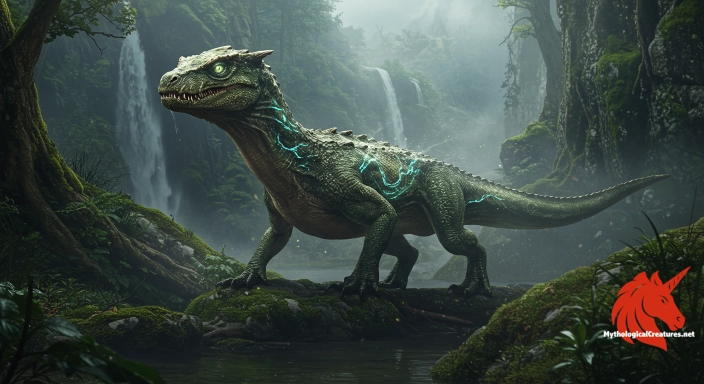
Chimimōryō
Chimimōryō - Chimimōryō embody the dangerous and unpredictable aspects of nature and the supernatural.
Origins & First Encounters
The Chimimōryō stands as one of the most intriguing supernatural entities woven into the fabric of ancient Chinese myth. Its origins lie in a rich tapestry of legendary narratives that first emerged some 2,500 years ago, with early references found in chronicles such as the Zuo Zhuan. The creature was conceived as a manifestation of the spectral dangers that lurked within remote mountains and rivers, embodying nature’s untamed fury. Its designation eventually broadened to include various yaoguai, symbolising all manners of demons and ghosts that troubled the human world. This expansive conceptualisation served to explain the inexplicable perils of wild landscapes and the unpredictable forces of nature. Over time, the Chimimōryō evolved into a symbolic warning against the chaotic elements that could upset established order. The creature’s enduring legacy is reinforced by its adaptability, appearing in both Chinese and Japanese mythological traditions. Today, it remains a compelling emblem of the ancient human endeavour to understand and negotiate the mysterious power inherent in the natural world.
Source Texts & Tale Variants
The literary journey of the Chimimōryō begins with its early appearance in ancient Chinese chronicles, notably in works like the Zuo Zhuan, which capture the mystique of supernatural phenomena. Early textual sources frame the creature as a broad category of spirits, invoking images of mysterious beings that haunted secluded environments. As historical narratives expanded, subsequent records enriched its mythos by attributing to it a role in both natural disasters and ominous omens. Multiple story variants emerged over the centuries, each reflecting the evolving societal fears and spiritual beliefs of their times. Local oral traditions later interwove with these recorded accounts, bestowing upon the Chimimōryō additional layers of nuance and local colour. Diverse regional anthologies preserved unique interpretations, highlighting the creature’s mutable nature and its function as both a harbinger of misfortune and a guardian of hidden natural wisdom. The fusion of documented records with evolving folklore has cemented its status as a versatile mythological figure within the East Asian cultural sphere. In this way, the Chimimōryō continues to resonate across generations, its narrative spirit being perpetually reinterpreted to suit the needs of its audience.
Form & Powers
Physical representations of the Chimimōryō are notably fluid, often eluding a singular, fixed form. Many accounts suggest that its anatomy is an amalgamation of diverse natural elements, blending features that evoke both terrestrial beasts and spectral apparitions. Descriptions frequently mention elongated limbs, contorted facial features, and a visage that merges human semblance with the ferocity of wild animals. Its eyes are often portrayed as glowing with an eerie, almost otherworldly luminescence, reminiscent of moonlight filtering through a misty woodland. Some depictions introduce jagged horn-like protrusions, while others describe a patchwork covering of scales, fur, or feathers that accentuate its chimeric nature. The creature’s ability to shift between various forms further underscores the mutable iconography that defines it. Variations in size and posture are common in the narratives, ranging from colossal, looming figures to smaller, yet no less unsettling, manifestations. Every element of its physical portrayal contributes to an overall impression of an entity that is both fearsome and enigmatic. This complex and transformative depiction reinforces the Chimimōryō’s enduring role as a symbol of the wild and unpredictable forces of nature.
Regional Faces
The motif of the Chimimōryō exhibits distinct regional variations that reflect the diverse cultural landscapes of East Asia. In its Chinese origins, it is primarily associated with the untamed aspects of nature, representing the perils of remote mountains and treacherous riverine terrains. In contrast, Japanese interpretations have refined its character, often imbuing it with a blend of eerie beauty and ambiguous moral significance. Local Japanese folklore sometimes portrays the creature as an elusive entity that inhabits the liminal spaces between the world of humans and the realm of nature. Regional legends tend to infuse the Chimimōryō with environmental idiosyncrasies, linking its emergence to specific geographical features or local events. These adaptations illustrate how different communities have sought to integrate their unique environmental concerns into a shared mythological narrative. Whether seen as a forewarning of misfortune or an enigmatic protector of natural order, the creature’s portrayal shifts subtly to reflect local sensibilities. The dynamic regional evolution of its legend thus highlights the deep interconnection between myth, place, and cultural identity in East Asia.
Cultural Parallels
When set alongside other mythological archetypes, the Chimimōryō reveals striking parallels with a range of supernatural beings across diverse cultural traditions. Its dual nature, straddling monstrous malevolence and the elemental power of nature, resonates with the broader Chinese yaoguai and the Japanese yōkai, both of which inhabit the liminal spaces between order and chaos. Similar themes emerge in European folklore, where creatures such as goblins or certain trickster figures also embody the unpredictable forces of the natural world. The creature’s mutable physicality and ambiguous moral character have contributed to its function as an allegory for the eternal struggle between human civilisation and wild nature. By challenging rigid boundaries of form and intent, the Chimimōryō invites comparisons with other ambiguous spirits whose roles are both protective and perilous. Cross-cultural analyses often focus on these shared motifs to explore how disparate societies articulate their relationship with the natural environment. Such comparative study reveals that the allure of these mythic figures extends far beyond their specific cultural origins. In this context, the Chimimōryō contributes to a universal narrative that celebrates the mysterious and often unsettling interplay between humanity and the forces of nature.
Legacy & Modern Evolution
Over the centuries, the Chimimōryō has undergone a remarkable evolution that mirrors the shifting cultural and social landscapes of East Asia. Originally emerging as an amorphous warning against the unpredictable powers of nature, it has gradually accrued layers of symbolic significance that resonate with modern audiences. Literary and artistic representations have reimagined the creature in ways that reflect both ancient wisdom and contemporary concerns. Modern adaptations in film, literature, and visual arts often portray it as a living metaphor for ecological imbalance and the uncontrollable aspects of the natural world. These reinterpretations speak to an enduring fascination that bridges the gap between the mythic past and present-day societal issues. As environmental anxieties continue to influence cultural narratives, the Chimimōryō has come to represent the perpetual tension between human ambition and the raw forces of nature. Its legacy is further enriched by the multiple nuances it has adopted over time, from a mere cautionary spectre to a complex symbol of resilience and transformation. Today, the creature not only inspires awe but also prompts reflection on how ancient myths can inform modern perspectives on nature and civilisation. The evolving narrative of the Chimimōryō thus stands as a testament to the timeless power of folklore and its capacity to speak to the contemporary human condition.
Interesting Fact
An interesting observation about Chimimōryō is that the term encapsulates a vast variety of supernatural beings, highlighting the rich and diverse nature of ancient Chinese demonology.
Limited sponsor opportunity
One slot, carefully chosen partners
We only feature a small number of relevant sponsors at any time. If you create serious myth content, we would like to hear from you.
Partner with usQuick Creature Info
Associations:
Our Mythic Legendary Rating:

Also Sometimes Known As:
Habitat:
Supernatural Powers:
Physical Attributes:
Abilities:
Behavior:
Lore:
References
Discover Another Mythical Legend You May Not Have Heard Of?
Uncover the mysteries of ancient folklore and expand your knowledge of legendary beings from cultures around the world.
Dare to Meet the Cetus....
-031feaa9-051e-477b-a87e-8285dfa951e9_small.webp "Depiction of Cetus")
Curated by the Mythological Creatures Team
Series editor: Mythological Creatures Directory
Primary desk: Asian & Pacific Myth Cycles Desk
(rev. November 2025)