
Chrysopeleia: Chrysopeleia is a hamadryad nymph in Greek mythology, embodying the spirit of the forest and its trees.
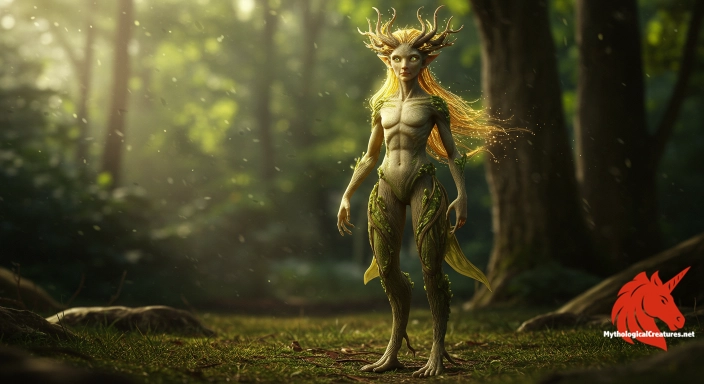
Chrysopeleia
Chrysopeleia - Represents the eternal bond between nature and the divine, highlighting the symbiotic relationship between trees and their spirits.
the legend in five swipes.
the legend in five swipes.
The Earliest Known Accounts of Chrysopeleia
Chrysopeleia emerges from the rich tapestry of Greek mythology as an enchanting hamadryad nymph whose very name evokes images of radiant beauty and delicate vitality.
Her name, translating to 'golden pigeon', hints at both a lustrous allure and a graceful presence, intertwining natural symbolism with ethereal elegance.
She is traditionally linked to the sacred groves and venerable trees of ancient Greece, representing the deep bond between the natural world and divine spirit.
Though scant historical texts offer only brief mentions, her mythological essence suggests a connection to the broader tradition of nymphs who preside over specific natural habitats.
Some early accounts indicate that her presence was celebrated through local cults and rituals, marking her as a guardian of undisturbed groves.
While details of her origins are sparse, the cultural context in which she flourished was one of reverence for nature and the personification of its myriad forces.
Her initial attestation, embedded within the oral traditions of the ancient Greeks, has left an indelible mark on poetic and symbolic representations of nature.
The enduring imagery of Chrysopeleia encourages a reflection on the interplay of beauty, nature, and divinity in classical thought.
Chrysopeleia in the Historical Record
The primary sources that mention Chrysopeleia are few, yet her brief presence in mythological texts highlights her importance within the broader spectrum of nature spirits.
Ancient Greek literary traditions, including fragments of epic poetry and local myth compilations, contain subtle references to her and other hamadryads, weaving her attributes into a larger narrative of woodland deities.
While specific texts that detail her myths are limited, the cumulative retellings by later authors have enriched her character as an emblem of nature’s sanctity.
Variations in her story emerge in regional folklore where she is sometimes conflated with other tree nymphs, suggesting a fluid identity shaped by local tradition.
In some accounts, her golden pigeon epithet is interpreted symbolically, representing the light and magic inherent in the natural world.
Other narrative variants introduce her as an intermediary between human communities and the secret life of the forest, bridging the mundane and the divine.
Ancient scholia and later mythographers have occasionally elaborated upon her myth in passing, linking her to broader themes of environmental guardianship.
This multiplicity of story variants, while fragmentary, offers a compelling glimpse into how ancient communities revered both the forest and its mysterious inhabitants.
What powers did Chrysopeleia have?
In artistic imagination and poetic description, Chrysopeleia is envisioned as an embodiment of natural grace and delicate beauty, her appearance mirroring the splendour of the forest canopy.
Her form is often depicted as lithe and exquisite, with luminous skin that seems to capture the soft glow of dawn and a subtle aura of warmth that reflects her connection to the earth.
Her hair, described in some accounts as having a golden hue, cascades in gentle waves that evoke the shimmering leaves of mature trees.
Her eyes are perceived as deep and insightful, mirroring the secret patterns of the woodland and the profound mysteries of nature.
Although she is a spirit rather than a mortal entity, visual interpretations sometimes blend human and avian features, alluding to the 'golden pigeon' motif through delicate, feather-like adornments.
The elegance in her bearing is matched by an ethereal, almost otherworldly quality that sets her apart from common nymphs, suggesting a higher mystic status among tree deities.
Artistic representations occasionally play with the symbolism of flight, hinting that she may be accompanied by a spectral pigeon or that elements of her attire evoke the graceful simplicity of this bird.
Her overall depiction remains consistent with the Greek ideal of natural beauty, where every aspect of her form celebrates the seamless fusion of the divine and the organic.
Where was Chrysopeleia best known?
Across the diverse regions of ancient Greece, the portrayal of Chrysopeleia exhibits subtle local variations that reflect distinct cultural attitudes towards nature and the divine.
In Attica, for example, she is occasionally regarded as a symbol of spring renewal, linked to the blooming of sacred trees in ceremonial celebrations.
Her myth finds a slightly different hue in the rural landscapes of Boeotia, where local traditions sometimes enshrine her as a protector of particular groves or even olive orchards.
In these areas, ancient villagers might have held small, dedicated festivals to honour her presence, seeking her blessing for fruitful harvests and the preservation of nature’s balance.
Her imagery adapts to regional customs, with some communities emphasising her golden attributes as a sign of prosperity and light.
Other locales integrate her story with that of local spirits, blurring the lines between a unique personal deity and the collective identities of nature's guardians.
While her core identity as a hamadryad remains consistent, these regional adaptations contribute to a richer mosaic of beliefs that underscore the intimate relationship between place, myth, and the natural world.
This regional multiplicity illustrates how a singular mythological figure can blossom into varied symbols of hope and nature, depending on the cultural and environmental context in which she is venerated.
The Global Cousins of Chrysopeleia
Chrysopeleia's character resonates with many nature deities throughout the classical world, drawing fascinating comparisons with other hamadryads and nymphs renowned for their close connections to the natural environment.
Her role as a guardian spirit finds echoes in the legends of Daphne, whose transformation and eternal union with the natural world similarly celebrate the sanctity of the forest.
In comparing her to counterparts like Chloris, the goddess of flowers, one discerns overlapping themes of rebirth, vitality, and nature’s delicate beauty.
The integration of avian symbolism in her identity also invites parallels with mythological figures who embody birds or flight, underlining a shared motif of ascension and transcendence.
Beyond Greek mythology, her attributes evoke the dryads of Roman lore and even aspects of Celtic faerie tradition, where nature spirits are honoured for their protective and nurturing roles.
The metaphorical use of the 'golden pigeon' links her to symbols of communication and harmony in various cultural myths, reinforcing cross-cultural connections among nature deities.
This comparative analysis not only positions her within a pantheon of forest guardians but also highlights the universal human fascination with the mysterious forces of nature.
Through these cultural parallels, Chrysopeleia emerges as a unique yet relatable figure, embodying a timeless narrative that transcends regional and mythological boundaries.
How is Chrysopeleia remembered today?
The legacy of Chrysopeleia has evolved over the centuries, transitioning from a somewhat obscure myth to a symbol of nature’s eternal mystery and delicate balance.
Early depictions of her as a hamadryad nymph laid the groundwork for later interpretations that merged her identity with broader environmental themes.
During the Renaissance, as artists and poets rekindled classical mythologies, her image was often romanticised and imbued with a renewed sense of vitality and grace.
Modern renditions in literature and visual art have embraced her as an emblem of nature’s resilience, inspiring works that celebrate the interconnectedness of the natural and the supernatural.
Her myth continues to serve as a poignant reminder of the ancient reverence for the living world, a sentiment that resonates in contemporary ecological discourse.
In modern fantasy genres, she is sometimes reimagined as a guardian of woodland realms, protecting sacred groves and lending an air of mysticism to environmental narratives.
Her enduring symbolism has also found a place in cultural rituals and festivals that seek to honour nature, bridging the gap between classical myth and modern environmentalism.
The evolution of her legacy exemplifies the power of myth to adapt and flourish, reflecting ever-changing societal values and the timeless human connection to the natural world.
Interesting Fact
Her name's translation to 'golden pigeon' provides a unique juxtaposition of avian symbolism with tree-bound nature, highlighting the layered richness of Greek myth.
Mythological Treasures
Greek Myths: A field guide to the monsters of ancient Greece
Every monster here earned its place in legend, and each gets a full page of artwork and the story behind it.
Chinese Beasts: A field guide to the dragons and demon kings of Chinese myth
From river dragons to demon kings, with the legends that shaped five thousand years of storytelling.
Japanese Yokai: A field guide to the spirits and demons of Japanese folklore
Fifteen spirits, with the signs to watch for and what the old tales say to do if you meet one.
the legend in five swipes.
For authors, artists, and makers
Created something from the realm of myth?
If your book, deck, game, or artwork draws from legendary creatures and lore, you can showcase it here in a tasteful, year-round placement.
Share your projectQuick Creature Info
Origin:
Associations:
Our Mythic Legendary Rating:

Habitat:
Supernatural Powers:
Physical Attributes:
Abilities:
Behavior:
Lore:
Related Creatures, Tales or Lore
- DDryads
- KKodama
- GGreen Man
References
Discover Another Mythical Legend You May Not Have Heard Of?
Uncover the mysteries of ancient folklore and expand your knowledge of legendary beings from cultures around the world.
Dare to Meet the Yukashar....
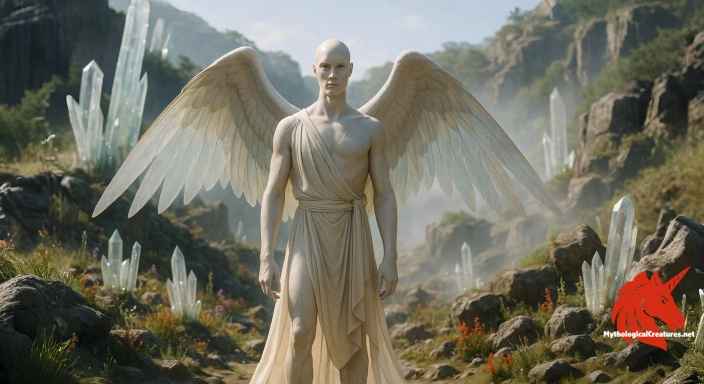
The Mythological Creatures Book Series
Yokai, Greek, Norse, Egyptian & Chinese. Five illustrated field guides to the creatures the old stories either warned or told you about.




Curated by the Mythological Creatures Team
Series editor: Mythological Creatures Directory
Primary desk: Hellenic & Ancient Mediterranean Desk
(rev. November 2025)