
Clonia: Clonia is a nymph from Greek mythology, renowned for her ethereal beauty and divine nature.
-c9e6eee2-30dd-4867-a800-6a401fece2c9_small.webp "Clonia - Her myth underscores the connection between the divine forces of nature and mortal lineages in Greek lore.")
Clonia
Clonia - Her myth underscores the connection between the divine forces of nature and mortal lineages in Greek lore.
the legend in five swipes.
the legend in five swipes.
Where does Clonia come from?
Clonia emerges in the rich tapestry of Greek mythology as a nymph imbued with the wild spirit of nature. Her very name, derived from the term meaning 'wildly rushing', evokes images of tumultuous streams and the unbridled energy of the natural world. She is best known as the consort of the enigmatic Hyrieus, whose union with her is interwoven with the heritage of significant mythic figures. Her presence is subtly noted in ancient genealogies where she is acknowledged as the mother of Nycteus and Lycus, linking her to a broader mythological narrative of lineage and destiny. The brief attestations of her myth underscore an inherent duality; she manifests both a tender nurturing quality and an untamed, dynamic essence. Many ancient storytellers revered her as a symbol of nature’s capricious power, a reminder that the forces of the wild are never fully domesticated. Even though her story is not as elaborately chronicled as those of other deities, Clonia’s narrative offers a glimpse into the intimate relationship between mortal legacies and divine natural phenomena. In this way, her myth continues to stimulate the imagination, encapsulating the ever-changing interplay of order and chaos in the world of nature.
Clonia: Variants Across the Sources
Ancient texts provide only delicate traces of Clonia’s story, leaving much to the interpretive imagination of later mythographers. Her mention is predominantly confined to brief genealogical records that interlace her identity with that of Hyrieus and his descendants. Some fragmentary scholia and minor mythographic works hint at an influence over natural forces, suggesting that her domain extended beyond mere lineage. The scant references in classical literature have inspired modern scholars to re-evaluate her role as a mediator between the wild and the orderly realms. Alternately, the sparse detail has led to the emergence of several narrative variants in which her essence is intertwined with the ever-restless flow of water and the vitality of the natural landscape. Byzantine compilations and local oral traditions sometimes add layers to her character that were absent from the earliest sources. Such diverse manuscript traditions frequently reshaped her role to suit regional tastes and evolving thematic interests in the natural world. Ultimately, while her primary attestations remain minimal, the multiplicity of story variants demonstrates a long-standing cultural fascination with the fleeting yet potent spirit of Clonia.
How powerful did people believe Clonia to be?
Visual depictions of Clonia, although limited, portray her as an ethereal beauty whose form embodies the fluidity and motion of the natural world. She is often imagined with luminous, shifting features that mirror the glimmer of sunlit water and the soft glow of dawn. Artists sometimes render her hair cascading like a waterfall, interwoven with strands that resemble the delicate filaments of wild flora. Her skin is depicted as subtly radiant, as if kissed by the dewdrops of early morning or the shimmer of moonlight across a tranquil stream. The eyes of Clonia are frequently described as deep and reflective, capturing the dual nature of calmness and storm inherent in the wild. Her attire is envisaged as fluid, comprising garments that seem to be spun from the very essence of natural elements, drifting effortlessly with every movement. In some representations, hints of wings or delicate fins suggest an integration with the watery realms, reinforcing her affinity with flowing bodies of water. Collectively, these physical details serve to enhance her image as a mysterious, dynamic entity that encapsulates the ever-changing beauty of nature.
Where in the world is Clonia known?
Clonia’s myth has been intriguingly adapted across various regions of the ancient Greek world and beyond, reflecting local sensibilities and natural environments. In the Aegean islands, for example, local lore often transforms her persona into that of a guardian spirit of freshwater springs and coastal tides. Communities in Arcadia celebrate her as an emblem of pastoral bounty, where the wild, rushing streams imbue the land with fertile vitality. In parts of Asia Minor, regions familiar with rugged highlands have woven her into traditions that link her with the untamed torrents of mountainous water sources. Variations in her depiction have allowed for additional attributes to emerge, such as an association with the rhythmic cycles of seasonal rain and growth. Along the Mediterranean, storytellers have occasionally elevated her to a patroness of local natural ceremonies dedicated to the rejuvenation of the land. These regional adaptations, while preserving the core aspects of her nature, demonstrate the flexibility of her myth to resonate with diverse audiences. Each cultural reinterpretation reaffirms her status as a timeless symbol of the wild, untamed forces that shape the natural environment.
Which figures are similar to Clonia?
The figure of Clonia resonates with a number of similar nature spirits found in various mythological traditions, offering fascinating avenues for cross-cultural comparison. Much like the Naiads and other water nymphs in Greek lore, Clonia embodies the sacred and unpredictable essence of flowing water. Her unpredictable nature and inherent connection to the wild mirror motifs present in Celtic water fairies and Slavic rusalki, each representing the delicate balance between benevolence and caprice in natural forces. In comparable mythologies, similar figures often serve as messengers of nature’s dual capacity to nurture and to devastate, a theme that is present in Clonia’s own narrative. Across ancient cultures, divine feminine figures with control over water and growth stress the importance of maintaining harmony with the environment. Modern retellings tend to integrate these symbolic parallels, drawing attention to the universal archetype of the nature spirit. This comparative analysis reveals not only common motifs of untamed beauty and latent peril but also the enduring appeal of such deities in encapsulating the dynamic interplay of nature and human experience. Thus, Clonia stands as part of a broader tradition, linking her to a multitude of mythic figures that celebrate natural energy and transformation.
How is Clonia remembered today?
Over the centuries, the myth of Clonia has transitioned from modest genealogical mention to a subtle yet enduring emblem in art and literature. In antiquity, she was an understated figure whose fleeting appearances in texts nevertheless captured the imagination of those who revered the wild forces of nature. The Renaissance saw a revival of interest in ancient myths, during which Clonia was sometimes reimagined as a delicate muse symbolising the splendor and unpredictability of natural beauty. By the 19th century, the romantic movement further amplified this image, viewing her as an icon of both sublime wilderness and untethered freedom. In modern times, elements of her myth have been absorbed into contemporary environmental narratives, where her essence underscores the timeless interplay between humanity and its natural surroundings. Creative reinterpretations in literature, theatre, and visual arts continue to highlight her as a figure who inspires a deep appreciation for the unbridled energy of nature. Although Clonia’s myth may not be as widely known as those of major Olympian deities, she remains a quietly influential presence in the cultural imagination. Through ongoing reinterpretations and subtle appearances in modern media, her legacy endures as a testament to the perpetual allure of the wild natural world.
Interesting Fact
The etymology of Clonia’s name, meaning 'wildly-rushing', hints at a dynamic force of nature, setting her apart from more conventional portrayals of nymphs.
Mythological Treasures
Greek Myths: A field guide to the monsters of ancient Greece
Every monster here earned its place in legend, and each gets a full page of artwork and the story behind it.
Chinese Beasts: A field guide to the dragons and demon kings of Chinese myth
From river dragons to demon kings, with the legends that shaped five thousand years of storytelling.
Japanese Yokai: A field guide to the spirits and demons of Japanese folklore
Fifteen spirits, with the signs to watch for and what the old tales say to do if you meet one.
the legend in five swipes.
Mythology-aligned partners
Showcase your myth-friendly brand here
Run a store, studio, or platform that lives in the world of myth and folklore? A curated sponsor panel on these pages may fit.
Explore partnership optionsQuick Creature Info
Origin:
Associations:
Our Mythic Legendary Rating:

Also Sometimes Known As:
Habitat:
Supernatural Powers:
Physical Attributes:
Abilities:
Behavior:
Lore:
Related Creatures, Tales or Lore
- NNaiads
- DDryads
- OOreads
References
Discover Another Mythical Legend You May Not Have Heard Of?
Uncover the mysteries of ancient folklore and expand your knowledge of legendary beings from cultures around the world.
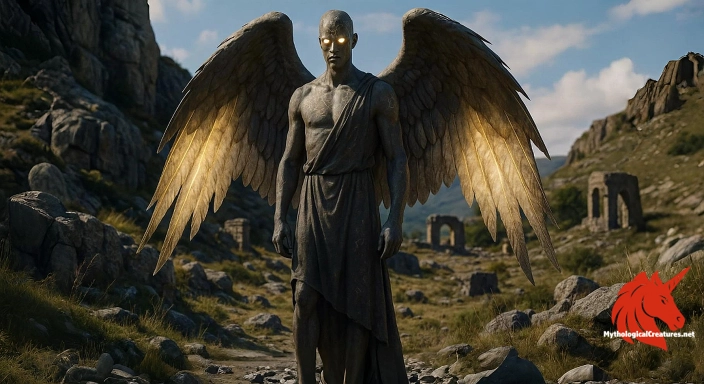
Dare to Meet the Zaqiel....
The Mythological Creatures Book Series
Yokai, Greek, Norse, Egyptian & Chinese. Five illustrated field guides to the creatures the old stories either warned or told you about.



Curated by the Mythological Creatures Team
Series editor: Mythological Creatures Directory
Primary desk: Hellenic & Ancient Mediterranean Desk
(rev. November 2025)