
Cyllarus: Cyllarus is a mythical centaur from Greek mythology, renowned for his half-human, half-horse form.

Cyllarus
Cyllarus - Cyllarus symbolises the coexistence of human intellect and animal instinct in mythological narratives.
the legend in five swipes.
the legend in five swipes.
Where does the story of Cyllarus begin?
Cyllarus emerges from the misty realms of ancient myth as one of the more enigmatic centaurs, embodying the delicate balance between refined intellect and untamed nature. His name, rendered in ancient Greek as Κύλλαρος, hints at a legacy that has captured the imagination of those fascinated by the dualities within human and animal realms. Though the surviving literary fragments offer only a brief mention of his existence, the character of Cyllarus is interwoven with the broader tapestry of centaur lore that thrived in classical antiquity. Early hints of his tale likely circulated through oral traditions and early epic verses, where centaurs symbolised both the wisdom of pastoral life and the chaos of the wild. His presence on ancient pottery and in modest mythological references suggests that he held a subtle yet significant role in the cultural psyche of the Greeks. The mythology surrounding him reflects themes of internal conflict, the interplay of civilisation and untamed nature, and the search for identity within a multifaceted world. By straddling the line between man and beast, Cyllarus became a living symbol of the transformation that accompanies the merging of contrasting forces. His legend continues to intrigue modern enthusiasts, inviting reinterpretations that resonate with the timeless human condition.
How did the story of Cyllarus change over time?
Although the ancient texts offer only fleeting mentions of Cyllarus, the scarce references that remain provide a glimpse into his mythological significance. Fragments and subtle allusions in early epic poetry and scholia suggest that his story was known to the ancient audience, even if his exploits were not elaborated upon in surviving literature. Small but evocative details found on vase paintings and regional inscriptions hint at a figure whose character was part of a more extensive, albeit now lost, narrative tradition. The ancient authors who touched upon the lore of centaurs often interwove his name within broader discussions of centaur genealogies and the chaotic energy of the wild. Variations in the oral retellings allowed for a rich diversity of story elements to flourish around his character. Some local traditions appear to have preserved distinct aspects of his personality, perhaps emphasising a nobler streak amid the typical brusque nature of his kin. The multiplicity of subtle references across diverse sources underscores how even minor mythological figures contributed to an intricate web of narrative and symbolism. Despite the fragmentary evidence, the endurance of these hints in primary sources speaks to the layered and dynamic nature of centaur mythology in ancient Greece.
How would you recognise Cyllarus?
Visual depictions of Cyllarus consistently celebrate the unique integration of human and equine features that define the centaur archetype. His upper body is rendered with the grace and poise expected of a classical hero, juxtaposed with the robust, muscular build of a powerful stallion. Artistic portrayals often highlight finely sculpted facial features, a deep, penetrating gaze, and a mane of hair that cascades with natural elegance, suggesting an inner nobility rare among his kind. The equine half, typically depicted with rippling muscles and a sleek coat, underscores the physical prowess and wild beauty that centaurs possess. In some images, subtle adornments such as rustic garlands or symbolic accessories distinguish him from other centaurs, hinting at a special status within his mythic community. Variations in his portrayal reflect changes in artistic style over time, with some depictions emphasising a more harmonised union between man and beast. The overall composition of his figure suggests not only strength and agility but also a refined aesthetic that invites contemplation about the nature of both civilization and wilderness. Through these physical attributes, Cyllarus is immortalised as a creature whose form perfectly encapsulates the duality of intellect and instinct.
What do different regions call Cyllarus?
The myth of Cyllarus has been subject to diverse regional reinterpretations that mirror the local cultural and artistic traditions across ancient Greece. In certain Athenian circles, for instance, he was envisioned as a centaur with an almost aristocratic bearing, a subtle departure from the brutish image often associated with his kin. In the pastoral regions of Thessaly and Arcadia, where the bond between humanity and nature was deeply revered, his character was often imbued with that same serene wilderness spirit. Local variations sometimes emphasised his gentler, more reflective qualities, thus recasting him as a mediator between the orderly world of man and the chaotic realm of beasts. In contrast, other regions adopted a more aggressive portrayal, aligning him with the turbulent elements of the untamed natural world. Roman adaptations further transformed his narrative by integrating aspects of their own hybrid mythological figures, reinforcing his role as a symbol of the collision between the refined and the wild. These regional narratives, whether emphasising nobility or savagery, illustrate how localized cultural values influenced the interpretation of centaur myths. Ultimately, the regionally diverse portrayals of Cyllarus underscore the adaptability of myth, mirroring the multifaceted relationship between nature and civilization.
Which myths echo the story of Cyllarus?
Cyllarus occupies an interesting position within the broader spectrum of mythological hybrids, drawing parallels with both celebrated and obscure figures from various traditions. Much like the wise and benevolent centaur Chiron, he embodies a synthesis of human insight and animalistic energy, yet his narrative is marked by a subtler, more enigmatic quality. His existence invites comparison with Roman fauns and satyrs, who similarly straddle the line between natural wildness and cultivated culture. In many respects, his character resonates with themes found in Indo-European myth, where creatures that blur the boundaries between man and beast serve as metaphors for internal duality and transformation. Such comparative analysis highlights how the motif of the centaur transcends specific cultural boundaries, finding echoes in diverse mythic systems. While Cyllarus might not be as extensively chronicled as some of his counterparts, his inclusion enriches the tapestry of classical hybridity by offering alternative perspectives on the nature of identity and power. The recurring image of half-man, half-horse appears in various cultures, suggesting a common symbolic language that addresses the dynamic interplay between civilisation and nature. In this light, his story contributes to a universal dialogue on the tensions and harmonies that define the human condition.
The Lasting Influence of Cyllarus
Over the centuries, the figure of Cyllarus has evolved from a brief mention in ancient myth to a subtle emblem of the enduring fascination with hybridity and duality. The Renaissance, in its revival of classical themes, saw artists and poets reinterpreting centaur myth with renewed artistic sensitivity, often drawing on the enigmatic qualities of lesser-known figures like Cyllarus. Modern creative expressions, from literature to visual art, have embraced his image as a symbol of the perpetual conflict and harmony between the wild and the refined. His fragmented myth has been reassembled in contemporary narratives, where he sometimes appears as a character endowed with introspection and complexity. Popular fantasy genres and role-playing games have incorporated elements of classical centaur lore, using figures such as Cyllarus to explore themes of identity, transformation, and the natural world. His depiction has shifted from the shadowed figures of ancient pottery to nuanced representations that highlight both his noble and untamed aspects. The evolution of his portrayal reflects broader cultural trends that celebrate the merging of opposites and the beauty found within paradox. Today, Cyllarus stands as a testament to the timeless allure of myth, reminding us that even the most obscure characters can embody universal truths about the human spirit.
Interesting Fact
While many centaurs in Greek mythology are known for their reckless and savage behaviour, Cyllarus's specific exploits remain less documented, adding an air of mystery and intrigue to his character.
Mythological Treasures
Greek Myths: A field guide to the monsters of ancient Greece
Every monster here earned its place in legend, and each gets a full page of artwork and the story behind it.
Egyptian Legends: A field guide to the gods and monsters of ancient Egypt
Guardians of the living and devourers of the dead, with the role each played in judgement.
Chinese Beasts: A field guide to the dragons and demon kings of Chinese myth
From river dragons to demon kings, with the legends that shaped five thousand years of storytelling.
the legend in five swipes.
For myth educators and toolmakers
Built a resource for mythology learners?
If you offer courses, teaching tools, or research platforms focused on myth and folklore, consider a discrete placement on our reference pages.
Introduce your resourceQuick Creature Info
Origin:
Features:
Associations:
Our Mythic Legendary Rating:

Habitat:
Supernatural Powers:
Physical Attributes:
Abilities:
Behavior:
Weaknesses:
Lore:
References
Discover Another Mythical Legend You May Not Have Heard Of?
Uncover the mysteries of ancient folklore and expand your knowledge of legendary beings from cultures around the world.
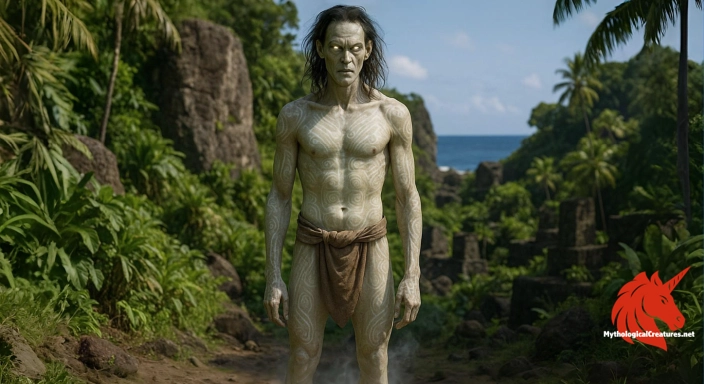
Dare to Meet the Aitu....
The Mythological Creatures Book Series
Yokai, Greek, Norse, Egyptian & Chinese. Five illustrated field guides to the creatures the old stories either warned or told you about.

Curated by the Mythological Creatures Team
Series editor: Mythological Creatures Directory
Primary desk: Hellenic & Ancient Mediterranean Desk
(rev. November 2025)