
Cymatolege: Cymatolege is a sea-nymph from Greek mythology, renowned as one of the 50 Nereids.
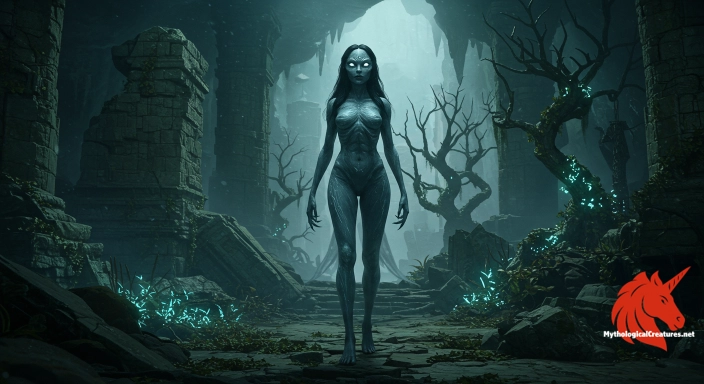
-6c243ff3-6397-4d7f-a536-c7a769ac249f_small.webp "Cymatolege - Her very name, meaning 'wave-stiller', highlights her influence over the sea and symbolizes the soothing as well as formidable aspects of the ocean.")
Cymatolege
Cymatolege - Her very name, meaning 'wave-stiller', highlights her influence over the sea and symbolizes the soothing as well as formidable aspects of the ocean.
Origins & First Encounters
Cymatolege emerges as one of the most intriguing sea nymphs within Greek mythology, celebrated as one of the fifty Nereids. Born of the venerable Nereus and the Oceanid Doris, her origins are rooted in a time when the ancient Greeks sought to explain the mysteries of the ocean through divine narrative. Her very name, meaning 'wave-stiller', hints at an extraordinary ability to calm the tumultuous waters that both endangered and inspired seafarers. She is attested in early texts that list the diverse daughters of Nereus, each representing different facets of the sea's ever-changing temperament. Her myth served as a symbolic bridge between the chaotic forces of nature and the serene moments that follow a storm. Within the rich maritime culture of ancient Greece, her calming presence was embraced as both a literal and metaphorical counterbalance to the unpredictable ocean. Myths of Cymatolege also provided solace and hope to those battling the perils of the deep, reflecting the human desire to harness nature's power. Over time, her legacy has stood as a testament to the harmonious interplay between divine intervention and the natural world's caprice.
Source Texts & Tale Variants
The primary sources that mention Cymatolege are interwoven with broader accounts of Greek myth, particularly in works that catalogue the Nereids. Ancient texts, including fragments attributed to Hesiod, record her name among the fifty daughters of Nereus, firmly placing her within the established maritime pantheon. Although narratives solely dedicated to her are few, her mention underscores the important role of sea nymphs in explaining natural phenomena. Later literary traditions during the Hellenistic period provided additional layers of meaning to her character, often highlighting her power to pacify storm-tossed waters. Scattered references in Byzantine compilations and scholia further attest to her enduring presence in the mythic landscape. Coastal folklore also preserves her name, with local legends recounting the mysterious intervention of a sea nymph during violent tempests. In several of these retellings, her calming influence is a central theme that reinforces the belief in divine guardianship over the ocean. Each variant, while differing in nuance, consistently celebrates her as a benevolent force amidst the chaos of the deep.
Form & Powers
Cymatolege is portrayed with an otherworldly beauty that seems to mirror the serene yet unpredictable nature of the sea. Her hair is imagined as long and flowing, evoking the gentle motion of ocean waves under a soft breeze. Deep, reflective eyes are said to capture the glimmer of sunlight on water, lending her a gaze that is both captivating and mysterious. She is often depicted adorned in diaphanous garments that flow effortlessly, resembling the delicate veil of sea foam. Her skin is rendered in a luminous tone, akin to moonlight shimmering on a tranquil bay at night. Artistic representations sometimes include subtle hints of iridescence, suggesting that even her skin may bear traces of the sea’s flickering light. Accessories crafted from shells, coral, and starfish enhance her ethereal presence, bridging the gap between the divine and the natural. In many portraits, the overall impression is one of calm authority, with her graceful form embodying both gentleness and the raw power of the ocean. The visual harmony in her depiction serves as a constant reminder that beauty and strength can exist in perfect balance.
Regional Faces
The portrayal of Cymatolege has evolved as her myth travelled across different parts of the ancient Mediterranean. In coastal Greek communities, she was sometimes venerated as a nurturing guardian whose intervention could bring calm to stormy seas, providing vital protection for seafarers. Island traditions enriched her legend, portraying her as an ever-watchful spirit who ensured the stability of the local waters. Local festivals often featured depictions of her, celebrating her role in mediating between watery chaos and the serene harbour. In the Roman context, elements of her identity were sometimes merged with indigenous water deities to create hybrid forms that reflected both protection and grace. Variations in artistic style and ritual practice in the Eastern Mediterranean further transformed her iconography, adapting her attributes to local maritime needs. Such regional adaptations emphasised different facets of her nature—from a benevolent protector to a symbol of natural equilibrium. Across these diverse cultural landscapes, the core idea of the wave-stiller remained a powerful motif celebrating the balance between the forces of nature.
Cultural Parallels
Cymatolege invites compelling comparisons with water deities from various cultures, as many mythologies have sought to embody the dual nature of the sea through divine figures. Her unique ability to calm the waves resonates with the Roman mythology of Salacia, a goddess who symbolised the more pacific aspects of the marine realm. In Celtic lore, similar water spirits appear as guardians of both the bounty and the peril of the sea, echoing the calming influence inherent in Cymatolege's myth. Norse traditions also feature deities who encapsulate the mystery and might of the ocean, though these figures often possess a darker, more formidable presence. The recurring theme across these cultures is the effort to personify natural forces in a way that renders them approachable and, at times, benevolent. Such cross-cultural parallels highlight a universal human fascination with the sea and its unpredictable power. In comparative narratives, Cymatolege stands out as a serene embodiment of nature's capacity to both challenge and nurture. Her gentler role contrasts with more tumultuous representations, offering insights into how different societies reconcile with the formidable aspects of the natural world. Together, these comparisons illuminate the shared human impulse to seek harmony amid the relentless rhythms of the ocean.
Legacy & Modern Evolution
Over the centuries, Cymatolege’s myth has morphed from a brief mention in ancient texts to a symbol imbued with both historical gravitas and modern relevance. Early depictions of her centred on the divine gift of calming stormy seas, a narrative that deeply resonated with the experiences of ancient mariners. During the Renaissance and Romantic eras, her image was revitalised in art and literature, where she came to embody the sublime beauty and power of nature. In contemporary creative circles, her legend offers fertile ground for reinterpretation, merging classical themes with modern environmental consciousness. Artists, writers, and musicians have embraced her as an emblem of balance, often invoking her name in discussions on the stewardship of natural resources. Educational programmes and cultural festivals continue to highlight her legacy, ensuring that her myth endures in public imagination. Modern reinterpretations also link her to ecological movements, where her ability to still the waves symbolises harmony between human activity and natural preservation. Cymatolege thus serves as a bridge between antiquity and modernity, a reminder of the timeless connection between myth and nature. Her enduring legacy inspires ongoing dialogue about resilience, beauty, and the innate power of the natural world.
Interesting Fact
An interesting fact about Cymatolege is that her very name explicitly means 'wave-stiller', which not only defines her role among the Nereids but also highlights the ancient Greeks’ deep connection with and reverence for the sea.
For indie creators
Give your myth project a permanent home
Indie authors, artists, small studios, and makers can secure an annual, non-intrusive sponsor slot that meets readers where they explore.
Obtain more informationQuick Creature Info
Origin:
Features:
Associations:
Our Mythic Legendary Rating:

Also Sometimes Known As:
Habitat:
Supernatural Powers:
Physical Attributes:
Abilities:
Behavior:
Lore:
Related Creatures, Tales or Lore
- TThetis
- AAmphitrite
- GGalatea
References
Discover Another Mythical Legend You May Not Have Heard Of?
Uncover the mysteries of ancient folklore and expand your knowledge of legendary beings from cultures around the world.
Dare to Meet the Allani....
Curated by the Mythological Creatures Team
Series editor: Mythological Creatures Directory
Primary desk: Hellenic & Ancient Mediterranean Desk
(rev. November 2025)