
Allani: Allani is the Hurrian goddess of the underworld, also known as Allatu or Allatum.
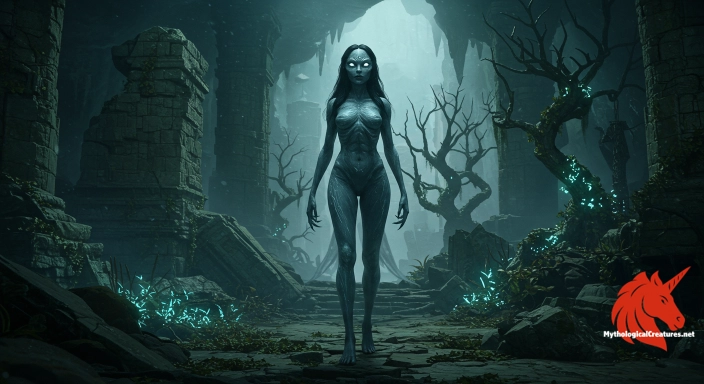
Allani
Allani - A central deity in the underworld, invoked in rituals related to fate and the afterlife.
the legend in five swipes.
the legend in five swipes.
Allani: Origins and First Sightings
Allani, revered as a formidable goddess of the underworld, embodies the profound mysteries of ancient realms of life and death. Originating in the Hurrian pantheon, she is one of the earliest deities associated with both mortality and the determination of fate. Her earliest attestations mark her worship in the western regions where the Hurrians thrived. Allani’s mythic narrative intricately weaves together the inevitability of destiny with the enshrouded nature of the afterlife. Her divine presence was celebrated through rituals and offerings, emphasising her role as the guardian of the boundary between worlds. Despite the uncertainty of her principal cult centre, her veneration spread widely across regions such as Tigunani, Tuttul, and Ugarit. Her incorporation into the Mesopotamian pantheon further enriched her identity, with worshippers in Ur, Nippur, and Sippar recognising her unique powers. Intercultural exchanges with neighbouring societies greatly influenced her depiction, merging various mythic motifs. The enduring allure of Allani reflects the ancient fascination with life, death, and the mysteries in between. Her legacy continues to offer insights into how early cultures contemplated fate and the eternal cycle of existence.
Allani: Manuscripts, Texts and Variants
Ancient textual traditions provide a window into the multifaceted nature of Allani and her evolving narrative. Primary sources, including cuneiform tablets from Tigunani and Tuttul, record her divine rites and reverence. Ugaritic texts reveal complex invocations where she is mentioned alongside closely linked deities, underscoring her integral role in the underworld. Mesopotamian records from Ur, Nippur, and Sippar further attest to her assimilation into broader cultic practices. Akkadian inscriptions refer to her as Allatu, cementing her identity as a goddess who governs both fate and the afterlife. Hittite documents introduce additional layers by integrating local traditions with her established mythos. The diverse story variants preserved in these sources point to a deity whose character was continually reinterpreted. Each narrative emphasises different aspects of her authority, ranging from ritualistic functions to cosmic oversight. The fragmented tales across regions demonstrate the fluidity of her identity and the exchanges between ancient cultures. This rich corpus of sources continues to inspire scholarly exploration and reinterpretation of her mythological significance.
Allani: What Manner of Being?
Visual representations of Allani remain elusive, yet modern interpretations offer detailed conjectures on her appearance. Many reconstructions envision her as a regal figure draped in dark, flowing garments that mirror the silent shadows of the underworld. Her countenance is often depicted as serene and enigmatic, reflecting both wisdom and the inescapable sorrow of fate. Iconographic depictions sometimes include a distinctive crown or headpiece, symbolising her dominion over the realm of the dead. It is suggested that her eyes carry a profound intensity, as if they bear the weight of countless souls. In some artistic renditions, she is portrayed holding a sceptre, an emblem of her authority over the fortunes of life. Intricate details, such as subtle engravings and celestial motifs on her attire, further underscore her divine status. The fantasy-driven visual language surrounding her emphasises both austerity and an ethereal beauty that transcends mortal realms. Such imaginative portrayals provide an interpretative framework that helps to visualise her role as the ultimate arbiter of fate.
Allani: One Legend, Many Local Versions
The ancient worship of Allani displays notable regional variations that illuminate her multifaceted character. In the heartlands of the Hurrian culture, she was primarily venerated as the sovereign of the underworld and a dispenser of destiny. In Mesopotamia, however, her identity melded with that of Ereshkigal, resulting in a synthesis of iconography and myth that resonated with local spiritual practices. Hittite sources reveal additional adaptations, where her attributes were reframed to align with Anatolian religious sensibilities. Localised traditions at sites like Tigunani, Tuttul, and Ugarit incorporated unique ceremonial practices and narrative embellishments. Despite these diverse local renditions, the central themes of mortality and the passage of souls remained immutable. Regional adaptations reflected both the cultural values and the ritual innovations of each community. Such variations not only enriched her mythology but also demonstrated how ancient societies adapted shared deific symbols to their distinct spiritual landscapes. This regional dynamism underscores the pervasive influence of Allani across a broad geographical expanse.
Do other traditions know Allani by another name?
Comparative analysis reveals striking parallels between Allani and other deities who govern the realm of the dead. Her functions mirror those of Mesopotamian Ereshkigal, with both goddesses presiding over the underworld and embodying the certainties of fate. Beyond Mesopotamia, her character resonates with figures in Anatolian and Ugaritic traditions, where similar motifs of death and destiny prevail. Unlike deities associated with cyclical rebirth, Allani remains a steadfast symbol of finality and the inexorable nature of mortality. Cross-cultural comparisons highlight her austere beauty and the solemn power that she wields as an arbiter of life’s end. The overlapping attributes between her and analogous figures not only underscore common ancient themes but also illustrate the fluid exchange of religious ideas. These comparative insights reveal a shared symbolic language that transcends regional boundaries. The synthesis of her character with that of other underworld deities reflects a collective ancient understanding of life, death, and the inexorable passage of time. Overall, these cross-cultural connections enhance our comprehension of how various societies represented the ultimate mysteries of existence.
The Lasting Influence of Allani
The historical evolution of Allani is marked by continuous reinterpretation and cultural assimilation over the centuries. Emerging from the rich Hurrian tradition, she was initially celebrated as a definitive guardian of the underworld and a guide of fateful destinies. As her myth travelled across borders, her identity merged with that of deities like Ereshkigal, demonstrating a profound exchange of religious ideas. Over time, shifts in artistic and ritual practices led to nuanced portrayals that reflected local sensibilities and broader Mesopotamian influences. While her direct worship gradually dissipated in later periods, her archetype endured through allegorical portrayals and literary allusions. In modern times, Allani’s image has been rediscovered by scholars, artists, and writers who find in her a compelling symbol of mortality and destiny. Contemporary retellings often cast her as an enigmatic figure whose austere authority continues to captivate the imagination. Her evolution from a local cult deity to a resonant mythological figure exemplifies the enduring power of ancient narratives. This rich legacy ensures that the mysteries of the underworld, as personified by Allani, remain a significant subject of both academic inquiry and popular culture.
Interesting Fact
Allani's syncretism with deities from neighboring cultures, especially her equation with Ereshkigal, illustrates the complex interplay of ancient Near Eastern religious traditions.
Mythological Treasures
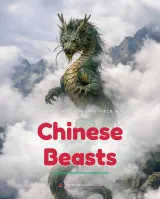
Chinese Beasts: A field guide to the dragons and demon kings of Chinese myth
From river dragons to demon kings, with the legends that shaped five thousand years of storytelling.
Japanese Yokai: A field guide to the spirits and demons of Japanese folklore
Fifteen spirits, with the signs to watch for and what the old tales say to do if you meet one.
Greek Myths: A field guide to the monsters of ancient Greece
Every monster here earned its place in legend, and each gets a full page of artwork and the story behind it.
the legend in five swipes.
For serious myth projects
Feature your work alongside the legends
From academic works to story-rich games, we highlight projects that respect world mythologies. Talk to us about a measured, long-term placement.
Start a conversationQuick Creature Info
Origin:
Associations:
Our Mythic Legendary Rating:

Also Sometimes Known As:
Habitat:
Supernatural Powers:
Abilities:
Behavior:
Lore:
Related Creatures, Tales or Lore
References
Discover Another Mythical Legend You May Not Have Heard Of?
Uncover the mysteries of ancient folklore and expand your knowledge of legendary beings from cultures around the world.
Dare to Meet the Choronzon....
The Mythological Creatures Book Series
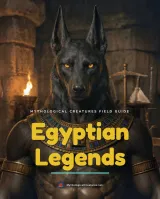
Yokai, Greek, Norse, Egyptian & Chinese. Five illustrated field guides to the creatures the old stories either warned or told you about.

Curated by the Mythological Creatures Team
Series editor: Mythological Creatures Directory
Primary desk: Hellenic & Ancient Mediterranean Desk
(rev. November 2025)