
Datsue-ba: Datsue-ba is a fearsome, old ogress from the Japanese Buddhist underworld known for stripping the clothes off the deceased as they cross the Sanzu River.
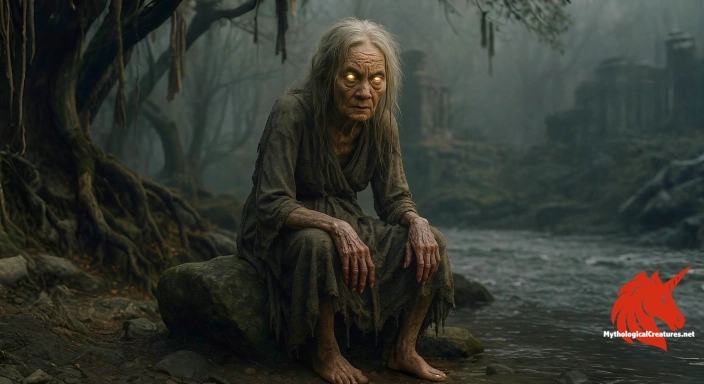
Datsue-ba
Datsue-ba - Represents the stripping away of worldly attachments and the transformative passage from life to the afterlife in Japanese Buddhist belief.
the legend in five swipes.
the legend in five swipes.
Datsue-ba: Where the Legend Started
Datsue-ba emerges from Japanese Buddhist mythology as a uniquely formidable presence, distinct in her role within the underworld. Her persona, often translated as the 'old woman who strips clothes', has captivated and unsettled audiences across generations. She is traditionally depicted sitting at the edge of the Sanzu River, a liminal boundary between life and the afterlife in Japanese spiritual lore. Her origins appear interwoven with both indigenous Japanese beliefs and the imported cosmology of Buddhism, where themes of impermanence and moral reckoning prevail. Early artistic depictions and literary texts hint at a symbolic role that bridges the mundane with the metaphysical, emphasising the stripping away of earthly attachments. The chilling imagery of Datsue-ba has been perpetuated in temple murals, woodblock prints, and ritual texts, solidifying her place in the collective psyche. She functions as a stark reminder of the ephemerality of human possessions and the inevitable transformation that awaits every soul. Over time, her narrative has been enriched and reinterpreted in tune with Japan’s evolving cultural and religious landscapes. The figure of Datsue-ba, with her haunting vigil by the Sanzu River, encapsulates a fusion of moral, existential, and spiritual themes that continue to inspire awe and introspection.
What sources tell us about Datsue-ba?
The myth of Datsue-ba is preserved through a range of literary, visual, and religious sources that have been passed down over the centuries. Early temple manuscripts and esoteric treatises from medieval Japan present one of the earliest attestations of her eerie character, intertwining her narrative with broader discourses on the afterlife. Visual depictions in the form of woodblock prints and temple murals vividly illustrate her presence alongside the Sanzu River. Some texts narrate her actions in a manner that emphasises her role as both a guardian and a harbinger of spiritual reckoning. Folkloric recitations and oral traditions further embellish her story, adding layers of ambiguity to her character. Although competing story variants exist, they uniformly underline her participation in the ritual stripping of the dead’s worldly garments. These diverse textual and artistic sources together form a mosaic that not only celebrates her fearsome attributes but also hints at a more complex symbolic relevance. The recorded narratives continue to stimulate scholarly interest, ensuring that her legend remains a subject of continual reinterpretation and debate.
Datsue-ba: What the Legends Describe
Datsue-ba is consistently depicted as a withered and imposing figure, her physicality embodying the decay and terror inherent in the underworld. Artistic renditions often focus on her deep-set, penetrating eyes that seem to hold the sorrow of countless ages. Her hair is typically shown as a tangled cascade of grey or white that frames a face marked by time and tribulation. The decrepit attire she wears, often rendered as tattered and threadbare garments, symbolises the impermanence of earthly possessions. In many illustrations, her expression oscillates between grim determination and a haunting melancholia, capturing both menace and vulnerability. Her elongated, gnarled fingers are a common motif, each one accentuating her almost inhuman appearance. The physical form of Datsue-ba is further accentuated by a hunched posture, suggestive of both the burden of her eternal task and the passage of time. Traditional artworks employ stark contrasts of light and shadow to underscore her ghostly aspect and to heighten the sense of foreboding she instils. In essence, every detail of her anatomy – from the weathered skin to the disordered hair – reinforces her role as a monitor of the barrier between life and death.
How does Datsue-ba differ by region?
Within Japan, regional interpretations of Datsue-ba reveal subtle shifts in emphasis and aesthetic presentation. While her core function remains that of a fearsome guardian at the Sanzu River, local artistic traditions often imbue her with additional layers of ritual significance. In some rural communities, she is portrayed not merely as an agent of dread but also as an enigmatic guardian who oversees the transition from the mortal realm. Urban depictions, particularly those emerging during the Edo period, accentuate her grotesque features in alignment with the era’s vivid portrayals of the supernatural. In regions with a rich theatrical tradition, elements of dark humour and irony are sometimes interwoven with her otherwise grim narrative. Variations in her representation may also reflect local spiritual practices and cultural values, leading to nuanced differences in how her role in the afterlife is interpreted. Certain localities have even adapted her image into performance art, where she functions as a symbolic mediator between societal order and the chaos of the netherworld. These distinct regional adaptations underscore the dynamic way in which mythological figures evolve in response to cultural and environmental contexts.
Is Datsue-ba unique, or found elsewhere?
Datsue-ba shares intriguing thematic similarities with mythic figures found in various cultures, where aged female entities often serve as custodians of the threshold between life and death. In Slavic folklore, for instance, the figure of Baba Yaga evokes a comparable blend of menace and mysticism, wielding both a disciplinary and transformative power. Both these figures challenge the boundary between the mortal and the supernatural, urging individuals to acknowledge the impermanence of physical existence. Western traditions, though less explicitly focused on the stripping away of earthly garments, nonetheless feature spectral entities that symbolically remove the trappings of worldly life. These cross-cultural parallels suggest a universal archetype – that of the liminality embodied by an elder, otherworldly woman. Such figures often serve as allegorical gatekeepers, compelling the living to confront the inevitability of change and decay. The thematic resonance of these distinct yet similar depictions serves to highlight shared human concerns about mortality and identity. In comparing these traditions, one finds that while the specific iconographies may differ, the underlying message regarding the ephemeral nature of life remains remarkably consistent.
Datsue-ba: The Modern Legacy
Over centuries, the image of Datsue-ba has witnessed a remarkable evolution, reflecting shifts in artistic styles and spiritual sensibilities. Early depictions rooted in classical Buddhist iconography have gradually been reimagined in forms that resonate with modern audiences. The transition from scroll paintings and traditional woodblock prints to contemporary media such as manga and film illustrates a dynamic rearticulation of her mythos. Modern reinterpretations often explore the psychological dimensions of her character, transforming her from a mere emblem of dread to a complex symbol of inevitable transformation. Contemporary artists sometimes employ her image to comment on the transient nature of societal norms and personal identity, mirroring today’s existential concerns. Arguments about the stripping away of material and symbolic layers of the self find echoes in modern cultural narratives that feature Datsue-ba. Her enduring presence in exhibitions, popular literature, and digital art underscores her persistent appeal as a metaphor for the passage from life to death. The evolution of her portrayal is a testament to the timeless relevance of ancient mythological themes, repurposed for the modern era. As new generations reinterpret her legacy, Datsue-ba continues as a potent reminder of impermanence, bridging the gap between historical tradition and contemporary expression.
Interesting Fact
Although a relatively minor figure in the broader spectrum of Buddhist mythology, Datsue-ba has had a lasting impact on Japanese art and folklore, symbolizing the essential transition from life to death through her uniquely unsettling role.
Mythological Treasures
Japanese Yōkai: A field guide to the spirits and demons of Japanese folklore
Fifteen spirits, with the signs to watch for and what the old tales say to do if you meet one.
Norse Sagas: A field guide to the beasts of the Viking world
Drawn from the saga accounts themselves, with the powers, weaknesses and doom of each being set out.
Egyptian Legends: A field guide to the gods and monsters of ancient Egypt
Guardians of the living and devourers of the dead, with the role each played in judgement.
the legend in five swipes.
Partner with us
Sponsor this space
Reach thousands of mythology enthusiasts with a curated placement on our creature pages.
Learn about sponsorshipQuick Creature Info
Our Mythic Legendary Rating:

Also Sometimes Known As:
Habitat:
Supernatural Powers:
Physical Attributes:
Abilities:
Behavior:
Lore:
Related Creatures, Tales or Lore
References
Discover Another Mythical Legend You May Not Have Heard Of?
Uncover the mysteries of ancient folklore and expand your knowledge of legendary beings from cultures around the world.
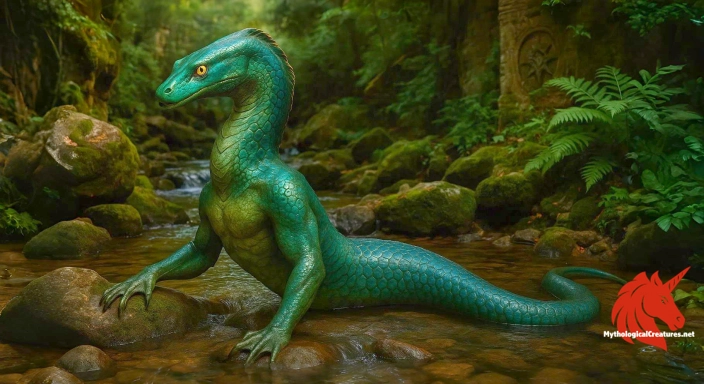
Dare to Meet the Apalala....
The Mythological Creatures Book Series
Yōkai, Greek, Norse, Egyptian & Chinese. Five illustrated field guides to the creatures the old stories either warned or told you about.

Curated by the Mythological Creatures Team
Series editor: Mythological Creatures Directory
Primary desk: Asian & Pacific Myth Cycles Desk
(rev. November 2025)