
Devil Bird: The Devil Bird, or Ulama, is a mysterious avian creature from Sri Lankan folklore known for its eerie, human-like shrieks that invoke fear.
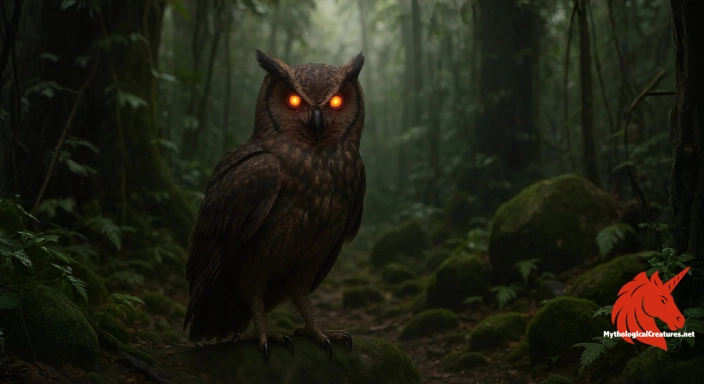
Devil Bird
Devil Bird - Its cry as an omen of death has cemented its place in local myth and inspired both fear and mystery.
Origins & First Encounters
The Devil Bird occupies a unique place in Sri Lankan cultural traditions, embodying a blend of natural mystery and mythical omens. Its eerie, human-like shrieks have sparked both wonder and dread among generations, creating a rich tapestry of narrative and superstition. Oral traditions, passed down through countless storytellers, hint at ancient origins that predate even the earliest written records. The creature’s reputation as a harbinger of death has captured imaginations, embedding it deeply into the island’s folklore. Over time, the legend has grown, absorbing various interpretations that range from literal sightings to allegorical warnings. Local communities have maintained a vibrant connection to the myth, viewing the Devil Bird as a symbolic reminder of life’s fragile boundary. Its narrative carefully balances between the realms of natural history and the supernatural, intriguing both sceptics and believers alike. The unsettling calls, heard in the dark silence of the jungle, continue to evoke a sense of inevitability and mystery. In this way, the Devil Bird remains a compelling figure that reflects the interplay between nature, fate, and the human spirit.
Source Texts & Tale Variants
The chronicles of the Devil Bird are preserved in a diverse array of sources that span oral narratives, archived manuscripts, and observed natural phenomena. Early accounts emerge from local communities whose vivid memories have been handed down over countless generations. Detailed descriptions found in these narratives emphasise the bird’s bloodcurdling cry, a sound that has long been intertwined with forebodings of death. Explorations by naturalists have added another layer of complexity, as scientific studies have sought to match this mythic cry with known species. The spot-bellied eagle-owl, in particular, is frequently cited in these investigations as a plausible basis for the accounts. Yet, there remain alternative depictions that suggest other nocturnal birds, such as the forest eagle-owl or even the crested honey-buzzard, might be responsible for the eerie sounds. Variations in the myth are evident within different regional compilations, each contributing unique details and nuances to the overall narrative. The multifaceted nature of the sources reveals a dynamic dialogue between empirical observation and mythic imagination. Together, these accounts form a layered tapestry that enriches the enigmatic appeal of the Devil Bird.
Form & Powers
Descriptions of the Devil Bird evoke an image of a majestic yet ominous creature, cloaked in the shadows of dense jungle foliage. Observers conjure a figure with a plumage that shifts subtly in the dark, suggesting both camouflage and spectral beauty. Detailed accounts often highlight striking eyes that seem to burn with a mysterious, inner light, lending the creature an almost otherworldly intensity. Its wings are portrayed as powerful extensions that enable swift and silent flight, a characteristic essential for an animal that haunts the night. The creature’s size is described with some variability; while some traditions depict it as considerably large and imposing, others hint at a more modest yet equally enigmatic form. Every mention of its physical attributes, from the sharp curvature of its beak to the lethal precision of its talons, contributes to a mythic aura of menace. Certain storytellers have even compared its silhouette to that of ancient, spirit-like entities found in local legends. Variability in these attributes underscores the elusive nature of the Devil Bird, as eyewitness accounts blend fact with tradition. Such descriptions continue to fuel both scientific inquiry and imaginative reinterpretation, reinforcing its place in both natural and cultural histories.
Regional Faces
While the myth of the Devil Bird is rooted deeply in Sri Lanka, regional interpretations lend the legend a rich diversity of attributes and symbolic meanings. In rural areas, the creature’s presence is often shrouded in intense mysticism, with local residents attributing to it warnings of impending misfortune. In the highland regions, its cry is sometimes believed to signal environmental catastrophes as much as personal tragedies. Urban inhabitants, contrastingly, have come to view the Devil Bird as an elusive emblem of the untamed natural heritage that still survives amid modernity. Diverse communities have adapted the myth to reflect their own cultural narratives, embedding elements of both fear and reverence in its portrayal. These variations highlight a dynamic interplay between the local ecological context and the broader mythological framework. The creature’s identification with various owl species also varies regionally, influencing its physical portrayal and symbolic resonance. Such regional nuances have allowed the legend to grow organically over time, maintaining relevance in ever-changing social landscapes. This adaptability ensures that the Devil Bird remains a multifaceted symbol within the cultural consciousness of different Sri Lankan communities.
Cultural Parallels
The enigmatic qualities of the Devil Bird have prompted comparisons with other mythological figures known for their ominous presence. Its role as a portent of death echoes the narrative of spectral creatures in distant cultures, where unusual sounds serve as harbingers of fate. Echoes of similar myths are evident in Celtic traditions, where figures such as the banshee similarly forewarn of sorrowful events. In various Asian cultures, mysterious nocturnal birds are often celebrated as bridges between the mortal realm and spiritual dimensions. The creature’s bloodcurdling cry resonates with the universal human experience of confronting the unknown, inviting parallels with symbols found in Native American lore and other indigenous mythologies. These comparative studies underscore the common instinct across cultures to interpret natural phenomena as portents of larger cosmic truths. Intricate symbolic systems across the world have employed such figures to articulate the boundary between life and death. The Devil Bird, by virtue of its captivating mystery, participates in a broader dialogue where natural observation meets symbolic elaboration. Such cross-cultural comparisons highlight the enduring human need to make sense of the inexplicable, drawing out shared themes of both dread and awe.
Legacy & Modern Evolution
The legacy of the Devil Bird has evolved alongside shifts in both scientific understanding and modern cultural expression. Once confined to oral tradition and local cautionary tales, the myth is now a subject of broader academic and popular interest. Contemporary media have rediscovered the creature, often portraying it in films and television dramas as a symbol of deep-seated, primal fears. The fluidity of its narrative has allowed the Devil Bird to serve as a metaphor not only for death, but also for the mysteries that lie at the heart of the natural world. As digital folklore and social media spread reinterpreted sightings and imaginative retellings, the myth has been reinvigorated for a modern audience. Its enduring appeal rests in the balance between its traditionally fearful associations and the allure of an unresolved mystery. The transformation from a strictly local omen to a subject of global mythological interest illustrates the evolution of cultural narratives over time. Contemporary interpretations often blend scientific curiosity with a dramatic flair, ensuring the creature’s relevance in modern discussions. Ultimately, the Devil Bird continues to embody the timeless dialogue between nature, myth, and the haunting beauty of the unknown.
Interesting Fact
Despite scientific findings correlating its cry to known owl species, the enduring mystery of the Devil Bird's identity continues to captivate the imagination and evoke fear in Sri Lankan folklore.
Partner with Mythological Creatures
Bring your myth-based world into ours
From game settings to narrative worlds, we work with partners who treat myths with care. Share your project for a potential sponsor slot.
Partner with usQuick Creature Info
Origin:
Features:
Associations:
Our Mythic Legendary Rating:

Also Sometimes Known As:
Habitat:
Supernatural Powers:
Physical Attributes:
Abilities:
Behavior:
Lore:
References
Discover Another Mythical Legend You May Not Have Heard Of?
Uncover the mysteries of ancient folklore and expand your knowledge of legendary beings from cultures around the world.
Dare to Meet the Ziminiar....

Curated by the Mythological Creatures Team
Series editor: Mythological Creatures Directory
Primary desk: Asian & Pacific Myth Cycles Desk
(rev. November 2025)