
Devil Whale: The Devil Whale is a legendary demonic sea monster known for its enormous size and deceptive appearance.
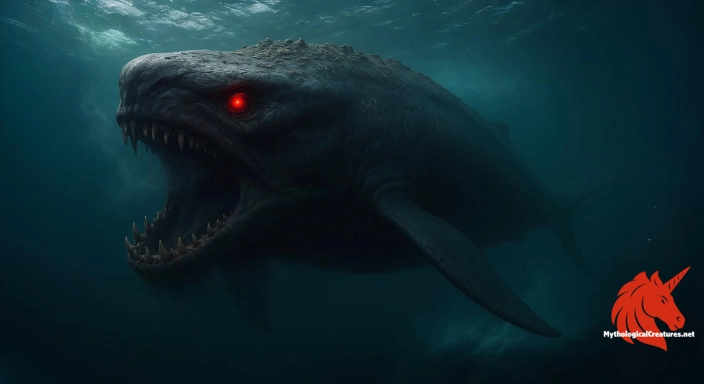
Devil Whale
Devil Whale - Serves as a cautionary symbol of the perils of the sea and the presence of demonic forces.
Origins & First Encounters
The Devil Whale emerges from the depths of maritime myth as a formidable and enigmatic sea creature, blending the traits of a colossal whale and, in some renditions, a sea-turtle. Its mythic roots are entwined with the seafaring narratives of ancient traders and explorers who sought to explain the ocean’s mysterious dangers. Early accounts depict it as a demonic force, its immense size and predatory nature invoking both awe and terror. The creature’s legend is deeply embedded in the rich tapestry of oceanic lore and holds a prominent place in stories that caution against the unpredictable seas. Renowned narratives, such as those involving Sindbad the Sailor, helped propagate its reputation among diverse cultures. Mariners often regarded the creature as a portent of doom, its very presence a sign of the unfathomable forces that lie beneath the waves. The Devil Whale symbolises the struggle between man’s smallness and nature’s vast power, serving as a cautionary emblem against hubris. Its sinister depiction, linked with the imagery of the Devil in Christian thought, underscores the ancient tendency to mythologise the unknown. The enduring fascination with this beast highlights its role as both a literal and figurative manifestation of nature’s overwhelming and sometimes perilous beauty.
Source Texts & Tale Variants
Ancient maritime texts and the vibrant tradition of oral storytelling provide the primary foundation for the Devil Whale’s myth. Early literary sources, most notably the tales of Sindbad the Sailor, showcase the creature in a narrative where it disguises itself as a benign island until provoked by human activity. Various manuscripts and seafarer accounts from the medieval period reveal differing interpretations, with some versions emphasising its whale-like proportions while others present it as a mysterious sea-turtle. Storytellers across generations have recounted dramatic encounters in which unwitting sailors trigger the beast’s wrath by setting a fire on its back. The narratives themselves diverge in detail, reflecting regional storytelling preferences and the improvisational nature of oral tradition. In certain texts, the creature is woven into broader religious allegories, merging the realms of myth and moral instruction. Written records from different eras illustrate a fascinating evolution of its portrayal as both a literal sea hazard and a symbol of moral decay. The myth has persisted through centuries, adapting to the cultural and historical contexts of the communities that have encountered it. Each variant reinforces the central theme of hidden dangers beneath an alluring and deceptive calm.
Form & Powers
The physical portrayal of the Devil Whale is as grandiose as it is ambiguous, capturing the imagination with depictions of an enormous marine creature. Its form is typically described as having a vast, bulbous body that recalls the bulk of a giant whale, yet some accounts imbue it with the hard, protective shell reminiscent of a sea-turtle. The creature’s skin is often imagined as rough and weathered, studded with barnacles and streaked by the tumultuous forces of deep waters. Witnesses in the legends claim that its eyes burn with an eerie light, conveying a sense of demonic intelligence and otherworldly power. Its enormous maw is frequently depicted as capable of engulfing entire ships, enhancing its reputation as an irresistible force of the deep. The Devil Whale’s silhouette, when seen in repose, has been likened to an island, blurring the boundaries between creature and landscape. This paradoxical detail reinforces the myth’s themes of deception and unexpected peril. Variations in its size and form are common within different traditions, yet the emphasis on its immense scale remains unwavering. Such physical descriptions not only evoke a sense of dread but also symbolise the overwhelming vastness and mystery of the ocean.
Regional Faces
The portrayal of the Devil Whale varies significantly across different maritime cultures, with each region adapting the tale to reflect local ecological and cultural sensibilities. In Arabian narratives, the creature is primarily a behemoth of the deep, its actions intertwining with both practical seafaring risks and supernatural retribution. Mediterranean sailors, influenced by a rich tapestry of Greco-Roman lore, often imbue the myth with elements of transformation and mystique, sometimes recasting it in a less malevolent light. Northern European traditions have occasionally interwoven it with legends of sea serpents and other monstrous deities, emphasising the unpredictable nature of the cold, dark waters. In some Pacific island cultures, a similar creature is envisioned as a guardian of hidden treasures, reflecting a dual nature of danger and wonder. The dual depiction as either a whale or a sea-turtle underlines the symbolic flexibility inherent in oral traditions across regions. Each local adaptation provides a unique lens through which seafarers understand the vast unknown, be it as a demonic aggressor or a capricious force of nature. These regional variations are indicative of the broader human impulse to interpret and personify the sea’s many mysteries. In every culture, the legend serves as a reminder of both the allure and the peril that define the maritime world.
Cultural Parallels
The Devil Whale shares thematic and symbolic similarities with many other mythological sea monsters that have captivated cultures around the world. It can be compared with the biblical Leviathan, which also embodies the chaotic might of the deep and stands as a symbol of divine retribution. In Norse and Celtic lore, creatures like the Kraken or giant sea serpents echo the Devil Whale’s role as a fearsome guardian of uncontrollable oceanic forces. Such comparisons highlight a recurrent motif: the ocean as an enigmatic realm where natural beauty intertwines with lethal danger. Both the Devil Whale and its cultural counterparts serve as metaphors for humankind’s vulnerability when facing the vast, uncharted expanses of the sea. The disquieting imagery of a creature that can appear as an island, only to reveal its true, monstrous nature, finds echoes in other regional myths. This cross-cultural convergence of maritime legends speaks to a shared human experience marked by both admiration and trepidation for the ocean. The myth’s demonic attributes, aligned with spiritual symbolism, further bridge gaps between diverse traditions. Through these parallels, the Devil Whale is situated within a wide tapestry of narratives that explore the fine line between wonder and terror in the natural world.
Legacy & Modern Evolution
The evolution of the Devil Whale myth over the centuries reflects the changing relationship between humanity and the ocean. Originally emerging from the imaginative fears of ancient mariners, the creature has transformed from a literal embodiment of the deep sea’s perils into a symbolic icon of nature’s unpredictable might. As maritime exploration advanced and scientific knowledge broadened, the legend began to serve more as a metaphor for environmental uncertainty rather than a concrete threat. Modern reinterpretations in literature and film often portray the Devil Whale as a tragic and misunderstood force, resonating with contemporary concerns over nature’s exploitation and ecological degradation. The creature’s portrayal in art and media has shifted from one of unambiguous malevolence to a more nuanced character, sometimes evoking sympathy alongside awe. Digital narratives and fantasy genres have embraced its mythic qualities, reimagining it in ways that challenge traditional dichotomies between good and evil. Its persistent presence in popular culture underscores the timeless allure of ancient maritime mysteries. The myth continues to be a rich source of inspiration for creative works, ensuring that the Devil Whale remains a potent emblem of the unknown. As modern audiences rediscover and reinterpret these tales, the Devil Whale endures as a bridge between the legends of the past and the imaginative landscapes of today.
Interesting Fact
An intriguing aspect of the Devil Whale myth is its dual depiction as either a whale or a sea-turtle in different legends, reflecting the fluid nature of mythological storytelling.
Curated sponsor space
One subtle banner. Thousands of myth lovers.
We offer a small number of curated sponsor spots for relevant books, courses, games, and art. No clutter, just well-matched partners.
Partner with usQuick Creature Info
Associations:
Our Mythic Legendary Rating:

Habitat:
Supernatural Powers:
Physical Attributes:
Abilities:
Behavior:
Lore:
Related Creatures, Tales or Lore
References
Discover Another Mythical Legend You May Not Have Heard Of?
Uncover the mysteries of ancient folklore and expand your knowledge of legendary beings from cultures around the world.
Dare to Meet the Mehet-Weret....
Curated by the Mythological Creatures Team
Series editor: Mythological Creatures Directory
Primary desk: Hellenic & Ancient Mediterranean Desk
(rev. November 2025)