
Dominion: Dominions are a class of angels in Christian angelology, also known as dominations or lordships.
-2e235123-8b9b-45d7-bd02-ef402b23627e_small.webp "Dominion - Dominions oversee the duties of lower angelic orders and maintain the cosmic order as decreed by God")
Dominion
Dominion - Dominions oversee the duties of lower angelic orders and maintain the cosmic order as decreed by God
Origins & First Encounters
Dominions, also known as dominations or lordships, hold a significant position in Christian angelology as stewards of divine order. They emerged from early theological efforts to categorise the celestial host, providing a structured explanation for the workings of heaven. Early scriptural references, especially in texts such as Colossians, laid the groundwork for their role in the cosmic hierarchy. Their first clear attestation in religious literature dates back to these formative biblical texts, later enriched by the writings of influential church figures. Over time, dominions gained recognition as the intermediaries who oversee the implementation of divine will, linking the higher and lower orders of angels. Their depiction reflects a broad cultural desire to understand how the unseen forces maintain order in both the spiritual and earthly realms. The iconography surrounding them highlights their association with governance, justice, and the subtle mechanisms that ensure the universe remains in balance. As a result, dominions have become enduring symbols that bridge ancient mysticism and evolving theological thought. Their presence in art and liturgy underscores a continuing fascination with the organised structure of the cosmos.
Source Texts & Tale Variants
Primary sources for dominions interweave canonical scripture with mystical and apocryphal literature. The biblical passage in Colossians provides one of the earliest attestations, establishing a basis for viewing them as integral parts of creation. Influential works by Pseudo-Dionysius the Areopagite further elaborate on their role, ranking them as a key station in the divine hierarchy. The Second Book of Enoch also contributes to their lore by describing their presence in the exalted realms of the Seventh Heaven. Various medieval manuscripts and apocryphal texts expand on these initial accounts, offering diverse perspectives on their duties and symbols. In these narratives, dominions are portrayed as agents responsible for the harmonious execution of divine plans. Multiple versions of their story underscore regional interpretative differences that enriched the overarching mythos. The blending of these sources has resulted in a multifaceted portrait that continues to influence theological studies and art. Such textual and legendary variants underscore the complex tapestry of angelic lore that dominions embody.
Form & Powers
While dominions transcend the confines of mere physical form, artistic and literary depictions imbue them with a striking, otherworldly presence. They are often envisioned as bearing a radiant glow that symbolises their closeness to the divine, with features that suggest both strength and serenity. Traditional imagery sometimes includes expansive, shimmering wings that appear to be fashioned from pure light, lending them an ethereal quality. In many portrayals, dominions are adorned with elaborate regalia, such as crowns or resplendent robes that hint at their supreme status among celestial beings. Their visages are typically rendered as serene and commanding, reflecting the inner order they are tasked to uphold. Although descriptions of their exact size vary, the suggestion is that they possess a majestic presence that eclipses the mundane. The luminous aura surrounding them often conveys an impression of both transparency and mystery, inviting contemplation of their divine mission. Even when their forms are rendered symbolically rather than literally, the depiction of dominions serves as a powerful representation of cosmic balance and authority.
Regional Faces
Despite originating in the framework of Christian angelology, the interpretation of dominions has been subject to regional variation and cultural adaptation. In Eastern Orthodox tradition, they are frequently depicted as serene custodians of divine order, whose calm demeanour reinforces the concept of a meticulously organised cosmos. Western European mystics and artists, on the other hand, often imbue dominions with a regal bearing that emphasises hierarchy and sovereign authority. In Italian Renaissance art, for example, dominions are portrayed with classical elegance and detailed iconography, reflecting a fusion of religious conviction and humanist aesthetics. Local folklore in parts of Eastern Europe has occasionally merged the figure of the dominion with that of guardian spirits, blurring the lines between strictly canonical angels and mythical protectors. Regional liturgical practices also shape their portrayal, adapting iconography and ritual functions to suit local conceptions of divine governance. These adaptations underscore a broader tendency for diverse cultures to reinterpret and localise universal themes. The resulting mosaic of representations testifies to the enduring appeal and versatility of the dominion archetype as it resonates with various traditions worldwide.
Cultural Parallels
Comparative analysis of dominions reveals striking parallels with similar entities across diverse mythological traditions. In Jewish mystical thought, for instance, angels associated with divine governance resonate with the dominions’ role in maintaining cosmic order. Islamic angelology also presents an array of celestial beings tasked with overseeing natural and spiritual laws, drawing notable comparisons with the dominions’ function. Greco-Roman mythology offers counterparts in the form of deities and spirits that personify order and balance, further illustrating an enduring motif in human culture. Neoplatonic philosophy similarly engages with hierarchical structures that mirror the celestial orders found in Christian tradition. These cross-cultural parallels highlight a common human impulse to understand and symbolise the principles that govern the universe. Dominions, with their intermediary role between the supreme and the manifold, echo widespread mythic themes of order emerging from chaos. The synthesis of these ideas demonstrates that while specific details may vary, the archetype of an ordering force is a recurring element in many cultural narratives. Such comparisons enrich our understanding of the dominions, positioning them within a broader dialogue about divine structure and cosmic harmony.
Legacy & Modern Evolution
The evolution of dominions from medieval theology to modern interpretations showcases their enduring impact on religious and cultural thought. Initially enshrined in the rigid angelic hierarchies of early Christian mysticism, dominions came to symbolise an essential component of divine governance. Over the centuries, artistic depictions evolved from strict canonical representations to more expressive and abstract interpretations. In modern spiritual and New Age movements, these celestial figures are often reimagined as embodiments of cosmic balance and inner order. Contemporary literature and visual arts continue to explore their symbolism, transforming dominions into metaphors for the organised interplay between chaos and order. This evolution reflects broader changes in the way spirituality is understood, with a shift toward more personal and universal interpretations. Modern reinterpretations tend to emphasise the symbolic rather than literal nature of their existence, inviting audiences to consider broader themes of justice, structure, and harmony. The legacy of dominions thus bridges ancient mysticism with modern existential quests, remaining a potent emblem of eternal order in an ever-changing world.
Interesting Fact
An interesting aspect of dominions is their dual representation in both canonical scripture and apocryphal texts, blending doctrinal authority with mystical tradition.
Curated sponsor space
One subtle banner. Thousands of myth lovers.
We offer a small number of curated sponsor spots for relevant books, courses, games, and art. No clutter, just well-matched partners.
Partner with usQuick Creature Info
Origin:
Associations:
Our Mythic Legendary Rating:

Also Sometimes Known As:
Habitat:
Supernatural Powers:
Physical Attributes:
Abilities:
Behavior:
Lore:
Related Creatures, Tales or Lore
- SSeraphim
- CCherubim
- AArchangels
References
Discover Another Mythical Legend You May Not Have Heard Of?
Uncover the mysteries of ancient folklore and expand your knowledge of legendary beings from cultures around the world.
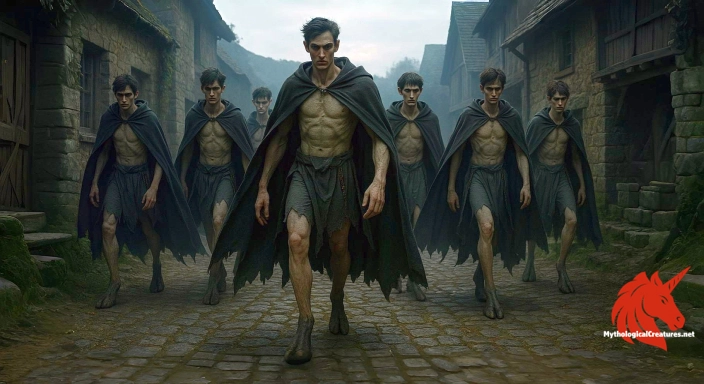
Dare to Meet the Sântoaderi....
Curated by the Mythological Creatures Team
Series editor: Mythological Creatures Directory
Primary desk: Hellenic & Ancient Mediterranean Desk
(rev. November 2025)