
Sântoaderi: The Sântoaderi are mysterious supernatural entities from Romanian folklore that manifest as a group of young men with unusually long feet and hooves, clad in capes.
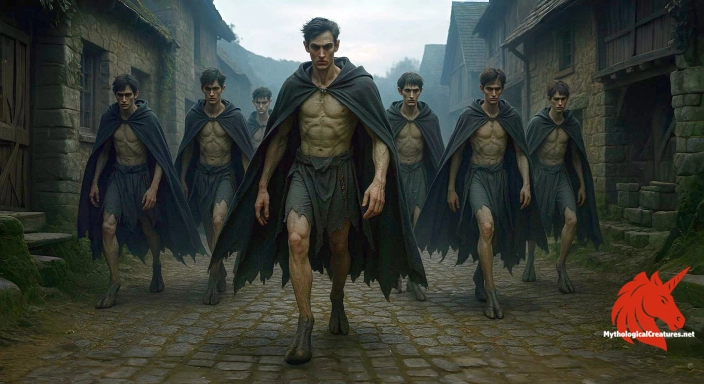
Sântoaderi
Sântoaderi - They serve as a cautionary emblem in Romanian folklore, embodying the unpredictable interplay between harm and unexpected benevolence.
the legend in five swipes.
the legend in five swipes.
How did the legend of the Sântoaderi begin?
The Sântoaderi emerge from the depths of Romanian folklore as enigmatic entities whose very presence blurs the line between the natural and supernatural. They are traditionally described as either seven or nine youthful figures endowed with long, almost otherworldly feet and hooves, lending them a strangely disconcerting appearance. Their mysterious arrival in villages is marked by the haunting sound of drums and the footsteps that seem to stir the night air. Legends of these figures weave together threads of ancient pagan rituals and later Christian influences, creating a rich tapestry of myth and mystery. Villagers historically took heed of their appearance, retreating indoors to avoid the misFortune the procession could bring. The lore surrounding the Sântoaderi reflects not only fear but also a fascination with the uncanny and inexplicable forces at work in the world. Their myth serves both as a cautionary tale and as a symbolic expression of life’s unpredictable nature. Embedded deeply in local tradition, the Sântoaderi continue to inspire curiosity and scholarly interest as guardians of an esoteric cultural heritage.
How was the story of the Sântoaderi recorded?
The primary accounts of the Sântoaderi are steeped in the oral traditions of rural Romania, handed down through generations with vivid detail. Local folklore and folk songs capture the eerie processions of these beings as they traverse the quiet hamlets under the cover of night. Multiple storytellers have recounted varied experiences with the Sântoaderi, some noting that their music and rhythmic drumming heralded calamity. While some narratives portray them as malevolent kidnappers capable of both healing and harming, others suggest a more ambiguous role that infuses both wonder and dread. Early ethnographic recordings, though sparse, highlight the influence of regional beliefs and the overlapping stories of other nocturnal figures such as the zîne. Historical texts and personal testimonies contribute layers to the mythology, expanding the traditional narrative with regional embellishments. Some versions of the legend underscore a reunion with the zîne after Easter, symbolising a seasonal transformation of arcane energies. In essence, the diverse story variants not only enhance the complexity of the Sântoaderi but also illustrate the fluidity and adaptability of folklore over time.
What did the Sântoaderi look like?
The Sântoaderi are vividly depicted as striking figures whose physical form merges human youth with haunting beast-like features. Descriptions often emphasise their unusually elongated feet that abruptly end in cloven hooves, a detail that magnifies their eerie allure. Their apparel, notably capes that billow in the nocturnal breeze, adds an air of sophistication to their otherwise uncanny presence. In various accounts, their appearance is as fluid as the myths that describe them, with subtle variations in the shape of their faces and the texture of their garments. The combination of human-like demeanour with animalistic physicality lends them an ambiguous identity that is both alluring and foreboding. Some tales suggest that their elongated limbs lend them an almost spectral quality, allowing them to glide silently through the darkened streets. The stark contrast between their youthful features and the harshness of their hooved feet reinforces their role as both protectors and heralds of misfortune. These detailed physical descriptions serve not only to define their appearance but also to symbolise the paradoxical nature of the myth itself.
How far did the story of the Sântoaderi spread?
Regional interpretations of the Sântoaderi reveal a fascinating spectrum of local traditions and variations across different parts of Romania. In some mountainous communities, the beings are portrayed with a touch more benevolence, their eerie drumming resounding as a prelude to both caution and unexpected fortune. In contrast, lowland villages often caution that encountering the procession is an omen of impending illness or misfortune, reflecting a deeper cultural anxiety about the unknown. The shift between depicting them in groups of seven or nine underscores local numerical symbolism and the fluid nature of oral traditions in these settings. Variations extend to their dress and demeanor, where some regions embellish their capes with colours or patterns that are significant within local ritualistic practices. Urban retellings sometimes reinterpret the myth, merging the ancient with modern urban legend to capture a contemporary audience’s imagination. This patchwork of regional adaptations demonstrates how the Sântoaderi have been incorporated into the daily life and seasonal rituals of many communities. Such discrepancies not only enrich the lore but also attest to the dynamic relationship between myth and the cultural identity of each locality.
Are the Sântoaderi unique, or found elsewhere?
The Sântoaderi hold a compelling place in the broader landscape of European myth, drawing clear parallels with the fairy beings found in Irish folklore. Their dual nature, capable of bestowing both blessings and curses, is reminiscent of many Celtic entities whose capricious temperaments have long enchanted storytellers. This blend of benevolence and danger allows the Sântoaderi to function as tricksters as well as harbingers of doom, a quality that resonates with comparable characters in neighbouring folklore traditions. Similar to the zîne, the notion of nocturnal processions reappears across cultural boundaries, reinforcing themes of mystery and the passage of time. The shared mythic motifs, such as the use of rhythmic music and dance, create a fascinating cross-cultural dialogue among various European traditions. Comparative narratives have noted that like the Irish fairies, these beings possess a liminal status that enables them to traverse both the mortal world and that of the divine. Their supernatural attributes are not confined to a single region but instead mirror a wider European fascination with ephemeral beings. Through this lens, the Sântoaderi can be seen as part of a rich tapestry of mythical creatures that illustrate common human responses to the mysteries of existence.
Sântoaderi: The Modern Legacy
Over the centuries, the story of the Sântoaderi has undergone a significant transformation to resonate with the evolving cultural landscape. Early depictions rooted in stark, rural caution have given way to more nuanced interpretations that explore the symbolic dimensions of their nocturnal processions. Contemporary artists and authors often reimagine these mysterious figures as embodiments of the liminal state between chaos and order. Modern retellings frequently incorporate elements of both cautionary wisdom and playful mischief, suggesting that there is an inherent duality in the forces they represent. With the advent of digital media and globalised folklore studies, the Sântoaderi have been cast in a role that bridges ancient superstition and modern narrative experimentation. Their presence in theatrical productions, literature, and visual art serves as a reminder of the enduring power of myth throughout the ages. As cultural critics and folklorists continue to reinterpret their story, the Sântoaderi stand as a symbol of the transformative potential of myth. Ultimately, their legacy is one of perpetual reinvention, capturing the imagination of audiences while grounding them in centuries of shared cultural heritage.
Interesting Fact
An intriguing aspect of the Sântoaderi is that their dual nature—capable of both harm and unexpected benevolence—challenges conventional villainous archetypes in folklore.
Mythological Treasures
Greek Myths: A field guide to the monsters of ancient Greece
Every monster here earned its place in legend, and each gets a full page of artwork and the story behind it.
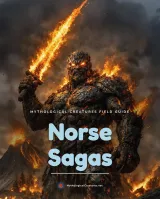
Norse Sagas: A field guide to the beasts of the Viking world
Drawn from the saga accounts themselves, with the powers, weaknesses and doom of each being set out.
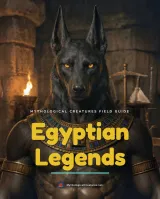
Egyptian Legends: A field guide to the gods and monsters of ancient Egypt
Guardians of the living and devourers of the dead, with the role each played in judgement.
the legend in five swipes.
Partner with Mythological Creatures
Bring your myth-based world into ours
From game settings to narrative worlds, we work with partners who treat myths with care. Share your project for a potential sponsor slot.
Partner with usQuick Creature Info
Features:
Our Mythic Legendary Rating:

Habitat:
Supernatural Powers:
Physical Attributes:
Abilities:
Behavior:
Lore:
Related Creatures, Tales or Lore
- IIrish Fairies
- zzîne
References
Discover Another Mythical Legend You May Not Have Heard Of?
Uncover the mysteries of ancient folklore and expand your knowledge of legendary beings from cultures around the world.
Dare to Meet the Ladon....
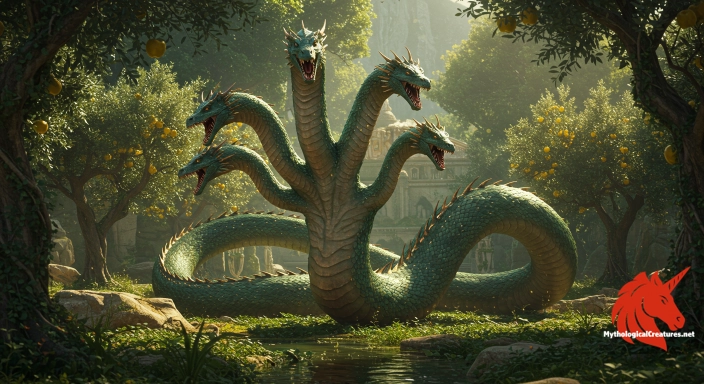
The Mythological Creatures Book Series
Yōkai, Greek, Norse, Egyptian & Chinese. Five illustrated field guides to the creatures the old stories either warned or told you about.
Curated by the Mythological Creatures Team
Series editor: Mythological Creatures Directory
Primary desk: Northern & European Folklore Desk
(rev. November 2025)