
Dragon King: The Dragon King, also known as the Dragon God, is a revered Chinese deity who commands the forces of water and weather.
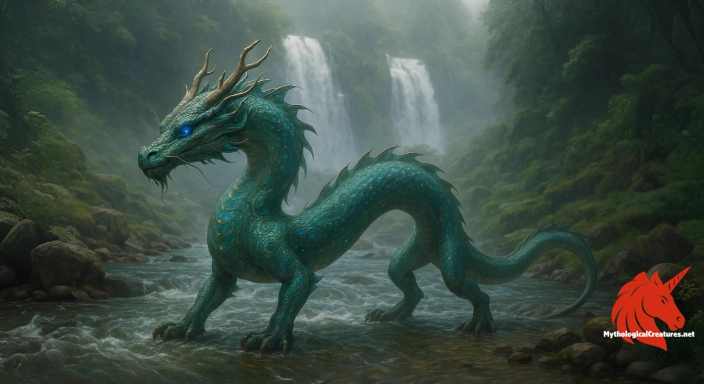
Dragon King
Dragon King - A central figure in Chinese cultural and religious practices, the Dragon King embodies ancient beliefs about water, weather, and divine guardianship.
Origins & First Encounters
The Dragon King stands as a monumental figure in Chinese mythology, embodying the formidable power of water and weather. His origins are interwoven with the ancient concept of the lóng, which symbolises both might and benevolence. Emerging in early Chinese mythological traditions, his narrative reflects the deep connections early societies had with natural phenomena. His first attestations can be traced back to ancient dynastic periods, where rain and water were seen as both gifts and trials from the heavens. This deity was revered not only as a dispenser of rain but also as a guardian of rivers, lakes, and seas, essential for agricultural prosperity. His myth evolved alongside the development of Chinese civilisation, merging cosmological wonder with natural necessity. Communities looked to his power for assurance during times of drought and floods, reflecting their reliance on the elemental forces of nature. The Dragon King’s presence underscores the cultural belief that nature itself is animated by divine forces. Over the centuries, his image has come to represent the dynamic duality of water as both life-sustaining and destructively unpredictable.
Source Texts & Tale Variants
Ancient texts, local traditions, and ritual recitations have all contributed to the rich tapestry of stories surrounding the Dragon King. Diverse literary sources recount his role in controlling the four seas, with varying details that highlight different aspects of his character. Some classical narratives, preserved through imperial records and literary anthologies, depict him as a supreme water deity with command over celestial weather. Local folklore and oral traditions further elaborate these accounts by introducing regional embellishments and dramatic episodes. In rural communities, his myth is interlaced with seasonal festivities and agricultural rites intended to appease his capricious moods. Daoist scriptures and historical chronicles alike offer variants that range from benevolence to the fierce expression of nature’s wrath. These texts often intersect with accounts of other tutelary deities, reflecting the interconnectivity of the divine in everyday life. As time progressed, theatrical performances and local operas took centre stage in relaying his legend to successive generations. The diverse sources not only testify to his revered stature but also illustrate the evolution of his character through reinterpretation and adaptation.
Form & Powers
Visual depictions of the Dragon King are as multifaceted as the myths that enshroud him. His form usually takes on the classic serpentine shape of the Chinese dragon, with a lengthy, undulating body and intricately scaled skin that shimmers with iridescent hues. His eyes are often described as both penetrating and wise, reflecting his command over the realms of water and sky. Artists have rendered him with prominent features such as elaborate horns, flowing whiskers, and a mane that suggests the movement of water and clouds. The Dragon King is sometimes portrayed with fin-like extensions along his back, symbolising his affinity with aquatic life. In many artistic traditions, his majestic presence is amplified by depictions of swirling mists and billowing waves that hint at his control over the weather. The grandeur of his form has been subject to regional variations, sometimes depicted more ferocious and other times more serene and nurturing. His mutable physical portrayal underscores a duality, balancing benevolence with the latent potential for natural calamity. This ever-changing imagery serves as a reflection of the elemental forces he personifies, merging the natural world with the divine.
Regional Faces
Regional interpretations of the Dragon King reveal a fascinating spectrum of cultural adaptations across China and its neighbouring territories. In southern provinces, he is often revered as a compassionate guardian whose gentle rains bring harmony to parched lands. Northern traditions, by contrast, sometimes accentuate his tempestuous nature, depicting him as a powerful force capable of unleashing destructive storms. Coastal communities celebrate his presence through elaborate dragon boat festivals and water rituals that honour his dominion over the seas. In Taiwan and Hong Kong, local folklore incorporates distinctive attributes of the deity, blending indigenous beliefs with classical Chinese motifs. Variations in his depiction also emerge in diverse religious practices, where he sometimes functions alongside earth deities such as Tudigong and Houtu. These regional narratives stress different aspects of his character, from his nurturing influence on agriculture to his role as a stern weather arbiter. The regional embellishments in his story often mirror the unique environmental challenges and cultural priorities of each area. Such variations not only highlight local devotion but also illustrate a broader, pan-regional acknowledgement of his pivotal role in sustaining life and order.
Cultural Parallels
The Dragon King shares numerous parallels with water deities and dragon figures from other mythological traditions. Similar to the Japanese Ryujin, who governs the ocean currents and marine life, the Dragon King bridges the gap between nature and the divine. Elements of his character can also be compared to the Southeast Asian Nāga, both incarnating the duality of creation and destruction inherent in water. His domain over weather and water finds echoes in the maritime myths of ancient Greece and the Norse legends of powerful sea serpents. Such cross-cultural comparisons highlight a universal human fascination with the forces that govern water and rain. The interplay of benevolence and ire in his myth resonates with similar dual characteristics found in global flood myths. In the realm of iconography, his serpentine form serves as a common motif that traverses continents and eras. The recurring presence of dragon-like beings in diverse cultures reinforces the notion that water deities often embody the essential balance between order and chaos. Comparative analysis reveals that while local nuances differ, the symbolic role of water in sustaining life is a theme that unites these mythical narratives. This broad interconnection underscores the shared human experience in grappling with the natural world and its mysteries.
Legacy & Modern Evolution
The historical evolution of the Dragon King reflects a journey from an elemental water spirit to an emblematic figure in modern culture. Early depictions intertwined his persona with the practical needs of agrarian societies, where his favour could mean the difference between famine and plenty. As dynasties rose and fell, his image was continually reimagined in literature, art, and ritual practices, evolving to encapsulate ever-changing social and environmental concerns. In the medieval period, his myth served as a medium for expressing the unpredictability of nature, a theme that resonated deeply with communities facing seasonal upheavals. Today, his legacy persists not only in traditional ceremonies and temple worship but also in contemporary media such as film, television, and literature. Modern reinterpretations present him with a blend of classical mystique and imaginative fantasy, appealing to a global audience. The Dragon King now emerges as a symbol of environmental stewardship and cultural continuity, bridging ancient beliefs with modern sensibilities. Festivals, dragon boat races, and artistic exhibitions frequently invoke his spirit as a reminder of humanity’s enduring bond with nature. His evolution from myth to modern icon illustrates a timeless narrative of adaptation and reverence, ensuring that his ancient power continues to inspire and educate in a changing world.
Interesting Fact
Unlike the fire-breathing dragons of Western lore, Chinese dragons such as the Dragon King are celebrated as benevolent, wise guardians whose control over water and weather reflects the ancient cultural reverence for nature's life-giving forces.
For serious mythcraft
Your project belongs among the legends
If your work deepens how people understand, play with, or teach mythology, a sponsor placement here keeps it in front of the right readers all year.
Submit a sponsorship enquiryQuick Creature Info
Features:
Associations:
Our Mythic Legendary Rating:

Also Sometimes Known As:
Habitat:
Supernatural Powers:
Physical Attributes:
Abilities:
Behavior:
Lore:
Related Creatures, Tales or Lore
- RRyujin
- NNaga
- AAzure Dragon
References
Discover Another Mythical Legend You May Not Have Heard Of?
Uncover the mysteries of ancient folklore and expand your knowledge of legendary beings from cultures around the world.
Dare to Meet the Mintuci....
Curated by the Mythological Creatures Team
Series editor: Mythological Creatures Directory
Primary desk: Asian & Pacific Myth Cycles Desk
(rev. November 2025)