
Dragon of Mordiford: The Dragon of Mordiford is a legendary, fire-breathing dragon said to dwell near the confluence of the River Lugg and the River Wye outside Mordiford.
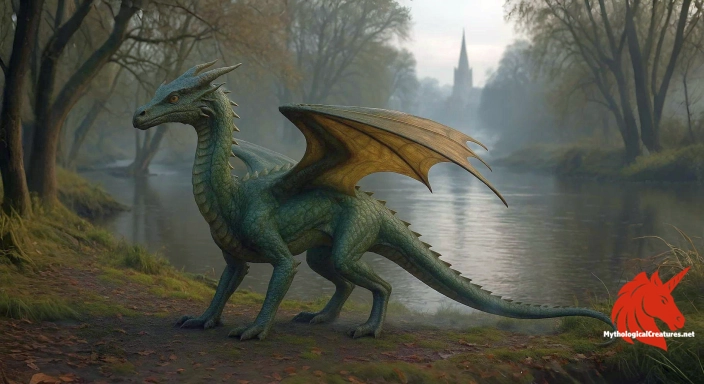
Dragon of Mordiford
Dragon of Mordiford - The Dragon of Mordiford embodies the mystique and latent dangers of the British countryside, serving as a potent emblem within local folklore.
the legend in five swipes.
the legend in five swipes.
How did the legend of the Dragon of Mordiford begin?
The Dragon of Mordiford has been woven deeply into the fabric of Herefordshire’s ancient mystique, emerging as a legendary guardian of the natural landscape. Its origins are enshrouded in the mists of medieval folklore, where oral traditions first gave life to a creature of both terror and awe. Early tales, passed down by villagers, hint at a being that bridged the realms of myth and reality at a time when the supernatural was part of everyday life. The dragon’s fabled lair at the confluence of the River Lugg and the River Wye underscored the belief in nature’s hidden forces and mystical energies. Over time, this creature became the emblem of a dual nature, symbolising both destruction and renewal in a land where the wild and the wondrous intermingle. Local memories recount how its presence was believed to herald both impending danger and transformative change. The narrative grew richer with each retelling, reflecting the shifting cultural dynamics and the inherent duality of nature. Communities have clung to the legend as both a cautionary tale and a celebration of the mysterious power inherent in the landscape. The enduring myth of the Dragon of Mordiford continues to evoke fascination, embodying the eternal dance between human endeavour and the untamed forces of the natural world.
The Documented Accounts of the Dragon of Mordiford
Fragmentary historical manuscripts and lively oral narratives form the core of the Dragon of Mordiford’s documented history. Sparse mentions in medieval parish records suggest that the beast was not a mere product of imagination, but rather a figure captured in the collective memory of the local populace. Multiple variants of the tale have surfaced over the centuries, each adding layers of complexity to the creature’s character. In some accounts, the dragon is cast as a wrathful spirit invoked as nature’s retribution, while in others it appears as a mystical guardian imbued with the power to protect the sanctity of its watery domain. Folkloric ballads and local plays also echo the legend, transforming the dragon into a cultural symbol with several nuanced interpretations. As storytellers passed down the myth from one generation to the next, each community imbued it with distinct local elements relevant to their environment. The narrative frequently incorporates the dramatic setting where the River Lugg meets the River Wye, enriching the story with a sense of place. Diverse renditions have allowed the creature to serve various roles, from a scourge of the land to a benevolent keeper of ancient secrets. In the end, the numerous variants highlight the fluid nature of folklore, continually shaped by the experiences and imaginations of its tellers.
Dragon of Mordiford: Form, Powers and Weaknesses
The Dragon of Mordiford is depicted with an imposing and almost otherworldly presence that captivates those who hear its legend. Its elongated body is cloaked in iridescent scales that shift in colour like the turbulent skies during a storm. The creature is reputed to be colossal, with proportions that suggest both immense strength and graceful menace. Winged with broad, leathery membranes, it is said that every powerful beat of its wings stirs the mists and draughts around it. The eyes of the dragon are often described as glowing orbs of inner fire, reflecting an ancient and mystic intelligence. Its snout, elongated and formidable, is lined with rows of sharp, gleaming teeth, adding to its menacing visage. A thick, muscular tail, ending in searing, jagged tips, sweeps through the air with a presence that both warns and mesmerises onlookers. In several descriptions, multiple curved horns crown its head, lending it an almost regal aspect despite its fearsome demeanor. Razor-like claws complete its anatomy, each capable of rending the earth and stirring the deep memories of the land. Despite variations in detail, the overarching portrayal is that of a creature that is as mutable as legend itself, shifting disciplines between the roles of destroyer and protector.
How did location shape the story of the Dragon of Mordiford?
Within Herefordshire, the myth of the Dragon of Mordiford is inextricably linked to the local landscape and the mystique of its river confluence. Regional renditions often portray the dragon as a phenomenon emerging directly from the interplay between the earth and water. Local storytellers embed the creature in the natural rhythms of the land, sometimes describing it as cloaked in a shimmering mist that appears at the meeting of the River Lugg and the River Wye. In neighbouring villages, subtle variations are evident, with some communities attributing healing qualities or even prophetic warnings to its appearances. These variations reflect the strong influence of local geographical features and communal experiences that shape the myth. In some parts of the region, the dragon is intermingled with stories of elemental water spirits and earthbound protectors, highlighting a more benevolent facet of its nature. Others depict it as a stark reminder of nature’s unpredictable potency and its capacity for both destruction and rebirth. The regional adaptations reveal an evolving legend that responds intimately to local environmental cues and cultural sentiments. Overall, the creature’s image morphs across the landscape, making it not only a product of folklore but also an enduring local emblem that mirrors the character of southwestern England.
Is the Dragon of Mordiford unique, or found elsewhere?
The legend of the Dragon of Mordiford invites intriguing comparisons with dragon myths across both Western and Eastern cultures. Echoing the dualistic nature found in many European dragon legends, this creature balances the roles of a destructive force and a guardian of natural order. Similar to the wyrms of northern folklore, its depiction is one of primordial power and mystery, imbued with both reverence and dread. Unlike the benevolent dragons of Eastern tradition, which often symbolise prosperity and wisdom, the Mordiford dragon occupies a more ambiguous moral territory. Yet, like many mythic dragons, it is associated with guarding sacred sites and treasures, reinforcing the universal motif of vigilance over nature’s mysteries. Its narrative resonates with Celtic myths where serpentine beasts often symbolise the earth’s hidden energies and untapped forces. The multifaceted portrayal aligns it with northern European tales that imbue dragons with the power to both bestow and withhold blessings. Such comparisons reveal a shared human fascination with creatures that embody the forces of nature, bridging disparate cultures through common symbolic language. The synthesis of these motifs placing the Dragon of Mordiford within a broader tradition underscores its role as a mythic vessel for both cultural fears and aspirations. In doing so, it stands as a testament to the universality of the dragon archetype, even as it retains uniquely local flavours.
Dragon of Mordiford: How the Legend Lives On
The enduring legacy of the Dragon of Mordiford is a vibrant tapestry that spans centuries of myth and community identity. Over the ages, its image has evolved from a fearsome beast of ancient lore to a celebrated symbol in local culture. Modern reinterpretations in literature, art, and local festivities have softened some of its more terrifying aspects, while still honouring its formidable heritage. Contemporary depictions often merge historical mystery with modern artistic creativity, resulting in diverse portrayals that range from whimsical to ominous. The legend now serves as a cultural touchstone that brings together communities in the celebration of shared myth and regional pride. Local festivals and public art installations frequently draw upon its storied past, reimagining the dragon as both a protector and a reminder of nature’s timeless power. As scholars and tourists alike delve into this enigmatic legend, the story reveals new dimensions with each retelling. The transformational journey of the creature from myth to modern cultural icon mirrors the changing attitudes towards folklore in a rapidly evolving world. Today, the Dragon of Mordiford stands not only as a relic of medieval superstition but also as an enduring emblem of the region’s rich and diverse heritage.
Interesting Fact
A striking aspect of this legend is the dragon’s proximity to the confluence of two rivers, a geographical feature that many believe imbues it with dual elemental influences, blending the powers of fire and water in its lore.
Mythological Treasures
Norse Sagas: A field guide to the beasts of the Viking world
Drawn from the saga accounts themselves, with the powers, weaknesses and doom of each being set out.
Greek Myths: A field guide to the monsters of ancient Greece
Every monster here earned its place in legend, and each gets a full page of artwork and the story behind it.
Egyptian Legends: A field guide to the gods and monsters of ancient Egypt
Guardians of the living and devourers of the dead, with the role each played in judgement.
the legend in five swipes.
Curated sponsor space
One subtle banner. Thousands of myth lovers.
We offer a small number of curated sponsor spots for relevant books, courses, games, and art. No clutter, just well-matched partners.
Partner with usQuick Creature Info
Origin:
Associations:
Our Mythic Legendary Rating:

Habitat:
Supernatural Powers:
Physical Attributes:
Abilities:
Behavior:
Lore:
Related Creatures, Tales or Lore
- WWawel Dragon
- SSt. George's Dragon
- WWelsh Dragon
References
Discover Another Mythical Legend You May Not Have Heard Of?
Uncover the mysteries of ancient folklore and expand your knowledge of legendary beings from cultures around the world.
Dare to Meet the Kasa-obake....
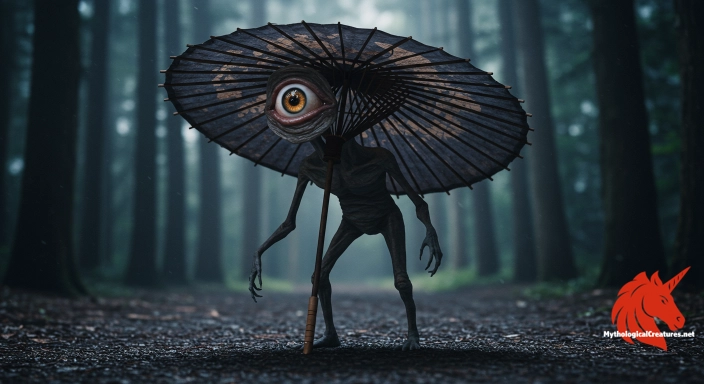
The Mythological Creatures Book Series
Yokai, Greek, Norse, Egyptian & Chinese. Five illustrated field guides to the creatures the old stories either warned or told you about.
Curated by the Mythological Creatures Team
Series editor: Mythological Creatures Directory
Primary desk: Northern & European Folklore Desk
(rev. November 2025)