
Kasa-obake: Kasa-obake is a traditional Japanese yōkai, often depicted as an animated, one-eyed umbrella with a singular leg and a playful demeanour.
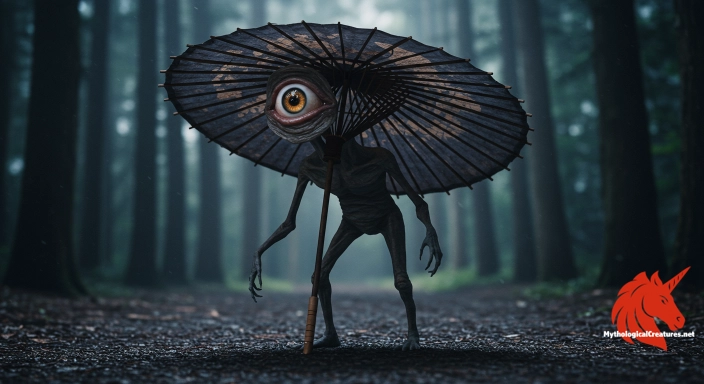
Kasa-obake
Kasa-obake - Represents the idea that even ordinary objects can possess life and spirit when neglected, embodying both humor and the mysterious nature of the supernatural.
the legend in five swipes.
the legend in five swipes.
Where in the world does the Kasa-obake come from?
Kasa-obake are enigmatic figures that inhabit the rich tapestry of Japanese folklore, emerging as animated umbrellas endowed with a mischievous spirit. Born from the cultural belief in tsukumogami, these creatures represent the idea that once cherished objects can develop personalities after years of service. They trace their origins to the Edo period when everyday items were believed to become animated after a century of use. The lore surrounding them reflects a deep reverence for both the utilitarian beauty and the ephemeral nature of common household objects. Their very existence symbolises a playful confrontation with impermanence, as a forgotten umbrella transforms into a spirited entity. Local storytelling traditions embraced the kasa-obake, embedding them into rural lore and urban legends alike. The narrative not only speaks to the supernatural but also to the human tendency to find wonder in the mundane. As such, kasa-obake encapsulate a uniquely Japanese perspective on the fusion of the everyday with the supernatural, leaving an enduring mark on the cultural imagination. Their legacy is a testament to the creative reinterpretation of ordinary artefacts, achieving immortality through myth and art. In a world where functionality meets folklore, they continue to enchant those who seek mystery in the most unexpected places.
Kasa-obake: From Oral Tale to Written Record
The accounts of kasa-obake are preserved in a diverse range of ancient texts, woodblock prints, and oral traditions that have been passed down through generations. Early illustrations from the Edo period prominently featured these umbrella spirits, capturing their uncanny features in detailed sketches. Folktales that circulated in rural communities and bustling city quarters alike portrayed the kasa-obake as both playful tricksters and cautionary figures. Variants of the story have been documented in assorted manuscripts, where the focus sometimes shifts to their single, unblinking eye or their unexpected movements. In many traditional collections, the creature’s origins are tied to the idea that forgotten, aged objects eventually acquire a life of their own. This multiplicity in narrative has led to several local adaptations and subtle differences in depiction, each adding layers to the myth. Folklorists and enthusiasts in the modern era have revisited these sources, reinforcing the creature’s enduring place in Japanese cultural history. The convergence of artistic depictions with narrative fragments paints a picture of a myth that is as varied as it is captivating. Each variant, whether emphasising humour or mystery, contributes to a broader understanding of how everyday items can be reimagined as bearers of hidden vitality.
Kasa-obake: Appearance and Abilities
The physical form of the kasa-obake is a study in the transformation of the mundane into the extraordinary. Traditionally, it is depicted as an umbrella with a vibrant, aged canopy that shows signs of wear through tattered edges and fading patterns. A singular, often exaggerated eye is a hallmark of its visage, lending an air of whimsical scrutiny that makes it both amusing and eerie. Artistic portrayals sometimes enhance this feature by adding a long, protruding tongue and spindly, almost comical legs that suggest a lively gait. The once-practical wooden handle is often reimagined as an additional appendage, contributing to the creature’s anthropomorphic charm. These visual elements are rendered with careful attention to detail, highlighting the intricate craftsmanship of the original umbrella. Subtle textures and colour variations in the fabric illustrate the passage of time, echoing the object’s transition from everyday use to animated life. The overall aesthetic merges simplicity with supernatural allure, offering a striking visual metaphor for rebirth and transformation. Though variations exist—ranging from modest, nearly inanimate forms to more elaborately personified figures—every depiction celebrates the unexpected vitality inherent in everyday objects.
Which regions tell stories of the Kasa-obake?
While the core concept of the kasa-obake remains intact, regional interpretations of the creature introduce delightful nuances that reflect local traditions. In urban centres like Edo, the umbrella ghost is often portrayed with an added layer of humour, its antics becoming part of the local revelry during festivals and seasonal celebrations. Conversely, in more rural or northern areas, the creature sometimes takes on a slightly more foreboding presence, underscoring themes of unpredictability and the transient nature of life. These regional tales frequently incorporate local climate and customs, imbuing the kasa-obake with characteristics that resonate with the community’s own experiences with weather and change. In some districts, it is affectionately known by alternative names such as karakasa kozō, which emphasise its playful spirit and youthful mischief. Artistic renditions across regions might vary in colour, shape, or size, reflecting the diversity in regional craftsmanship and aesthetic preferences. The interplay of local dialects and idiomatic expressions further enriches the legends, allowing the creature to adapt stories to its surroundings. As communities evolved, so too did the nuances of the kasa-obake myth, ensuring that it continued to mirror the values and concerns of each locality. Even as modern reinterpretations gain popularity, the regional diversity of its depiction remains a key aspect of its enduring charm.
How does the Kasa-obake compare to figures in other traditions?
The story of the kasa-obake finds intriguing parallels in a wide array of cultural mythologies where everyday objects gain unexpected vitality. Similar to other Japanese tsukumogami such as the bakeneko, the kasa-obake transforms a once mundane item into an animated spectacle, resonating with the universal theme of inanimate objects acquiring a spirit of their own. In Chinese folklore, objects like teapots or brushes also occasionally appear animated in fanciful tales, highlighting a shared cultural fascination with the supernatural. European legends, too, recount instances of ordinary items taking on eerie qualities, although these tend to lean towards a more sinister tone. What sets the kasa-obake apart is its playful and humorous character, which mirrors the benign mischief found in many Eastern narratives. Comparative analysis reveals that while the specifics may differ—ranging from singular eyes to varying appendages—the underlying motif of transformation in both Eastern and Western traditions remains strikingly similar. Cross-cultural comparisons underscore how societies utilise everyday objects as vessels for deeper symbolic meanings, such as the passage of time and the inevitability of decay. In this respect, the kasa-obake occupies a unique niche by celebrating the charm and unpredictability inherent in objects that have outlived their practical purpose. Ultimately, this comparative perspective enriches our understanding of how different cultures engage with the idea of reanimation, blending humour, caution, and reverence in the process.
What does the Kasa-obake mean to people today?
Throughout history, the depiction of the kasa-obake has evolved from an obscure local myth to a celebrated symbol of Japanese folklore. Early artistic impressions from the Edo period laid a foundation for a creature that symbolizes both the whimsical and the transient, an idea that resonated with a society in flux. Over time, modern media such as manga, anime, and even video games have embraced the kasa-obake, reimagining it with a blend of humour and nostalgia. Contemporary reinterpretations often highlight its role as a benign trickster, a playful reminder of the impermanence of material objects. This evolution reflects a broader cultural shift, where traditional folk motifs are continually adapted to engage new audiences without losing their original charm. The creature’s enduring presence in popular culture is evident in festivals, exhibitions, and an array of merchandise that pays homage to its quirky origins. Artists and storytellers have found renewed inspiration in the kasa-obake, using its image to explore themes of obsolescence, creativity, and the magic hidden in the mundane. Its journey from a feared ghostly entity to a cherished cultural icon underscores the dynamic interplay between tradition and modern reinterpretation. As urban legends and ancient tales converge in the digital age, the kasa-obake continues to enchant, serving as a bridge between historical mystique and contemporary creativity. Ultimately, its legacy is one of transformation, celebration, and the enduring allure of finding wonder in everyday life.
Interesting Fact
Despite its eerie appearance, the kasa-obake often evokes amusement and nostalgia, and remains one of the most endearing figures in Japanese yōkai lore.
Mythological Treasures
Japanese Yōkai: A field guide to the spirits and demons of Japanese folklore
Fifteen spirits, with the signs to watch for and what the old tales say to do if you meet one.
Greek Myths: A field guide to the monsters of ancient Greece
Every monster here earned its place in legend, and each gets a full page of artwork and the story behind it.
Norse Sagas: A field guide to the beasts of the Viking world
Drawn from the saga accounts themselves, with the powers, weaknesses and doom of each being set out.
the legend in five swipes.
For serious mythcraft
Your project belongs among the legends
If your work deepens how people understand, play with, or teach mythology, a sponsor placement here keeps it in front of the right readers all year.
Submit a sponsorship enquiryQuick Creature Info
Features:
Associations:
Our Mythic Legendary Rating:

Also Sometimes Known As:
Habitat:
Supernatural Powers:
Physical Attributes:
Abilities:
Behavior:
Weaknesses:
Lore:
Related Creatures, Tales or Lore
- BBakeneko
- CChochin-obake
- HHitotsume-kozō
References
Discover Another Mythical Legend You May Not Have Heard Of?
Uncover the mysteries of ancient folklore and expand your knowledge of legendary beings from cultures around the world.
Dare to Meet the Alloces....

The Mythological Creatures Book Series
Yōkai, Greek, Norse, Egyptian & Chinese. Five illustrated field guides to the creatures the old stories either warned or told you about.
Curated by the Mythological Creatures Team
Series editor: Mythological Creatures Directory
Primary desk: Asian & Pacific Myth Cycles Desk
(rev. November 2025)