
Eirene: Eirene, also known as Peace, is the Greek goddess and personification of peace.
-85afe8d4-ff94-45ec-b93a-af31d42f594a_small.webp "Eirene - Eirene embodies peace and order, symbolizing the harmonious aspect of the cosmos in Greek mythology.")
Eirene
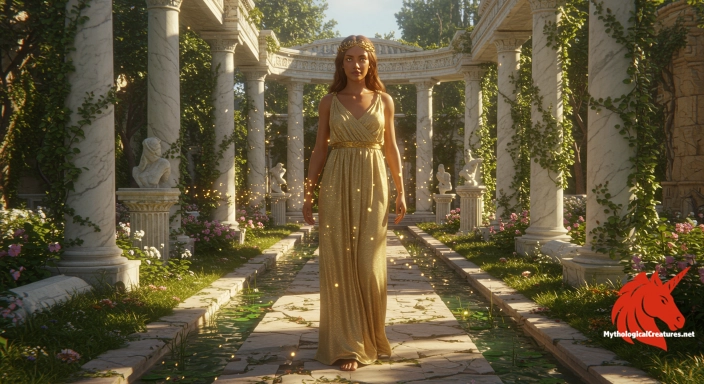
Eirene - Eirene embodies peace and order, symbolizing the harmonious aspect of the cosmos in Greek mythology.
Origins & First Encounters
Eirene emerges as a luminous embodiment of tranquility and order, a figure whose origins are deeply rooted in the rich tapestry of ancient Greek mythology. Born as one of the Horae and celebrated as the goddess of Peace, she embodies the sacred ideal of harmony that once governed both mortal and divine affairs. Her very name, meaning ‘Peace’, resonates as a timeless promise of calm and stability amid a turbulent world. Raised in the divine household of Zeus and Themis, Eirene’s existence symbolised the natural balance between authority and justice. Early mythic traditions portray her as an essential pillar whose presence helps to reconcile the opposites of chaos and order. She features prominently in the cultural celebrations of a society that revered the notion of peaceful coexistence as both a divine and civic necessity. The artistic portrayals of her, often accompanied by symbols such as the cornucopia and sceptre, accentuate her role as a nurturer of both social and material prosperity. In classical art and literature, Eirene’s radiant beauty and serene countenance continue to evoke the eternal human aspiration for peace. Her enduring influence is evident in the way she has inspired diverse cultural interpretations, assuring her place in the pantheon of deities who embrace the dreams of humanity. Through the ages, her legacy as a symbol of hope and unity has provided a counterpoint to the strife inherent in both mortal and divine domains.
Source Texts & Tale Variants
Ancient literary fragments and visual art have long preserved the legacy of Eirene, offering a multifaceted glimpse into her divine narrative. Early Greek texts, including poetic descriptions found in the broader corpus of mythological literature, position her alongside other personifications of natural order and civic virtue. Classical vase paintings and sculptural reliefs depict her in dynamic compositions that capture the gentle power of peace. Diverse sources from the Hellenistic period add layers of nuance to her story, highlighting variations in her portrayal across different regions. In certain accounts, Eirene appears as not just a deity but an allegorical bridge between the tangible world and the realm of higher ideals. The integration of her image in civic festivals and dedications underscores the importance ancient communities placed on the maintenance of social harmony. Roman sources, through the transformation of Eirene into the goddess Pax, further enrich the narrative by adapting her symbolism to an imperial context. These texts and artistic representations, though sometimes fragmentary, reveal a consistent thematic emphasis on balance and benevolence. The multiplicity of story variants enriches our understanding of how ancient peoples harnessed myth to express the universal desire for peace.
Form & Powers
Eirene is traditionally depicted as a strikingly beautiful young woman, whose graceful features evoke a sense of serene majesty. Her visage is often rendered with soft, harmonious lines and a luminous complexion that seems to radiate inner calm. Flowing hair, portrayed in gentle waves, frames her serene countenance and underscores her timeless elegance. In many classical portrayals, she is adorned with a flowing robe that is both modest and refined, echoing the aesthetics of ancient Greek art. The goddess is frequently shown holding a cornucopia, a sceptre, and sometimes a torch or an ornamental rhyton, each symbolically representing the abundance and authority of peace. Her posture is imbued with an effortless grace, suggesting both youthful vigour and a contemplative tranquillity. Variations in artistic traditions sometimes accentuate her form with delicate embellishments or subtle hints of gold and soft blues, further enhancing her ethereal quality. The careful balance of strength and gentleness in her physical appearance mirrors the dual nature of her influence as a guardian of both moral and civic order. This imagery, passed down through generations of artistic expression, continues to capture the ideal of calm amidst a dynamic and often unpredictable world.
Regional Faces
The representation of Eirene exhibits fascinating regional nuances that mirror the diverse cultural landscapes of the ancient Mediterranean. In Athens and other major Greek city-states, she was venerated as a patroness of civility, with local festivals celebrating her as a bringer of social harmony during times of recovery. In regions such as Ionia, her iconography absorbed Near Eastern influences, resulting in a synthesis that interwove Greek aesthetic principles with local artistic traditions. Certain communities refined her image by infusing it with additional local symbols of prosperity and order, making her a composite emblem of both divine grace and civic stability. Roman adaptations of her myth, under the name Pax, emphasised the power of peace as a tool for consolidating imperial authority and cultural unity. In late antiquity, Byzantine art reinterpreted her attributes to align with emerging Christian motifs, thereby reinforcing the universal appeal of peace and renewal. Localised temple dedications and coinage served as tangible reminders of her protective influence over city life and public order. Even in smaller rural cults, subtle variations in colour and form testified to the deep regional engagements with her myth. These diverse adaptations underscore how the concept of peace was interwoven with local identity, reflecting each culture’s aspiration for harmony and balance.
Cultural Parallels
Eirene occupies a distinctive place within the broader constellation of deities who stand for order and harmony across ancient mythologies. In the Roman tradition, her counterpart Pax mirrors her attributes so closely that the two are often considered interchangeable, yet each carries subtle differences that reflect their respective cultural backdrops. This careful alignment of symbolism across Greek and Roman traditions highlights a shared human preoccupation with the elusive quest for peace. In comparative mythology, one can observe parallels with other personifications of order, where deities are invoked to reconcile the inherent tensions between chaos and structure. Similar allegorical figures appear in medieval and Renaissance art, where the embodiment of peace consistently interweaves with the visual language of prosperity and justice. These cross-cultural connections emphasise that the ideal of peace transcends particular epochs and societies, resonating as a universal aspiration. The evolution of her iconography, from delicate features and symbolic regalia to broader allegorical representations, reveals a continuity that speaks to the collective human yearning for balance. Artistic treatises across cultures often draw on Eirene’s serene imagery to evoke a sense of calm and stability, reinforcing the enduring power of her myth. Such interwoven narratives serve to underscore the shared values that bind diverse traditions together in the celebration of peace and order. Ultimately, the comparative study of Eirene and her counterparts provides a window into the dynamic interplay between myth, aesthetics, and the political ideals of various cultures.
Legacy & Modern Evolution
The legacy of Eirene has traversed centuries, evolving from a concrete embodiment of divine peace in ancient mythology to a more abstract and symbolic figure in modern cultural consciousness. Classical representations of the goddess, steeped in the traditions of Greek art and literature, laid the foundational imagery that continues to inform later artistic renditions. During the Renaissance, the revival of classical themes saw Eirene’s attributes reincarnated as allegories of civic harmony and intellectual balance. Her visage, often depicted with the familiar regalia of a cornucopia and sceptre, influenced not only classical sculpture and painting but also the architectural embellishments of public spaces. In modern times, the spirit of Eirene endures in the iconography of peace movements and commemorative monuments, where her image is evoked to inspire hope and resolve amid conflict. Contemporary reinterpretations frequently cast her symbolism into a broader narrative about social justice and the continual pursuit of tranquility. Public art installations and coin designs have embraced her traditional motifs, updating them with modern aesthetics to resonate with today's global audience. Her evolution reflects the shifting paradigms of cultural expression, where ancient icons are continually reimagined to speak to current societal values. The seamless integration of Eirene’s classical ideals with modern artistic forms serves as a reminder of humanity’s persistent quest for a balanced and harmonious existence. Thus, her enduring legacy testifies to the timeless appeal of peace as both a divine ideal and a social imperative.
Interesting Fact
A notable observation is that Eirene's symbolism transcends mere aesthetics, serving as a timeless reminder of the importance of peace in both divine and mortal realms.
For serious myth projects
Feature your work alongside the legends
From academic works to story-rich games, we highlight projects that respect world mythologies. Talk to us about a measured, long-term placement.
Start a conversationQuick Creature Info
Origin:
Associations:
Our Mythic Legendary Rating:

Also Sometimes Known As:
Habitat:
Supernatural Powers:
Physical Attributes:
Abilities:
Behavior:
Lore:
Related Creatures, Tales or Lore
- PPax
- DDike
- EEunomia
References
Discover Another Mythical Legend You May Not Have Heard Of?
Uncover the mysteries of ancient folklore and expand your knowledge of legendary beings from cultures around the world.
Dare to Meet the Euthenia....
Curated by the Mythological Creatures Team
Series editor: Mythological Creatures Directory
Primary desk: Hellenic & Ancient Mediterranean Desk
(rev. November 2025)