
Euthenia: Euthenia is the Greek goddess and personification of prosperity, abundance, and gain.
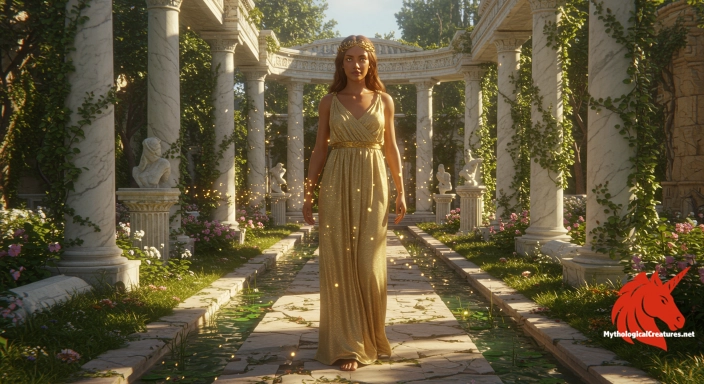
Euthenia
Euthenia - Euthenia symbolises positive wealth and fortune, providing a divine counterbalance to poverty and underscoring the importance of abundance in human society.
Origins & First Encounters
Euthenia stands as a luminous embodiment of prosperity, abundance, and gain in ancient Greek myth, her very essence reflecting the generous bounty of both nature and divinity. Emerging from a rich tapestry of mythological tradition, she is revered not only as a symbol of material wealth but also as a guardian of communal flourishing. Her origins, intricately interwoven with tales of divine craftsmanship and radiant beauty, are echoed in the lineage of Hephaestus and Aglaia. In the cultural milieu of her time, Euthenia's presence provided a comforting counterbalance to the hardships of poverty, her contrasting figure Penia underscoring the delicate equilibrium between opulence and want. She is celebrated alongside her sisters, Eucleia, Eupheme, and Philophrosyne, whose complementary virtues crafted a nuanced understanding of societal well-being. A member of the younger Charites, her role was one of both inspirational grace and pragmatic benevolence. Her narrative, though fragmentary in ancient texts, resonated deeply with communities seeking the favour of the divine in their everyday pursuits. Over time, the enduring appeal of her persona has affirmed the universal human aspiration for a life enriched with both prosperity and virtue. Her early attestation in Orphic fragments and subsequent mythic reinterpretations mark her as a timeless icon of abundance. Ultimately, Euthenia’s legacy continues to inspire reflections on the fruitful convergence of material gain and spiritual fulfilment.
Source Texts & Tale Variants
The primary textual evidence for Euthenia emerges from the scattered Orphic fragments where her divine parentage and symbolic role are briefly illuminated. These ancient sources offer tantalising glimpses into her origins as the daughter of Hephaestus and Aglaia, whose union hints at a blend of craft and beauty that underpins her character. Although the surviving texts are sparse, they have laid the groundwork for a rich interpretative tradition about her influence and importance. Multiple story variants across ancient Greece hint at a benevolent force that blessed communities with plenty, often contrasting her luminous attributes with the stark realities of poverty. In local cults and ritualistic ceremonies, Euthenia is sometimes mentioned in the context of seasonal celebrations and communal feasts, further enriching her mythic profile. Vase paintings and architectural reliefs occasionally capture her ethereal image, complementing the literary fragments with visual narratives of abundance. Alternate versions in regional accounts introduce her as an indispensable aspect of civic prosperity, merging myth with the realities of everyday life. Traditions passed down through oral storytelling also suggest she was invoked during festivals dedicated to harvest and wealth. Over centuries, the evolving retellings and cross-references with other deities have deepened our understanding of her role, making the available sources a mosaic of cultural memory.
Form & Powers
In artistic depictions, Euthenia is often portrayed as a figure of serene beauty and graceful abundance, her features carefully crafted to evoke both gentleness and strength. She is usually envisioned as a young woman with soft, luminous skin that seems to capture the radiant glow of a bountiful harvest. Flowing garments in warm, earthy tones often drape her form, symbolising the rich colours of autumn and fields ripe with produce. Her hair, shown cascading in elegant curls, is occasionally adorned with a wreath of grain or blossoms that further emphasise her connection to nature’s generosity. Iconography associated with her might include a cornucopia overflowing with fruits and grain, a potent emblem of prosperity and plenty. Classical sculpture and vase paintings tend to highlight her balanced posture and dignified expression, attributes that speak to the harmonious nature of abundance. The deliberate use of light and shadow in these artworks captures an almost ethereal quality, suggesting that her presence transcends mortal constraints. Some depictions integrate subtle regional characteristics, with decorative motifs that echo local agricultural practices and natural cycles. Thus, through a variety of artistic interpretations, Euthenia is rendered as both a divine ideal and an accessible symbol of well-being.
Regional Faces
The depiction and worship of Euthenia varied notably across different regions of the ancient Greek world, each community adapting her characteristics to local traditions and economic realities. In coastal regions, her image sometimes merged with maritime motifs, symbolising not only terrestrial abundance but also the wealth brought by the sea. In parts of Ionia and other Ionian Islands, local rituals incorporated elements of trade and seafaring prosperity, portraying her as a benefactor of both land and water. Meanwhile, inland communities, particularly those reliant on agriculture, emphasised her role as the nurturer of crops and sustainable livelihoods. Regional festivals often celebrated her in tandem with the cycle of the harvest, using her image to mark seasonal transitions and communal gratitude. In urban centres, there was a tendency to blend her attributes with the cosmopolitan ideals of wealth and civic success, making her worship a symbol of balanced prosperity. Variations in her iconography—such as slight changes in attire or accompanying symbols—reflected local aesthetics and spiritual priorities. Some local adaptations even intertwined her worship with that of other divine figures, creating hybrid mythological narratives that resonated with diverse audiences. These regional adaptations underscore the flexibility of her mythos, allowing each community to project its unique understanding of abundance onto her timeless figure.
Cultural Parallels
Across diverse mythological systems, the figure of Euthenia finds parallels that underscore the universal human fascination with prosperity and fortune. Much like the Roman goddesses Abundantia and Fortuna, her persona encapsulates the dual sense of hope and tangible wealth that pervades human culture. Her inherent dichotomy with Penia mirrors cross-cultural themes where divine forces of plenty exist in constant dialogue with those of scarcity. Such comparative frameworks reveal that many ancient societies sought to personify positive forces in similar ways, aligning prosperity with both moral virtue and tangible success. Eastern traditions, for instance, offer figures like the Chinese Caishen, whose iconography and ritualistic worship share common ground with Euthenia’s symbolic attributes. The synergy between her and her sisters—including Eucleia and Eupheme—further reflects a recurring motif in mythology: that prosperity is but one aspect of a broader spectrum of societal well-being. This pattern resonates with the concept of balanced virtues found in other cultural pantheons, where multiple deities jointly embody aspects of an ideal way of life. Comparative analysis thus highlights both the distinctiveness of Euthenia and her shared lineage with similar figures across varied traditions. Her mythic narrative enriches a broader dialogue on the intersection of divine benevolence, economic fortune, and the human condition.
Legacy & Modern Evolution
Evolving from fragmented ancient texts to vibrant modern interpretations, the legacy of Euthenia continues to weave through the fabric of cultural and artistic expression. In the Hellenistic era, her depiction broadened as emerging artistic styles infused her image with new layers of symbolic meaning, emphasising the transformative power of wealth. Roman adaptations further refined her iconography, often equipping her with a cornucopia and other emblems of material success that resonated with a changing world. The Renaissance revival of classical themes saw scholars and artists exploring her narrative anew, aligning her qualities with contemporary ideals of balance and bountiful living. In modern times, the concept of Euthenia has transcended its mythological roots to serve as a metaphor in literary, economic, and cultural discussions about prosperity. Modern art and public installations sometimes invoke her spirit, blending ancient symbolism with innovative design to explore themes of abundance in today’s society. Her enduring image has also made its way into academic pursuits, where comparisons with other personifications of fortune continue to enrich the study of myth. As a subject of both serious scholarly inquiry and popular cultural reference, Euthenia remains a timeless emblem of hope and the perennial quest for a better life. The evolution of her representation highlights the dynamic interplay between historical myth and contemporary values, ensuring that her legacy endures as a beacon of abundant promise.
Interesting Fact
Despite being a relatively lesser-known deity compared to the major Olympian gods, Euthenia’s role as the personification of prosperity underscores the nuanced Greek understanding of wealth, balanced by her contrasting counterpart, Penia.
For myth educators and toolmakers
Built a resource for mythology learners?
If you offer courses, teaching tools, or research platforms focused on myth and folklore, consider a discrete placement on our reference pages.
Introduce your resourceQuick Creature Info
Origin:
Associations:
Our Mythic Legendary Rating:

Also Sometimes Known As:
Habitat:
Supernatural Powers:
Physical Attributes:
Abilities:
Behavior:
Lore:
Related Creatures, Tales or Lore
- TTyche
- FFortuna
- AAbundantia
References
Discover Another Mythical Legend You May Not Have Heard Of?
Uncover the mysteries of ancient folklore and expand your knowledge of legendary beings from cultures around the world.
Dare to Meet the Nanabozho....

Curated by the Mythological Creatures Team
Series editor: Mythological Creatures Directory
Primary desk: Hellenic & Ancient Mediterranean Desk
(rev. November 2025)