
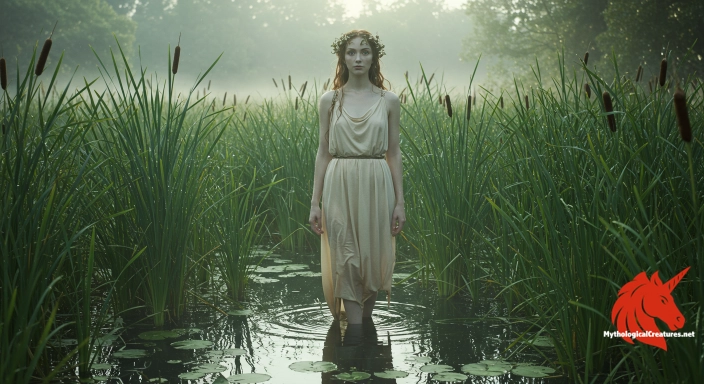
Eleionomae: The Eleionomae are freshwater nymphs from ancient Greek mythology, governing the marshes and wetlands.
Eleionomae
Eleionomae - They play a vital role in maintaining the natural balance of freshwater ecosystems and are revered as embodiments of the life-sustaining properties of water.
Origins & First Encounters
The Eleionomae emerge from the tapestry of ancient Greek mythology as enigmatic figures presiding over the fresh-water marshes and wetlands. Their presence is woven into the tradition of naiads, reflecting a deep connection to nature that transcends the boundaries between land and water. They are thought to have originated from early mythic traditions where natural elements were personified and revered as divine protectors. Although their earliest mentions are sparse, the Eleionomae occupy a distinctive niche, emblematic of both the nurturing and perilous qualities of marshy realms. Their role in local cults and rites suggests that they were once considered vital for ensuring the fertility of the land and the flow of water. Regional lore recalls them as guardians who could either bless communities with abundance or unleash nature’s hidden dangers. Their alternative name, Heleionomai, hints at a rich regional variation and the fluidity of myth in ancient culture. The interplay of beauty and mystery in their depiction underlines a symbolic narrative of the eternal interplay between life and decay. In many respects, they embodied the dual aspects of water: benevolent yet capricious, indispensable yet dangerous. Their legacy continues to evoke fascination for the wild and untamed corners of the natural world.
Source Texts & Tale Variants
References to the Eleionomae are interspersed within the fragmented corpus of ancient Greek literature, where brief mentions evoke a sense of wonder and reverence. They appear as part of the broader narrative of water nymphs, whose transient allusions capture the transient beauty of nature. Some classical texts and lexicons hint at their attributes alongside other freshwater deities, subtly distinguishing them as the spirit of marshy domains. Over time, local inscriptions and forgotten manuscripts helped preserve variations of their name, notably as Heleionomai. These sources, though scant, reveal that the Eleionomae were respected in regional cults dedicated to the forces of nature. Occasional references in poetic fragments and geographical treatises provide glimpses into their character and the environments they inhabited. Their narrative is pieced together from diverse folkloric elements, where the ephemeral is celebrated and feared in equal measure. Later mythographers attempted to consolidate disparate oral traditions into a coherent mythos, contributing to a legacy that remains elusive yet evocative. Variations in their portrayal are evident when comparing early literary mentions with later localised folk narratives. This patchwork of sources enriches our understanding of how ancient peoples perceived both the beauty and danger inherent in untamed wetlands.
Form & Powers
The Eleionomae are typically envisioned as ethereal maidens whose form reflects the glistening, mysterious environment of marshlands. They are described with luminous, almost translucent skin that seems to shimmer with the moisture of their watery domain. Their flowing hair often appears decorated with strands of water plants and delicate reeds, mirroring the wild vegetation of the wetlands. Artists and poets have imagined them adorned in garments that evoke the misty vapour and soft hues of dawn breaking over a marsh. Their eyes, deep and reflective, are said to capture both the allure and the hidden perils of nature. Some depictions suggest subtle amphibian features such as webbed fingers or toes, enhancing their connection to aquatic life. This blend of human beauty with hints of the aquatic creates an aura that is both mesmerizing and otherworldly. Variability in their portrayal allows for some accounts to describe them as diminutive and fragile, while others invest them with a formidable, almost elemental presence. Their appearance is as mutable and fluid as the water they embody, capturing the dual nature of creation and dissolution. Such physical descriptions serve not only to enchant but also to symbolically represent the delicate balance within nature’s more obscure corners.
Regional Faces
The portrayal of the Eleionomae varies significantly across different regions of the ancient Greek world, reflecting local environmental and cultural influences. In wetland-rich areas, they were celebrated as distinct local guardians whose identity was closely tied to the surrounding marshes. Variations in dialect and local tradition led to alternative appellations such as Heleionomai, each carrying subtle differences in attributes and mythic responsibilities. In some communities, they were portrayed as gentle benefactors who blessed the fields with fertility, while in others they assumed a more ominous role, embodying the unpredictable dangers of untamed marsh waters. Regional rituals and festivals frequently featured ceremonies honouring these nymphs, which were adapted to the unique ecological characteristics of each locale. In certain inland areas, their representation merged with that of other water deities, reflecting a synthesis of local flora, fauna, and water cycles. The cultural narrative in coastal regions sometimes blurred the lines between river, lake, and marsh nymphs, thereby enriching the mythic tradition. Local storytelling traditions imbued the Eleionomae with both healing and cautionary attributes, reflecting the ambivalent nature of their watery dominion. These regional adaptations underscore the dynamic interplay between communal identity and natural landscapes in ancient myth-making. As a result, the Eleionomae serve as an enduring symbol of the diverse interpretations of nature’s spirits throughout Greece.
Cultural Parallels
When viewed in a broader cultural context, the Eleionomae share intriguing similarities with water spirits from other mythological traditions. Like their Grecian counterparts among the naiads, they embody the quintessence of life-sustaining water, yet their association with marshes distinguishes them from those of river or lake origins. Comparable entities appear in Roman mythology, where similar freshwater nymphs are revered for their protective and nurturing qualities within local ecosystems. In the Celtic tradition, ethereal beings associated with bogs and fenlands mirror the dual nature of the Eleionomae, balancing benevolence with danger. Across various cultures, water deities often encapsulate the paradox of water as both a life-giver and a force of destruction. Parallels can also be drawn with Slavic and Nordic mythologies, where elemental spirits of watery realms act as intermediaries between the natural and the supernatural. These cross-cultural comparisons reveal a universal motif: the anthropomorphising of water to explain and mediate the temperamental forces of nature. The Eleionomae, in their hybrid role, underscore a recurring theme of liminality, serving as guardians of transitional spaces where land meets water. Such comparative observations enrich our understanding of how communities symbolically conceptualise and interact with the natural world. Ultimately, their mythic narrative resonates with a shared human experience of reverence and caution toward the unpredictable essence of water.
Legacy & Modern Evolution
Over the centuries, the Eleionomae have evolved from obscure mythological entities into celebrated symbols of nature’s eternal mystery and duality. In ancient art and literature, their depictions grew increasingly sophisticated, inviting new interpretations and adaptations over time. During the Renaissance, classical mythology experienced a revival that brought renewed interest to such water nymphs, inspiring artists to capture their elusive charm and ethereal beauty. Modern reinterpretations in literature and visual arts have further abstracted their imagery, often aligning them with contemporary environmental themes. Today, the Eleionomae are sometimes seen as allegorical figures representing the fragile balance between human civilisation and the natural world. Their narrative has been woven into modern discussions about conservation and ecological stewardship, reflecting a timeless appreciation for nature's capricious beauty. Contemporary fantasy and speculative fiction have reimagined these nymphs as guardians of mystical wetlands, bridging ancient myth with modern ecological concerns. This transformation, from classical tradition to modern artistic muse, underscores the enduring power of myth in adapting to societal changes. The Eleionomae continue to influence a diverse range of cultural expressions, from digital art to cinema, functioning as emblems of nature’s resilience and mystery. Their legacy, deeply rooted in the ancient past, remains a vibrant symbol of the ever-changing yet enduring spirit of the natural environment.
Interesting Fact
A notable aspect of the Eleionomae is their exclusive association with freshwater marshes, distinguishing them from other water nymphs like the sea-bound Nereids.
For indie creators
Give your myth project a permanent home
Indie authors, artists, small studios, and makers can secure an annual, non-intrusive sponsor slot that meets readers where they explore.
Obtain more informationQuick Creature Info
Origin:
Features:
Associations:
Our Mythic Legendary Rating:

Also Sometimes Known As:
Habitat:
Supernatural Powers:
Physical Attributes:
Abilities:
Behavior:
Weaknesses:
Lore:
Related Creatures, Tales or Lore
- NNereids
- LLimnades
- OOther Naiads
References
Discover Another Mythical Legend You May Not Have Heard Of?
Uncover the mysteries of ancient folklore and expand your knowledge of legendary beings from cultures around the world.
Dare to Meet the Seker....
Curated by the Mythological Creatures Team
Series editor: Mythological Creatures Directory
Primary desk: Hellenic & Ancient Mediterranean Desk
(rev. November 2025)