
Seker: Seker is the hawk or falcon god of the Memphite necropolis in Ancient Egyptian religion.
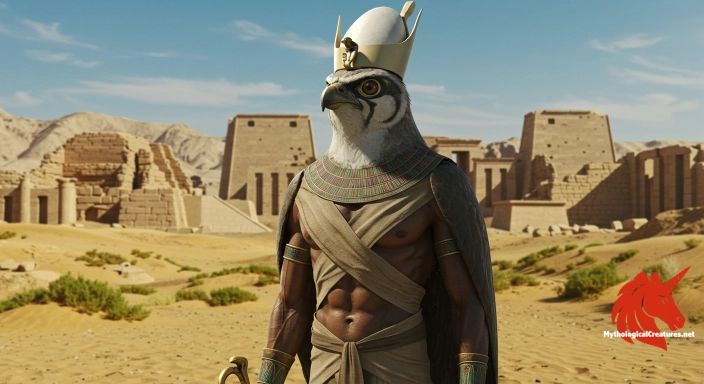
Seker
Seker - Symbolises the cyclical nature of life and death, representing the transformative power of the sun in Egyptian belief
the legend in five swipes.
the legend in five swipes.
When did people first speak of Seker?
Seker emerges from the ancient Egyptian pantheon as a striking and multifaceted figure whose dual roles intertwine the realms of life and death.
He is celebrated as a hawk or falcon deity, a symbol of swiftness and vigilance, that presides over the Memphite necropolis.
His origins are deeply rooted in the spiritual atmosphere of Memphis, where the interplay of darkness and light was central to the understanding of cosmic order.
Although primarily connected to the afterlife, Seker was also venerated as a patron of the living, guiding souls between the mortal plane and the eternal.
His early attestations were embedded in religious iconography and temple inscriptions that highlight his significance in funerary rituals and daily life alike.
The rich symbolism of his depiction, incorporating both avian and solar elements, speaks to the complex nature of Egyptian theology.
Worship of Seker underscores a belief in the cyclical renewal of life, where death was seen as a precursor to regeneration and rebirth.
This enduring legacy reflects the ancient Egyptians' profound respect for the mysteries of existence and their creative interpretation of divine power.
What sources tell us about Seker?
Seker’s mythological narrative is dynamically attested in a collection of ancient texts and temple inscriptions that have survived millennia.
Records from the necropolis reveal his association with death as well as his role in guiding the living, creating a unique bridge between the two realms.
Temple reliefs and inscriptions, especially from Memphis, illustrate his multifarious presence in rituals that mourn and celebrate life.
Various sources, including funerary papyri and monument inscriptions, depict him with potent symbolic motifs that emphasise his protective nature.
Alternate accounts found in diverse textual traditions recount his solar aspects, enhancing the narrative with layers that merge darkness and light.
Some inscriptions portray him as intertwined with other deities in stories of rebirth, reflecting the fluidity of Egyptian myth.
Local and regional texts sometimes adjust his myth to suit the specific spiritual needs of different communities, adding subtle variations to his character.
Taken together, these primary sources form a rich tapestry that captures the evolving story of Seker and his influence on both the living and the dead.
Seker: What the Legends Describe
The visual representation of Seker is as dynamic as his myth, marked by the graceful yet formidable traits of a hawk.
His form is typically rendered with a streamlined head and piercing eyes that evoke the acute perception of a falcon in flight.
Iconography often merges his avian features with human aspects, creating a figure that is both divine and relatable.
He is frequently shown wearing a solar disc or radiant crown, which underscores his connection with the sun and cosmic energy.
The textures of his feathers and the detailed depictions of his wings convey a sense of movement and power that is intrinsic to his divine persona.
Artistic renditions sometimes vary, with some images emphasising a more abstract, symbolic form while others provide a highly detailed anatomical portrayal.
This duality in appearance not only reflects his roles in the afterlife but also symbolises the balance between mortality and eternity.
Overall, the physical depictions of Seker remain a testament to the sophisticated artistry and deep symbolism that characterised ancient Egyptian religious expression.
How do regional versions of Seker differ?
Seker’s cult and iconography underwent fascinating regional variations that reflect the diversity of ancient Egyptian religious practices.
In the heart of Memphis, his worship was intricately linked to the necropolis, where he functioned as an essential guardian of the dead.
Beyond Memphis, localized interpretations infused him with additional solar qualities, thereby integrating his character into broader religious narratives.
The integration of indigenous symbols with his established motif allowed communities to adapt his myth to meet evolving spiritual and cultural needs.
The Greek influence in later periods is particularly noteworthy, giving rise to alternative names like Sokaris or Socharis that reimagined his character within Hellenistic artistic traditions.
This cross-cultural interaction led to subtle modifications in his depiction, often merging Egyptian symbolism with Greek stylistic techniques.
As a result, regional variations of Seker’s image span from stark, funerary depictions in one locality to more luminous, solar interpretations in another.
Such regional adaptation not only highlights the fluid boundaries of mythic storytelling but also underscores the enduring appeal of his archetypal role in explaining the mysteries of life and death.
Seker: Cross-Cultural Comparisons
The myth of Seker finds intriguing parallels with several other deities within both Egyptian and neighbouring mythologies, illustrating a common fascination with themes of life, death and renewal.
Their shared traits invite comparisons with Horus, another falcon-headed deity, whose symbolism also intertwines with the sky and kingship.
Seker’s dual identity as a guardian of both the living and the dead resonates with that of Ra, whose solar attributes highlight the sustaining forces of life.
This overlap of avian imagery with solar power is a recurring motif that adds layers of meaning to ancient iconography.
In comparative myth, similar deities in the Near Eastern tradition similarly blend celestial light with earthly governance, establishing a cross-cultural archetype of resurrection and protection.
The synthesis of these characteristics illustrates how ancient cultures used the familiar language of nature to make sense of cosmic order and the cycle of existence.
Such analysis brings to light the fluidity with which divine attributes could be shared and reinterpreted across different cultural boundaries.
This interconnection emphasises a common human impulse to explore and symbolise the perennial themes of transformation and eternal persistence.
Seker: The Legend's Second Life
Over time, Seker’s portrayal has evolved, mirroring shifts in artistic trends and the broader understanding of Egyptian mythology.
Early depictions rooted in formal temple art have been reinterpreted in light of modern discoveries and artistic revivals.
His image as both a guardian of the necropolis and a solar force has continued to resonate, inspiring contemporary literature, art, and even esoteric studies.
This dynamic reinterpretation reflects a broader modern fascination with ancient Egypt that breathes new life into his mythological persona.
Modern scholarship and museum exhibitions have rekindled interest in his enigmatic qualities, showcasing him as a symbol of transformation.
Artists and writers alike find in Seker a vivid metaphor for the interplay between mortality and renewal.
The evolution of his legacy highlights the timeless allure of ancient myths, capable of transcending historical boundaries to speak to contemporary issues.
In this way, Seker remains a powerful emblem bridging the ancient past with modern quests for identity, meaning, and continuity.
Interesting Fact
An intriguing aspect of Seker is his dual embodiment as both a god of death and a symbol of life, highlighting the complex Egyptian views on mortality and renewal.
Mythological Treasures
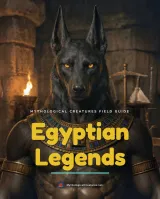
Egyptian Legends: A field guide to the gods and monsters of ancient Egypt
Guardians of the living and devourers of the dead, with the role each played in judgement.
Greek Myths: A field guide to the monsters of ancient Greece
Every monster here earned its place in legend, and each gets a full page of artwork and the story behind it.
Norse Sagas: A field guide to the beasts of the Viking world
Drawn from the saga accounts themselves, with the powers, weaknesses and doom of each being set out.
the legend in five swipes.
Mythology-aligned partners
Showcase your myth-friendly brand here
Run a store, studio, or platform that lives in the world of myth and folklore? A curated sponsor panel on these pages may fit.
Explore partnership optionsQuick Creature Info
Origin:
Features:
Associations:
Our Mythic Legendary Rating:

Also Sometimes Known As:
Habitat:
Supernatural Powers:
Physical Attributes:
Abilities:
Behavior:
Lore:
References
Discover Another Mythical Legend You May Not Have Heard Of?
Uncover the mysteries of ancient folklore and expand your knowledge of legendary beings from cultures around the world.
Dare to Meet the Litr....
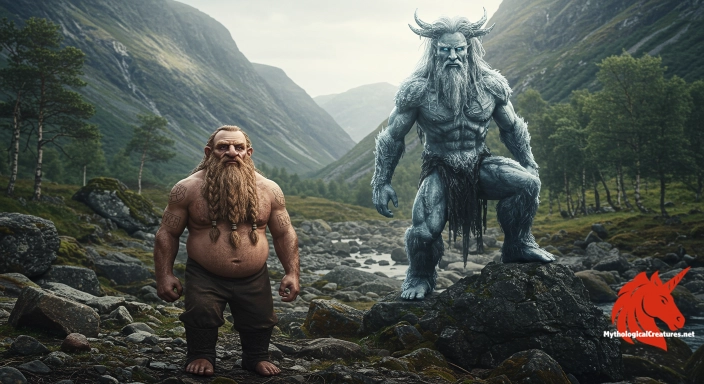
The Mythological Creatures Book Series
Yokai, Greek, Norse, Egyptian & Chinese. Five illustrated field guides to the creatures the old stories either warned or told you about.


Curated by the Mythological Creatures Team
Series editor: Mythological Creatures Directory
Primary desk: Hellenic & Ancient Mediterranean Desk
(rev. November 2025)