
Litr: Litr is a mythological figure from Norse lore known by the same name in both dwarf and jötunn forms.
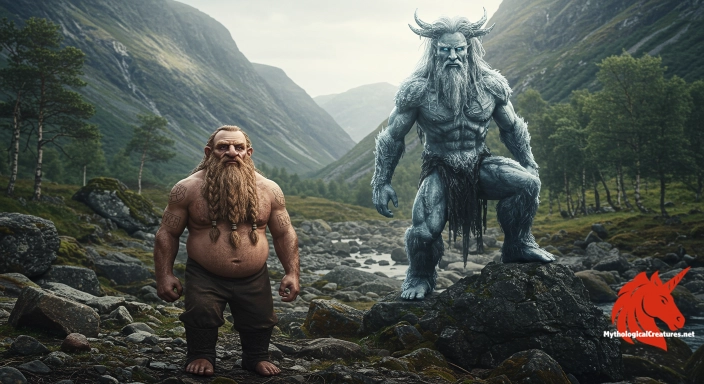
Litr
Litr - Litr's dual representation reflects the complex and often contradictory nature of Norse myth, where a single name can embody vastly different beings.
Origins & First Encounters
Litr is a fascinating figure woven into the fabric of Norse mythology, whose name—meaning 'colour' or 'appearance'—suggests a deep connection with the visual and symbolic facets of myth. His identity is intriguingly ambiguous, as he is recorded both as a dwarf and as a jötunn, which challenges simple categorisation within the mythic cosmos. Early attestations of Litr can be traced back to medieval Norse texts, where his dual nature hints at a convergence of traditions once clearly demarcated by cosmic order. His presence in these narratives reflects not just the stark contrasts between the orderly world of dwarfs and the chaotic realm of giants, but also their unexpected intersections. The figure of Litr invites curiosity about the mutable boundaries in myth, where a single name may carry several meanings and roles. Historical accounts suggest that his brief mentions were enough to spark debates on the fluidity of identity in legendary storytelling. The cultural context of his emergence reveals an era where the appearance and essence of a being were as significant as their deeds. Litr’s dual roles encapsulate themes of transformation and the evanescent nature of myth, providing rich material for both ancient storytellers and modern interpreters. His enigmatic reputation continues to resonate as a symbol of the layered and multifaceted aspects of existence in Norse lore.
Source Texts & Tale Variants
The scant primary literary sources that mention Litr have contributed significantly to his ambiguous reputation in Norse mythology. Texts such as the Prose Edda and certain skaldic verses offer only brief allusions to his existence, leaving much room for interpretation. In some accounts, the dwarf Litr appears in contexts surrounding ritual events and mythic funerals, while other narrations attribute a giant persona to him. The variations in these sources have led scholars to speculate that Litr may embody a composite of divergent oral traditions. Subtle differences in manuscript traditions indicate that his character might have been adapted over time, reflecting the dynamic nature of myth transmission in medieval Scandinavia. These early stories, while fragmentary, underscore the interplay between different mythic archetypes. The dual identifications found in the ancient texts not only reveal the complexity of Norse narrative structures but also encourage explanations that bridge seemingly contrasting beings. Each variant, whether emphasising a dwarven or jötunn aspect, enriches the cultural tapestry and provides diverse perspectives on his character. As new interpretations continue to emerge, the primary sources spark discussions about the intended symbolic meaning behind his elusive portrayal.
Form & Powers
Litr’s physical representation is subject to imaginative reconstructions, given the sparse descriptions in the extant sources. When envisaged as a dwarf, he is often portrayed with a compact, sturdy build typical of his kin, embodying the resourcefulness and grounded nature of the subterranean world. His name, which resonates with the idea of 'colour' and 'appearance', invites speculations about a vibrant or uniquely patterned vestment that set him apart from his brethren. Artists have sometimes imagined him with intricate facial features and an expressive demeanour that hints at an underlying wisdom. In contrast, interpretations of the jötunn Litr lean towards a more imposing stature, with rugged features and an air of wild intensity that mirrors the untamed forces of nature. This giant aspect is often accompanied by exaggerated physical traits that embody both majesty and menace, reflecting his connection to the chaotic elements of the Norse cosmos. Some modern creative depictions even suggest that his appearance might shift magically, symbolising the ephemeral nature of colour and form. The interplay of light and shadow in these portrayals further emphasises the duality implicit in his character. Ambiguity in the descriptions has allowed various interpretations to coexist, each adding layers of meaning to his legendary presence.
Regional Faces
Across Scandinavia, the portrayal of Litr adapts to the local flavour of myth while maintaining his core enigmatic essence. In the icy landscapes of Iceland, narratives tend to accentuate his giant attributes, casting him as a fierce and formidable presence deeply intertwined with the raw power of nature. Meanwhile, on the Scandinavian mainland, regional lore often emphasises his association with the dwarven world, linking him to ancient craftsmanship and the mysteries of underground realms. Folktales in these areas sometimes depict him as a liminal figure, one who effortlessly transitions between the tangible and the mystical. Local adaptations have also infused his character with elements of transformation, mirroring regional beliefs in rebirth and the seasonal cycles of nature. Varying artistic traditions across these regions highlight contrasting details of his physical appearance, from frost-kissed features in the north to warmer, earthier tones in more temperate zones. These differences underscore the varied cultural lenses through which Litr is interpreted and commemorated. His dual identity often serves as a local emblem for the intersection between humanity and the supernatural. Regional stories, while diverse in detail, all contribute to the broader narrative of Litr as a bridge between distinct mythological worlds.
Cultural Parallels
When set alongside similar figures in other mythological traditions, Litr’s dual identity highlights a recurrent theme found across various cultures: the merging of seemingly disparate cosmic forces. His ambiguous existence, straddling the boundaries of both dwarf and jötunn, can be compared to shape-shifting or liminal figures seen in Celtic and Germanic lore, where characters often embody both creative and destructive energies. The way his name invokes both visual splendour and mutable form parallels the roles played by trickster figures elsewhere, whose identities resist straightforward classification. In some traditions, ambiguous beings serve as mediators between the realms of order and chaos, a trait that resonates strongly with Litr’s contentious portrayal. This intermingling of physical and symbolic attributes invites comparisons with other mythic archetypes that operate on the thresholds between worlds. Much like the dual-natured figures in various folklore, Litr exemplifies how cultural narratives utilise contradictions to explore complex ideas of identity. The blending of attributes from different categories also reflects the broader tendency in myth to dissolve rigid boundaries, much as other European legends do. Such comparative insights not only enrich our understanding of Litr but also reinforce the universality of themes such as transformation and duality in world mythologies.
Legacy & Modern Evolution
The evolution of Litr’s portrayal over time mirrors broader shifts in both mythological studies and modern creative expressions of ancient lore. In the early medieval period, his fleeting mentions in canonical texts sparked considerable debate among storytellers and scribes regarding the nature and implications of his dual identity. Over the centuries, as Norse myths were rediscovered and reinterpreted, Litr emerged as a compelling symbol of transformation and complexity that appealed to modern audiences. Contemporary fantasy literature and role-playing games have embraced his multifaceted persona, reimagining him as an archetypal figure who transcends simple categorisation. His representation in modern art and narrative showcases a deliberate integration of his ambiguous traits, inviting viewers to reflect on the interplay between outward appearance and internal essence. The symbolic richness implied by his name has inspired discussions about the nature of identity, colour, and perception in both academic and popular contexts. Modern reinterpretations often explore the idea of Litr as a bridge between contrasting forces—mirroring modern discourses on hybridity and the fluidity of identity. His increasing prominence in today’s cultural landscape illustrates how ancient myths continually evolve to resonate with contemporary sensibilities. In this way, Litr stands as a timeless emblem of the enduring power of myth to adapt and inspire across generations.
Interesting Fact
An intriguing aspect of Litr is that the same name represents two distinct mythological beings—a dwarf and a jötunn—highlighting the fluidity and symbolic richness of Norse mythological nomenclature.
For myth educators and toolmakers
Built a resource for mythology learners?
If you offer courses, teaching tools, or research platforms focused on myth and folklore, consider a discrete placement on our reference pages.
Introduce your resourceQuick Creature Info
Origin:
Our Mythic Legendary Rating:

Also Sometimes Known As:
Habitat:
Supernatural Powers:
Physical Attributes:
Abilities:
Behavior:
Lore:
References
Discover Another Mythical Legend You May Not Have Heard Of?
Uncover the mysteries of ancient folklore and expand your knowledge of legendary beings from cultures around the world.
Dare to Meet the Merman....

Curated by the Mythological Creatures Team
Series editor: Mythological Creatures Directory
Primary desk: Northern & European Folklore Desk
(rev. November 2025)