
Bennu: Bennu is an ancient Egyptian deity depicted as a majestic, radiant bird symbolizing the sun, creation, and rebirth.
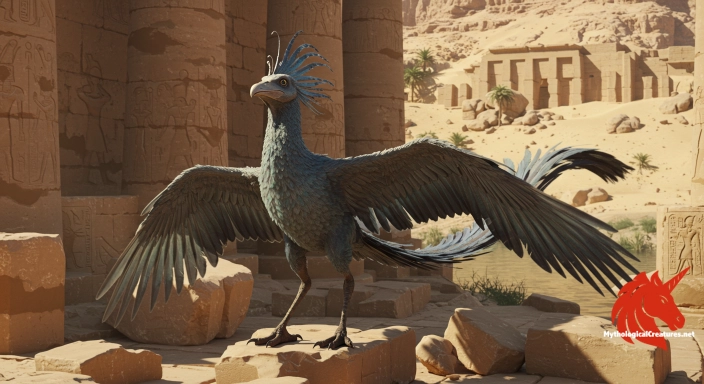
Bennu
Bennu - Embodies the cyclic nature of life, death, and rebirth, influencing later phoenix legends
the legend in five swipes.
the legend in five swipes.
Where does Bennu come from?
In the ancient tapestry of Egyptian mythology, Bennu emerges as a sacred bird deity closely linked to the sun, creation, and rebirth. This enigmatic figure first appears in the religious iconography of early Upper Egypt and is often depicted as a harbinger of renewal. His myth is intertwined with the cosmic cycles that governed the natural world, and he is renowned for his ability to transcend the boundaries of life and death. A prominent figure in the mythology of Heliopolis, Bennu’s origins are shrouded in mystery and symbolise the eternal cycle of existence. Bennu’s depiction as a self-regenerating force mirrors the seasonal rhythms of the agricultural calendar and the passage of time. He represents the creative spark that ignites the cosmos, embodying both the fiery energy of the sun and the gentle promise of rebirth. The divine bird’s story is celebrated through art, hieroglyphs, and temple reliefs that continue to captivate the imagination. Ever since his first attestation in ancient Egyptian lore, Bennu has symbolised the transcendent power of renewal, leaving an indelible mark on myth and ritual.
Bennu in the Historical Record
Ancient inscriptions and temple reliefs provide the most direct attestations of Bennu, revealing his prominence in Egyptian religious art. These primary sources originate from sacred sites such as Heliopolis, where Bennu was celebrated as a beacon of regeneration. Reliefs and hieroglyphic texts in temples depict his soaring form and his interaction with other divine figures, emphasising his cosmic role. Over time, a number of narrative variants emerged, underscoring different facets of his nature, from creator to sustainer of life. Writings in ancient religious manuscripts subtly reference his transformative attributes, linking him to both creation and the afterlife. In later periods, interpretations of Bennu’s myth expanded as the Greeks adopted his theme into their own phoenix legends. Artifacts and reliefs continue to be unearthed that offer fresh perspectives on his multifaceted role in the ancient worldview. The evolution of Bennu’s story across diverse texts reflects a dynamic blend of myth, tradition, and the enduring quest to understand life’s cyclic nature.
The Described Form of Bennu
Artistic depictions of Bennu reveal a majestic avian form that exudes both elegance and divine power. His slender and elongated body is often rendered with a graceful neck and an aerodynamic shape that speaks of eternal renewal. The creature is usually adorned with a radiant plumage that blends vibrant shades of red, gold, and amber—colours evocative of the sun’s brilliance. Intricate feather patterns, sometimes highlighted with subtle iridescence, further enhance his celestial appearance. Bennu is frequently portrayed with outstretched wings that suggest both the act of flight and the uplifting spirit of regeneration. In many depictions, a luminous aura surrounds him, reinforcing his status as a divine messenger of creation. Some iconographic representations emphasise his beaked visage and keen, penetrating eyes which symbolise insight and cosmic vision. The overall physical portrayal of Bennu is designed to merge beauty with symbolism, making him a timeless emblem of rebirth and transformation.
The Local Faces of Bennu
Bennu is primarily rooted in the spiritual traditions of ancient Egypt, where his image was revered in cultic centres like Heliopolis. In local traditions, his iconography has been adapted to reflect regional aesthetics, resulting in subtle variations in his portrayal. Northern Egyptian depictions often emphasise his connection to the sun, while more southern traditions might stress his role in the renewal of the agricultural cycle. As religious ideas spread, Bennu’s symbolism was gradually absorbed into neighbouring cultures, adapting his myth to fit local cosmologies. The ancient Greeks, in particular, recognised similarities between Bennu and their own phoenix legends, thereby reinterpreting his attributes. These cross-cultural exchanges allowed for a blending of iconographic styles, where Bennu’s image evolved to incorporate elements of classical refinement. Regional artistic traditions sometimes depict him with additional ornamental features that reflect local religious symbols and celestial themes. Despite these variations, the core themes of resurrection and renewal remain consistent, underscoring Bennu’s universal appeal across different cultures.
The Global Cousins of Bennu
Bennu occupies a distinctive niche in the realm of mythological creatures, standing as a precursor to many later narratives of rebirth. Comparisons with the Greek phoenix are inevitable, as both embody the cyclical phenomena of death and regeneration through fire. While the phoenix is widely celebrated in classical mythology, Bennu’s origins root him firmly in the ancient Egyptian tradition of cosmic creation. Similar motifs of renewal can be found in other cultures, where birds such as the Chinese fenghuang symbolise harmony and balanced cosmic forces. The convergence of these mythologies highlights a shared human fascination with cycles of destruction and rebirth across different continents. In contrast to many later adaptations, Bennu’s portrayal is specifically tied to the natural order and the life-giving properties of the sun. His narrative has provided a foundational archetype that has influenced an array of cultural symbols, from medieval heraldry to modern fantasy tales. This comparative analysis underscores how diverse cultures interpret the universal theme of transformation, tracing its lineage to ancient symbols like Bennu.
How is Bennu remembered today?
Over the centuries, Bennu’s myth has transcended its original Egyptian context to leave an enduring imprint on world mythology. His emblematic story of regeneration and rebirth has been reinterpreted through various historical lenses, influencing art, literature, and popular culture. The transition from Bennu to the more widely recognised phoenix is a testament to the dynamic evolution of myth over time. Medieval and Renaissance artists drew on the imagery of Bennu to explore themes of immortality and the cyclical nature of existence. Modern creative traditions continue to be inspired by Bennu’s archetypal symbolism, often depicting him as an emblem of hope and transformation. In contemporary literature and cinema, echoes of Bennu’s regenerative narrative can be seen in characters and stories that celebrate renewal. This ancient deity’s legacy is a reminder of the power of myth to adapt and survive through cultural shifts and historical transformations. Bennu remains a powerful symbol of life’s constant evolution, providing a timeless narrative that continues to captivate the modern imagination.
Interesting Fact
Bennu is often cited as one of the earliest representations of the phoenix myth, linking Egyptian cosmology with later Greek legends of rebirth.
Mythological Treasures
Egyptian Legends: A field guide to the gods and monsters of ancient Egypt
Guardians of the living and devourers of the dead, with the role each played in judgement.
Chinese Beasts: A field guide to the dragons and demon kings of Chinese myth
From river dragons to demon kings, with the legends that shaped five thousand years of storytelling.
Japanese Yokai: A field guide to the spirits and demons of Japanese folklore
Fifteen spirits, with the signs to watch for and what the old tales say to do if you meet one.
the legend in five swipes.
For authors, artists, and makers
Created something from the realm of myth?
If your book, deck, game, or artwork draws from legendary creatures and lore, you can showcase it here in a tasteful, year-round placement.
Share your projectQuick Creature Info
Origin:
Associations:
Our Mythic Legendary Rating:

Habitat:
Supernatural Powers:
Physical Attributes:
Abilities:
Behavior:
Lore:
Related Creatures, Tales or Lore
References
Discover Another Mythical Legend You May Not Have Heard Of?
Uncover the mysteries of ancient folklore and expand your knowledge of legendary beings from cultures around the world.
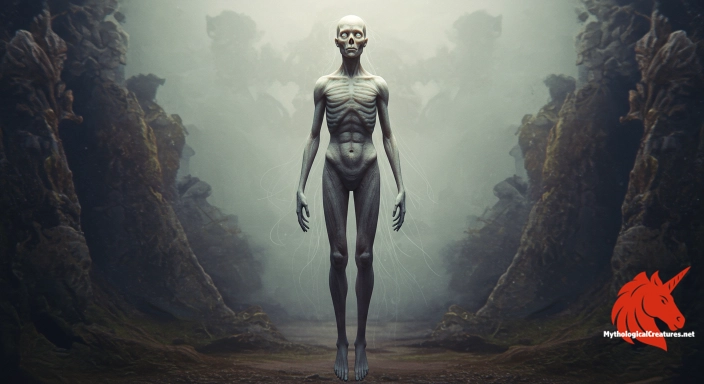
Dare to Meet the Lemures....
The Mythological Creatures Book Series
Yokai, Greek, Norse, Egyptian & Chinese. Five illustrated field guides to the creatures the old stories either warned or told you about.
Curated by the Mythological Creatures Team
Series editor: Mythological Creatures Directory
Primary desk: Hellenic & Ancient Mediterranean Desk
(rev. November 2025)