
Etinsib Ziwa: Etinsib Ziwa is an uthra of Mandaeism known for initiating a pivotal battle against the malevolent force Nbaḥ.
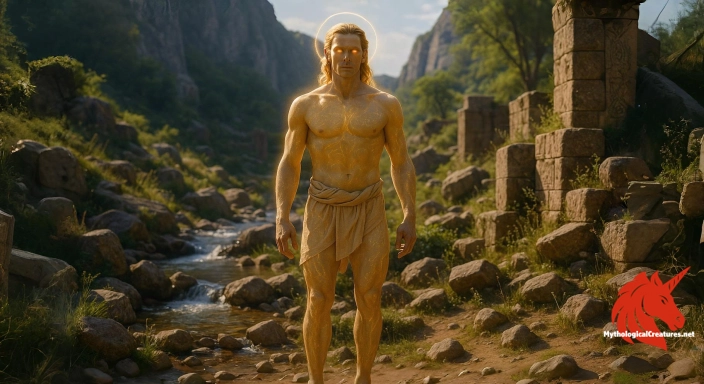
Etinsib Ziwa
Etinsib Ziwa - Signifies the eternal struggle between light and darkness in Mandaean cosmology.
the legend in five swipes.
the legend in five swipes.
What culture created Etinsib Ziwa?
Etinsib Ziwa stands among the revered uthras in Mandaean cosmology, known by a name that translates as 'Splendid Transplant' and suggesting a dynamic emergence from the realm of light. His origins, though shrouded in the mystery typical of ancient spiritual narratives, weave together themes of transformation and divine intervention. Emerging from the early mythopoeic traditions of the Mandaean faith, his first attestation is found in the Mandaean Book of John, a seminal text that outlines the eternal struggle between light and darkness. He is depicted as a luminous warrior whose presence not only signals the onset of cosmic conflict but also heralds the everlasting power of the divine. His role as a battle initiator against darker forces situates him within a broader cultural framework where celestial beings engage in decisive combat to preserve order. The aura of his myth encapsulates a spiritual journey, one that hints at an intricate interplay between creation and destruction. His character reflects the deep-seated philosophical notions of renewal, where the act of transplantation denotes both loss and regeneration. The enduring legacy of Etinsib Ziwa speaks to his ability to inspire hope and fortitude amidst the pervasive forces of chaos.
Etinsib Ziwa in the Historical Record
The literary footprint of Etinsib Ziwa is marked primarily by his appearance in a few select chapters of the Mandaean Book of John, an authoritative text within the Mandaean canon. This text, though limited in scope regarding his full narrative, provides a powerful glimpse into his role as a celestial combatant. Alternative story variants, emerging through fragmented oral traditions, embellish his encounter with Nbaṭ and imbue his character with additional layers of mystical significance. Some traditions offer subtle nuances in the depiction of his divine mission, suggesting a preparatory role in the cosmic drama against forces of darkness. Over time, later commentaries and recitations within the community have expanded upon his brief canonical mentions, emphasising his radiant energy. These multiple layers of rendition have led to a rich, albeit compact, spectrum of stories associated with him. Each variant underscores a universal theme of light overcoming darkness, resonating deeply within the Gnostic undertones of Mandaean thought. The surviving texts and oral accounts together reflect a complex tradition that venerates his role as both warrior and transformative agent in the celestial order.
The Appearance and Powers of Etinsib Ziwa
In artistic and liturgical descriptions, Etinsib Ziwa is envisioned as an embodiment of resplendent celestial light, his form radiating an ethereal brilliance that defies mere mortal depiction. His appearance is often portrayed as both awe-inspiring and formidable; a silhouette marked by luminous contours and a majestic, almost intangible, physique. Eyes envisioned like twin beacons of divine insight add to the aura of otherworldly wisdom, while garments fashioned from shimmering, celestial threads evoke the infinite tapestry of the cosmos. Symbolic adornments, such as intricate patterns and radiant hieroglyphics etched upon his form, serve to accentuate his connection to the divine realm. Some accounts suggest his stature varies according to the context of the myth, sometimes towering as a stern guardian and occasionally appearing as a luminous envoy amid the mists of the World of Light. The interplay of light and shadow in his visual representation functions as an allegory for the ceaseless struggle between order and chaos. Descriptions of his kinetic spirit, charged with an almost palpable energy, further emphasise his role as a harbinger of cosmic transformation. Each depiction, rich in both metaphor and mysticism, brings forth a composite image of a warrior adorned with the sublime regalia of divinity, merging martial prowess with serene, inner luminescence.
The Local Faces of Etinsib Ziwa
Across the various regions where Mandaean communities have flourished, the portrayal of Etinsib Ziwa exhibits subtle nuances that reflect local cultural and spiritual inflections. In the heartland of the Mandaean heritage, his image is largely intertwined with ritual practices and symbolic narratives that emphasise a cosmic struggle for purity and order. In areas such as southern Iraq and southwestern Iran, where ancient traditions are still vibrantly maintained, his characteristics are often described with added layers of local colour and mysticism. Folk renditions in these regions sometimes cast him as a guardian spirit endowed with celestial authority, thereby reinforcing his status as a force against encroaching darkness. Local artistic representations may include distinctive iconographies, such as unique patterns and colour schemes, that differentiate his image from similar celestial beings in neighbouring cultures. Regional adaptations have viewed his role through varying lenses—some emphasise his aggressive martial role, while others highlight his serene aspect as a mediator between human suffering and divine intervention. The local narratives often blend the canonical details with indigenous myths, thus broadening his appeal within a specific socio-religious context. These adaptations serve not only to maintain the rich mythological tapestry of the Mandaean tradition but also to align his myth with the contemporary spiritual needs of diverse communities.
Which figures are similar to Etinsib Ziwa?
When examining the figure of Etinsib Ziwa alongside analogous celestial warriors from other mythologies, one encounters a fascinating web of thematic parallels and cultural confluences. His role as a commander of light and divine might draws immediate comparisons to figures such as the Archangel Michael in Christian lore, both of whom serve as decisive agents in the perennial conflict between good and evil. Similarly, elements of his battle-ready brilliance resonate with the heroic narratives found in Zoroastrian mythology, where the forces of light are unleashed to subdue encroaching darkness. The motif of a luminous warrior emerging from the realm of the divine is a cross-cultural archetype that underlines the universality of such myths. In many ways, Etinsib Ziwa embodies the quintessential characteristics of a transcendent hero, whose mission is as much about inner purification as it is about celestial combat. His very name, suggesting a transformation or 'transplant', interlinks with broader mythic themes of rebirth and regeneration present in numerous traditions. Comparative myths often reveal an intricate dialogue between diverse cultural symbols of light, each adapted to reflect societal values and cosmic philosophies. His narrative, while deeply rooted in the subtleties of Mandaean theology, contributes to a broader religious discourse on spiritual warfare. The cross-pollination of these ideas enriches our understanding of how different cultures converge on similar symbolic representations of divine commitment and moral fortitude.
Why is Etinsib Ziwa still popular?
Over the centuries, the portrayal of Etinsib Ziwa has evolved in tandem with shifting cultural landscapes and emerging interpretative frameworks. Early texts firmly established him as a formidable figure in the cosmic battle against darkness, a role that has continued to inspire later generations. As Mandaean spiritual practices migrated and diversified, so too did the symbolic imagery associated with his luminous persona. In modern artistic and literary circles, his legacy has been revitalised, often serving as a metaphor for hope in the face of pervasive adversity. Contemporary interpretations frequently highlight his dual nature, blending martial vigour with a transcendent serenity that appeals to modern sensibilities. His enduring presence in ritual performances and sacred art underscores the timeless nature of myth—a narrative that bridges ancient cosmic struggles with current quests for moral clarity and spiritual renewal. The reimagining of Etinsib Ziwa in modern media and scholarship has effectively transformed him into a modern icon of resilience and light. His story continues to resonate with audiences beyond traditional religious boundaries, symbolising a universal quest for existential balance and redemption. This evolution reflects both a reverence for ancient teachings and an active reinterpretation that adapts to the changing contours of contemporary belief. The historical journey of Etinsib Ziwa thus remains a potent reminder of the enduring power of myth to inspire and transform across ages.
Interesting Fact
Despite his brief mention in scripture, Etinsib Ziwa's initiation of a cosmic battle highlights the dynamic interplay between divine radiance and the forces of darkness in Mandaean belief.
Mythological Treasures
Greek Myths: A field guide to the monsters of ancient Greece
Every monster here earned its place in legend, and each gets a full page of artwork and the story behind it.
Norse Sagas: A field guide to the beasts of the Viking world
Drawn from the saga accounts themselves, with the powers, weaknesses and doom of each being set out.
Egyptian Legends: A field guide to the gods and monsters of ancient Egypt
Guardians of the living and devourers of the dead, with the role each played in judgement.
the legend in five swipes.
Partner with Mythological Creatures
Bring your myth-based world into ours
From game settings to narrative worlds, we work with partners who treat myths with care. Share your project for a potential sponsor slot.
Partner with usQuick Creature Info
Origin:
Associations:
Our Mythic Legendary Rating:

Also Sometimes Known As:
Habitat:
Supernatural Powers:
Physical Attributes:
Abilities:
Behavior:
Lore:
Related Creatures, Tales or Lore
- HHibil Ziwa
- YYushamin
- AAbatur
References
Discover Another Mythical Legend You May Not Have Heard Of?
Uncover the mysteries of ancient folklore and expand your knowledge of legendary beings from cultures around the world.
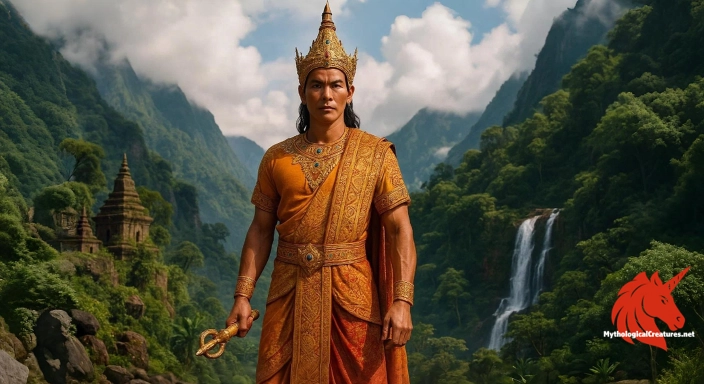
Dare to Meet the Thagyamin....
The Mythological Creatures Book Series
Yokai, Greek, Norse, Egyptian & Chinese. Five illustrated field guides to the creatures the old stories either warned or told you about.

Curated by the Mythological Creatures Team
Series editor: Mythological Creatures Directory
Primary desk: Hellenic & Ancient Mediterranean Desk
(rev. November 2025)