
Faun: Fauns are mythological half-human, half-goat beings originating in Roman mythology and later influenced by Greek satyrs.
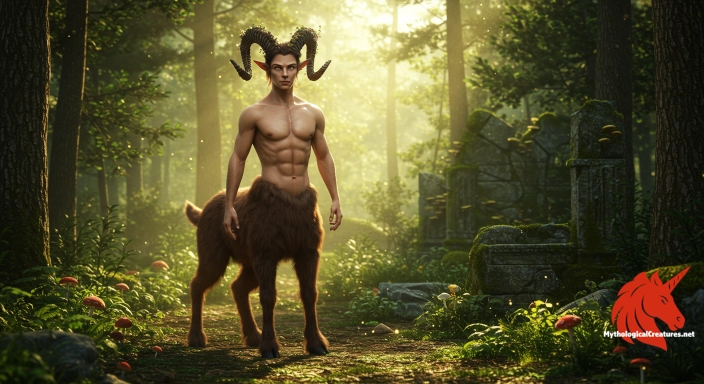
Faun
Faun - Fauns represent the harmonious and unbridled forces of nature, celebrated in both ancient lore and Renaissance art.
the legend in five swipes.
the legend in five swipes.
What culture created the Faun?
The faun is an enchanting mythological figure that straddles the boundary between human refinement and the raw beauty of nature. It emerged from the pastoral landscapes of ancient Roman lore, where it was intertwined with the spirit of rustic life. In its earliest form, the creature was seen as a ghostly presence—a genii of the countryside—closely linked to the deity Faunus. Its mythological roots later extended to Greek traditions, where the faun’s traits merged with those of the satyrs and the god Pan. This synthesis of myth emphasised both the serene and mischievous sides of nature. Artistic portrayals from the Renaissance further established the faun as a symbol of fertility and the luxuriant abundance of the natural world. Early attestations reveal a being that was less a monstrous oddity than a lively emblem of pastoral tranquillity. Today, the faun continues to captivate imaginations with its dual nature, seated firmly at the crossroads of civilisation and the wild.
Which versions of the Faun story survive?
Ancient narratives and classical artworks offer a rich array of sources that illuminate the faun’s storied past. Early Roman texts portrayed this being as an ethereal guardian of rural spaces, embodying the rustic essence of nature. Diverse accounts illustrate that in its original form, the faun was depicted as a naked, unadorned figure, mirroring its spectral origins before later transformations. Classical sculptural works, such as the celebrated Barberini Faun, capture the evolution of its iconography over time. Folkloric traditions recount alternative versions where the creature acts as both a benevolent nature spirit and a mischief-maker. As myth evolved, especially during the Renaissance, literary and artistic reinterpretations enriched the faun’s character with layers of pastoral charm and enigmatic allure. These various story strands reveal a creature that was simultaneously linked to fertility rites and the unbound spirit of wilderness. Despite minor discrepancies among sources, the enduring legacy of the faun is cemented by this multifaceted presence in ancient and transmitted traditions. The diversity of these primary sources continues to enrich modern interpretations and appreciation of this mythological figure.
Faun: Powers, Strengths and Vulnerabilities
The faun is typically visualised as a striking hybrid, combining the elegant upper body of a human with the robust, caprine characteristics of a goat. Its human torso, often depicted with natural grace, is juxtaposed against lower limbs that possess the sturdy form and agility of a goat’s legs. A pair of curved horns frequently adorn its head, lending a wild and timeless quality to its profile. Many artistic renditions also incorporate pointed ears and lively, expressive eyes, hinting at a playful yet mysterious disposition. The inclusion of a slender goat tail further accentuates its connection to the animalistic realm. Early representations even hinted at a more ethereal, unrefined human figure, reflective of its ghostly origins. Over time, variations emerged in size and proportion, with some portrayals revealing a lean, nimble presence while others suggest a more monumental and commanding stance. The use of earthy tones in sculptural and painted depictions reinforces its affinity with nature’s raw palette. Detailed Renaissance artworks skilfully blend textures of both skin and fur, providing a tangible sense of the creature’s dual heritage.
Which communities kept the Faun tradition alive?
Local interpretations of the faun reveal an intriguing tapestry of cultural adaptation and regional flavour. In the heart of Roman tradition, the faun was revered as a gentle spirit whose presence symbolised the lifeblood of rural existence. Meanwhile, Greek influences introduced a wilder aspect, evident in the satyr’s integration into the myth, where the faun’s image became interwoven with playful hedonism. Mediterranean regions often portrayed the creature as a protector of the natural world, a living emblem of harmony between man and nature. In Italy, particularly within rustic communities, the faun is sometimes seen as a guardian of the forests and fields, bridging the gap between earthly existence and the mystical. Northern European folklore, in contrast, has at times merged the faun with other woodland entities, endowing it with a more elusive and enigmatic quality. These regional narratives also reflect unique physical variations, such as differences in horn curvature and bodily proportions, shaped by local artistic traditions. Seasonal festivals and fertility rites in various parts of Europe further reinforce the creature’s role in celebrating nature’s cyclical bounty. Each regional adaptation contributes to a richer, multifaceted portrait that honours both the myth’s ancient roots and its evolving cultural significance.
Faun: Counterparts Around the World
Comparative study reveals that the faun shares striking similarities with its Greek counterpart, the satyr, yet retains a distinct cultural identity. Both mythological beings serve as embodiments of nature’s unbridled forces and the intersection between the wild and the civilised. While the faun is deeply rooted in Roman tradition as a rustic spirit, the satyr’s character is imbued with a sense of uninhibited revelry and hedonism. This overlap has allowed the two figures to merge in later artistic depictions, complicating their individual narratives. Beyond the ancient Mediterranean, echoes of the faun’s dual nature can be found in other cultures, such as Celtic woodland spirits and faerie creatures, which celebrate the capricious and fertile aspects of nature. These cross-cultural parallels underscore a universal human fascination with beings that incarnate both the refined and the untamed. In modern fantasy literature, the archetype of the half-human, half-beast continues to resonate, inspiring new interpretations that blend historical and imaginative elements. Such comparisons highlight how myth-makers across different cultures have tapped into similar themes of fertility, chaos, and natural beauty. Ultimately, the faun stands as a testament to the enduring power of myth to bridge diverse cultural narratives and explore the depths of the human relationship with nature.
Faun: Modern Retellings and Reinventions
The faun’s evolution through the ages reflects a remarkable journey from shadowy myth to a celebrated icon of pastoral splendour. In antiquity, the creature was revered as a spectral embodiment of nature’s mysterious force, a bridge between the divine and the earthly realms. The Renaissance heralded a rebirth of classical imagery, casting the faun in a new light as a symbol of both fertility and the exuberance of rural life. This artistic revival enriched its visual language, blending detailed human anatomy with the untamed features of a goat. In contemporary culture, the faun has found fresh expression in literature, cinema, and even digital media, where it often appears as an allegory for nature’s enduring spirit. Modern portrayals oscillate between mischievous guardian and enigmatic trickster, reflecting society’s evolving dialogue with the natural environment. Neo-pagan movements and environmental iconography have also embraced the faun, recognising it as a symbol of life’s cyclical energy and the intricate balance between civilisation and wilderness. Its legacy is a fusion of tradition and innovation, retaining elements of ancient myth while also adapting to the creative demands of new media. Through art and storytelling, the faun continues to inspire wonder and evoke the eternal allure of nature’s mystique. This enduring figure remains a powerful reminder of the timeless connection between myth and the natural world.
Interesting Fact
The Barberini Faun sculpture is one of the most famous artistic representations of the faun, encapsulating its dual nature and inspiring numerous Renaissance artworks.
Mythological Treasures
Greek Myths: A field guide to the monsters of ancient Greece
Every monster here earned its place in legend, and each gets a full page of artwork and the story behind it.
Chinese Beasts: A field guide to the dragons and demon kings of Chinese myth
From river dragons to demon kings, with the legends that shaped five thousand years of storytelling.
Japanese Yokai: A field guide to the spirits and demons of Japanese folklore
Fifteen spirits, with the signs to watch for and what the old tales say to do if you meet one.
the legend in five swipes.
Curated sponsor space
One subtle banner. Thousands of myth lovers.
We offer a small number of curated sponsor spots for relevant books, courses, games, and art. No clutter, just well-matched partners.
Partner with usQuick Creature Info
Features:
Associations:
Our Mythic Legendary Rating:

Also Sometimes Known As:
Habitat:
Supernatural Powers:
Physical Attributes:
Abilities:
Behavior:
Lore:
References
Discover Another Mythical Legend You May Not Have Heard Of?
Uncover the mysteries of ancient folklore and expand your knowledge of legendary beings from cultures around the world.
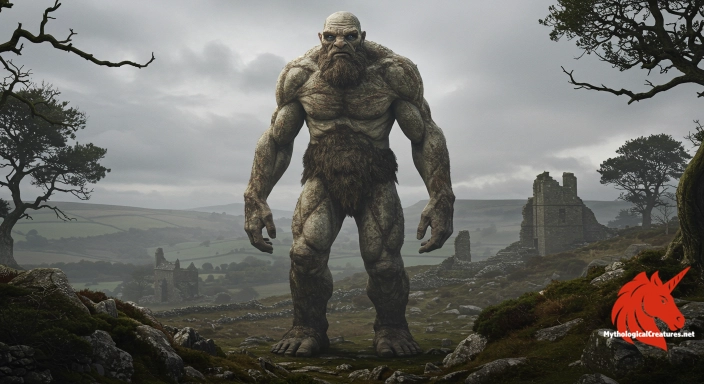
Dare to Meet the Blunderbore....
The Mythological Creatures Book Series
Yokai, Greek, Norse, Egyptian & Chinese. Five illustrated field guides to the creatures the old stories either warned or told you about.
Curated by the Mythological Creatures Team
Series editor: Mythological Creatures Directory
Primary desk: Hellenic & Ancient Mediterranean Desk
(rev. November 2025)