
Fjölnir: Fjölnir is a legendary king from Norse mythology, believed to be the son of the god Freyr and Gerðr.

Fjölnir
Fjölnir - Fjölnir embodies the legendary origins of the Swedish royal line and reflects the intermingling of divine ancestry with mortal rulership in Norse tradition.
the legend in five swipes.
the legend in five swipes.
Fjölnir: Where the Legend Started
Fjǫlnir emerges from the mists of Norse legend as a regal figure whose divine origins and storied reign continue to captivate the imagination. Born of the god Freyr and his consort Gerða, he embodies the fusion of celestial power and mortal endeavour. His name, rendered variously as Fiolnir, Fjölner, Fjolner, or Fjolne, reflects the rich and mutable tradition of oral storytelling. Early attestations place him as the progenitor of the Swedish Yngling dynasty, linking him indelibly to the hallowed grounds of Gamla Uppsala. His reign, set in the turbulent era from the 1st century BC to the early 1st century AD, intermingles myth with the historical undercurrents of Scandinavia. The legend of Fjǫlnir also interweaves themes of ambition, fate, and the burdens of legacy, mirroring the societal values of early Norse communities. His narrative provided a framework for understanding the divine right of kings and their celestial descent in an era when myth and history were indistinguishable. The enduring allure of his story reinforces his status as a pivotal character in the tapestry of Norse mythology. His multifaceted legacy continues to inspire and provoke debate among historians, mythologists, and cultural enthusiasts alike.
Fjölnir: How the Tale Was Told and Retold
The earliest literary references to Fjǫlnir can be found in works like the Grottasöngr, where his lineage and fate are recounted with vivid detail. Multiple medieval manuscripts and oral traditions provide variant accounts of his deeds and destiny, underscoring the fluid nature of his myth. Some texts portray his rule with an emphasis on noble qualities and the burdens of kingship, while others highlight his tragic demise in a vat of mead. Distinct narrative threads arise in different sources, each contributing layers of complexity to his character. Variations in the story often reflect regional priorities and the evolving understanding of divine versus mortal realms. These accounts reveal a tension between heroic idealism and fatalistic inevitability, a common theme in much of Norse lore. The amalgamation of these sources has allowed his legend to be transmitted and transformed over time, adapting to new cultural contexts. Even with the differences in detail, a central story of divinely sanctioned kingship and tragic downfall persists throughout the surviving accounts. Each retelling not only embellishes his life but also reinforces the enigmatic qualities synonymous with ancient Norse myth.
Fjölnir: Size, Shape and Strange Features
Although ancient texts provide only sparse details of Fjǫlnir's appearance, later interpretations have imbued him with a commanding physical presence. He is often imagined as a man of robust stature, exuding an aura that blends both divine authority and mortal resilience. His facial features, typically described as noble and chiseled, suggest a countenance that reflects a lifetime of leadership and conflict. Artists and storytellers have depicted his eyes as bright with wisdom, mirroring the deep, reflective qualities of a northern fjord. His hair is envisioned as dark and flowing, reminiscent of the stormy skies over ancient Scandinavia, accentuating his otherworldly origins. Regal garments and intricately crafted armor are imagined as part of his attire, each piece symbolising his connection to both the warrior tradition and divine heritage. The symbolism of his crown and adornments further accentuate the duality of his character—both majestic and marked by human vulnerabilities. Some accounts hint at visible scars or weathered features, which are interpreted as emblems of past conflicts and the cost of kingship. These artistic interpretations offer a window into how later generations sought to visualise a king whose true form remains forever shrouded in myth.
Fjölnir: The Same Figure in Different Places
The myth of Fjǫlnir varies significantly across different regions of Scandinavia, with each tradition colouring his character to align with local cultural values. In Sweden, he is celebrated as the forefather of the Yngling dynasty, a symbolic anchor for the early historical narrative of Swedish monarchy. Danish traditions, meanwhile, often integrate his tale with that of Peace-Fróði, emphasising the dramatic circumstances of his demise in a vat of mead. These regional adaptations illustrate how localized customs and historical contexts transform a single narrative into a multifaceted legend. In some areas, his story is also woven into broader mythic cycles that explore themes of divine ancestry and royal legitimacy. Oral traditions have played a vital role in these adaptations, ensuring that his myth remains both fluid and responsive to the collective memory of each community. Variations in his name and attributes across regions underscore both linguistic evolution and the selective emphasis different cultures have placed on his legacy. As each tradition retells his saga, elements of local mythology and societal values subtly reshape his character. Through these diverse regional lenses, Fjǫlnir’s story retains a dynamic quality that renders it ever-relevant and adaptable.
Fjölnir: Parallels in Other Cultures
Fjǫlnir's narrative invites comparison with other mythological figures who straddle the line between mortal and divine, serving as archetypal progenitors of great lineages. His dual identity as both a legendary king and a figure of semi-divine origin mirrors similar characters in other cultures, such as the heroic founders of Greek and Celtic traditions. The manner of his demise, particularly the dramatic image of drowning in a vat of mead, resonates with global myths where fateful encounters with sacred substances lead to a downfall. This thematic element finds echoes in tales where excess or destiny conspires against the proud and powerful. His story operates as a metaphor for the delicate balance between ambition and the inexorable forces of fate—a motif present in many ancient royal myths. Like the storied heroes of the Arthurian legends, Fjǫlnir embodies the tragic interplay of greatness and vulnerability. His character also invites cross-cultural dialogue about the nature of divine intervention in the affairs of man. These parallels highlight a shared cultural heritage that transcends geographical divides and underscores the universal appeal of myths centered on the heroic journey. In this way, Fjǫlnir stands as a testament to the enduring power of myth to connect disparate cultural narratives.
Fjölnir in Modern Culture
The evolution of Fjǫlnir’s myth reflects centuries of reinterpretation, transitioning from its oral origins to a symbol imbued with historical and cultural significance. Medieval scribes and sagas preserved the essence of his legend, even as they adapted its details to suit contemporary tastes and political needs. The advent of national romanticism in Scandinavia saw his story become emblematic of an ancient, noble past, contributing to a burgeoning sense of national identity. In modern times, his myth has been revisited and reimagined in literature, art, and even digital media, ensuring that his legacy endures in the collective consciousness. Contemporary reinterpretations often emphasise themes of destiny, sacrifice, and the intricate relationship between divine forces and human frailty. His tragic end and regal birth continue to serve as potent symbols in discussions of leadership, identity, and the passage of time. Modern artists and writers frequently draw on his story to explore contemporary concerns, weaving elements of his ancient narrative into new forms of cultural expression. The transformation of his legend over the centuries illustrates the fluidity of myth and its capacity to adapt to changing societal values. Fjǫlnir’s legacy remains a vibrant reminder of the enduring power of myth to inspire and challenge, bridging the gap between the ancient past and modern sensibilities.
Interesting Fact
An intriguing aspect of Fjölnir's legend is his death by drowning in mead, a fate that starkly contrasts with his divine and royal heritage, adding layers of mystery to his myth.
Mythological Treasures
Norse Sagas: A field guide to the beasts of the Viking world
Drawn from the saga accounts themselves, with the powers, weaknesses and doom of each being set out.
Chinese Beasts: A field guide to the dragons and demon kings of Chinese myth
From river dragons to demon kings, with the legends that shaped five thousand years of storytelling.
Japanese Yōkai: A field guide to the spirits and demons of Japanese folklore
Fifteen spirits, with the signs to watch for and what the old tales say to do if you meet one.
the legend in five swipes.
Limited sponsor opportunity
One slot, carefully chosen partners
We only feature a small number of relevant sponsors at any time. If you create serious myth content, we would like to hear from you.
Partner with usQuick Creature Info
Origin:
Features:
Associations:
Our Mythic Legendary Rating:

Also Sometimes Known As:
Habitat:
Supernatural Powers:
Physical Attributes:
Abilities:
Behavior:
Lore:
References
Discover Another Mythical Legend You May Not Have Heard Of?
Uncover the mysteries of ancient folklore and expand your knowledge of legendary beings from cultures around the world.
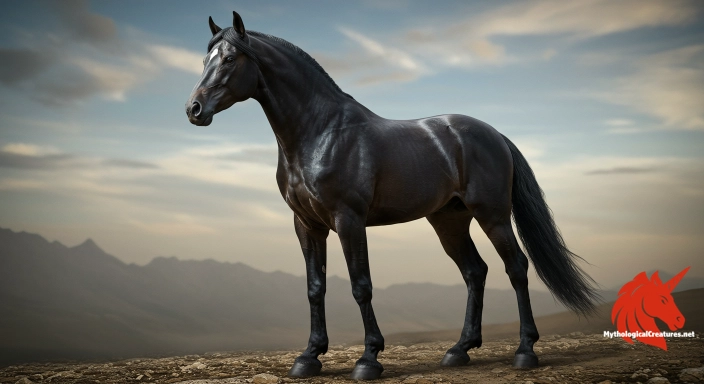
Dare to Meet the Arion....
The Mythological Creatures Book Series
Yōkai, Greek, Norse, Egyptian & Chinese. Five illustrated field guides to the creatures the old stories either warned or told you about.
Curated by the Mythological Creatures Team
Series editor: Mythological Creatures Directory
Primary desk: Northern & European Folklore Desk
(rev. November 2025)