
Gaueko: Gaueko is a mysterious Basque spirit of the night known for enforcing nocturnal taboos.
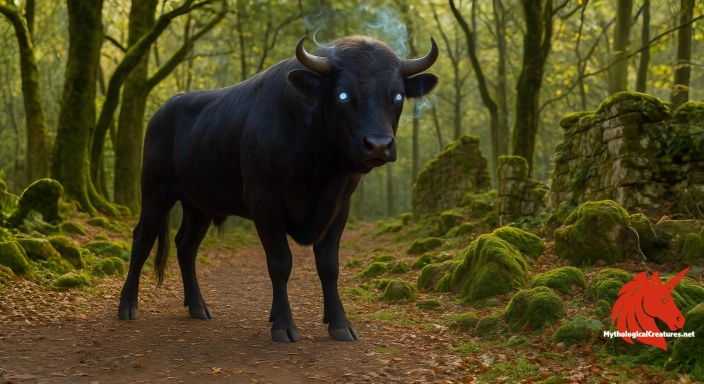
Gaueko
Gaueko - Represents the dangerous and mysterious nature of the night in Basque mythology, serving as a moral enforcer among humans.
the legend in five swipes.
the legend in five swipes.
Gaueko: Where the Legend Started
Gaueko emerges from the rich tapestry of Basque myth as an enigmatic guardian of the night, whose origins are interwoven with ancient community customs and the natural rhythms of dusk and dawn. His presence is emblematic of the mysterious power that darkness wields, serving as both a warning and a guide to those who traverse the nocturnal hours. The spirit's reputation as a punisher of hubris—particularly for those who boast of invulnerability to the dark—reflects a deep-seated cultural emphasis on respect for the unseen forces of nature. In the early oral traditions, he was depicted not only as a fearsome demon but also as a jentil, an otherworldly divinity whose moral authority transcends simple good and evil. The duality of his character, shifting between benevolent guardian and vengeful punisher, highlights a sophisticated understanding of human frailty in the face of natural forces. Rooted in the everyday experience of nightfall, Gaueko’s legend echoes the practical realities of pre-modern life, where darkness was both protective and perilous. His myth encapsulates community wisdom, warning against reckless bravado while imbuing the night with a sense of sacred mystery. Over time, his persona has become a cultural touchstone, symbolising the eternal interplay between the known and the unfathomable realms of the night.
Who wrote down the legend of Gaueko?
The narrative of Gaueko is primarily derived from centuries-old oral traditions and folklore, with sporadic mentions in early written compilations of Basque legends. Various local storytellers and folk poets have recounted the exploits of this nocturnal spirit, each adding layers of nuance to his character through diverse retellings. In some accounts, his presence is announced by the subtle whisper of the wind or enigmatic incantations that blend seamlessly with the natural sounds of the night. There exist differing story variants where Gaueko is portrayed both as a benevolent force upholding the sanctity of nighttime and as a merciless punisher for those daring to flaunt their fears. Some rural manuscripts from the 19th century hint at a more intricate relationship between his spectral interventions and communal norms. Local folklore archives from various Basque valleys preserve unique, sometimes conflicting depictions that highlight his mutable nature and moral ambiguity. These accounts, while sometimes conflicting, converge on the idea that Gaueko governs the boundary between the human realm and the shadowy unknown. The recurring phrase he utters, which demarcates the night from the day, underscores his central role in maintaining cosmic balance and cultural order. Through these diverse sources, the spirit’s myth is celebrated as a living tradition that continues to influence local narratives.
Gaueko: What the Legends Describe
Descriptions of Gaueko are as varied as the regions in which his legend is told, often shifting in form to suit the mood of the night and the expectations of the listener. His physical manifestations can range from an almost ethereal gust of wind to a tangible, imposing figure that challenges the boundaries of human perception. In certain tales, he is envisioned as a spectral cow, a guise that symbolises both the unexpected and the pastoral essence of Basque life. Other accounts speak of a more monstrous appearance, with features that are rugged, shadowed, and ever-changing, mirroring the unpredictable nature of the darkness itself. Some narrations hint at eyes that glimmer with an eerie luminescence, reminiscent of moonlight that pierces a thick veil of obscurity. There is also mention of horn-like appendages or a vaguely anthropomorphic outline that serves as a bridge between animalistic and human traits. This fluidity in his physical description serves to underscore the adaptability of his myth, reflecting the interplay between literal and symbolic imagery. The variability in size and appearance—sometimes colossal and sometimes deceptively diminutive—adds to the aura of mystery that surrounds him. Each depiction is carefully layered with symbolism, drawing attention to the seamless blending of natural phenomena with supernatural essence. Overall, the imagery associated with Gaueko is deliberately crafted to evoke a sense of awe and caution, reinforcing his status as a formidable presence of the night.
How does Gaueko differ by region?
Local traditions have shaped the image of Gaueko in distinct ways, with each region of the Basque country contributing unique elements to his mythos. In rural highland communities, he is often seen as a protective spirit whose role is to safeguard the sanctity of the nocturnal hours, while in lower valleys his image sometimes assumes a more foreboding, punitive aspect. Variations in his portrayal are influenced by the differing environmental conditions and social practices of each area, leading to diverse interpretations that range from benevolent guardian to vengeful demon. Some regions emphasise his ability to manifest as natural phenomena—a sudden gust of wind or a moving shadow—mirroring local experiences of nature’s caprice. In certain coastal areas, his presence is interlaced with elements of seafaring lore, attributing to him a role in the unpredictable temperament of both land and sea. Local rites and community gatherings have, over time, incorporated stories of Gaueko into cautionary tales aimed at curbing imprudent nocturnal ventures. Artistic expressions, including traditional paintings and sculptures, capture his dual nature in region-specific styles, reflecting the creative spirit of each locality. The diversity in regional depictions not only enriches his character but also embodies a broader cultural dialogue about the relationship between humans and the mysterious forces of the night. Through these variations, Gaueko remains a dynamic symbol, continually reinterpreted by communities in tune with their own experiences of darkness and light.
Gaueko: Cross-Cultural Comparisons
When compared with other mythological beings across Europe, Gaueko holds a distinct yet resonant position as a nocturnal force that transcends simple categorisation. His role as the enforcer of night-bound taboos is reminiscent of certain European entities such as the Germanic night hags and the spectral black dogs that have haunted rural landscapes for centuries. Similar to these figures, Gaueko embodies the fear and mystique associated with darkness, yet his dual identity—oscillating between a benevolent guardian and a vengeful punisher—sets him apart. He shares notable thematic parallels with other shapeshifting deities who appear in diverse cultural narratives, reflecting the universal human inclination to personify the unknown. While some traditions cast him in the mould of a devilish figure, others celebrate his ancestral roots as a jentil, indicating a complexity that mirrors the multifaceted nature of night itself. The adaptability of his form, whether as a gust of wind, a cow, or a monstrous visage, aligns him with shapeshifting spirits found in Celtic and Slavic mythologies. Cross-cultural comparisons reveal that the tension between fear and reverence, so central to Gaueko’s myth, is a recurring motif in stories that seek to explain the capricious qualities of nocturnal life. In this way, his legend contributes to a broader mythological tapestry that spans geographical and cultural boundaries, underlining shared human experiences of the mysterious forces of darkness.
Gaueko: How the Legend Lives On
The evolution of Gaueko’s myth reflects a broader transformation in cultural attitudes towards the natural world and the supernatural. Once an omnipresent figure in rural Basque folklore, his role has gradually expanded and adapted to the context of modern society, where ancient traditions meet contemporary sensibilities. In today’s cultural landscape, Gaueko is not only celebrated as a cautionary figure who upholds the sacred order of night and day, but also revered as a symbol of the intrinsic mystery that continues to inspire artistic expression. Modern literature, visual arts, and even local festivals have embraced his legacy, reimagining him as a complex character that straddles the line between myth and metaphor. His adaptable narrative has allowed him to morph into a figure that both honours traditional values and challenges modern perceptions of rationality and reason. The resurgence of interest in pre-modern mythologies has brought Gaueko back into public consciousness, prompting renewed interpretations that explore themes of nature, vulnerability, and the unknown. Contemporary storytellers and cultural historians have incorporated his figure into a dialogue about heritage, identity, and the lingering influence of the past on modern life. Through these evolving portrayals, Gaueko continues to serve as a potent reminder of the power and allure of the night, urging successive generations to contemplate the enduring mysteries that lie beyond the realm of everyday experience.
Interesting Fact
An intriguing aspect of Gaueko is his ability to transform his appearance, from a simple gust of wind to a formidable beast, reflecting the unpredictable essence of the night.
Mythological Treasures
Chinese Beasts: A field guide to the dragons and demon kings of Chinese myth
From river dragons to demon kings, with the legends that shaped five thousand years of storytelling.
Japanese Yokai: A field guide to the spirits and demons of Japanese folklore
Fifteen spirits, with the signs to watch for and what the old tales say to do if you meet one.
Greek Myths: A field guide to the monsters of ancient Greece
Every monster here earned its place in legend, and each gets a full page of artwork and the story behind it.
the legend in five swipes.
For authors, artists, and makers
Created something from the realm of myth?
If your book, deck, game, or artwork draws from legendary creatures and lore, you can showcase it here in a tasteful, year-round placement.
Share your projectQuick Creature Info
Associations:
Our Mythic Legendary Rating:

Habitat:
Supernatural Powers:
Physical Attributes:
Abilities:
Behavior:
Lore:
Related Creatures, Tales or Lore
- NNyx (Greek mythology)
- NNocnitsa (Slavic folklore)
- HHine-nui-te-pō (Maori mythology)
References
Discover Another Mythical Legend You May Not Have Heard Of?
Uncover the mysteries of ancient folklore and expand your knowledge of legendary beings from cultures around the world.
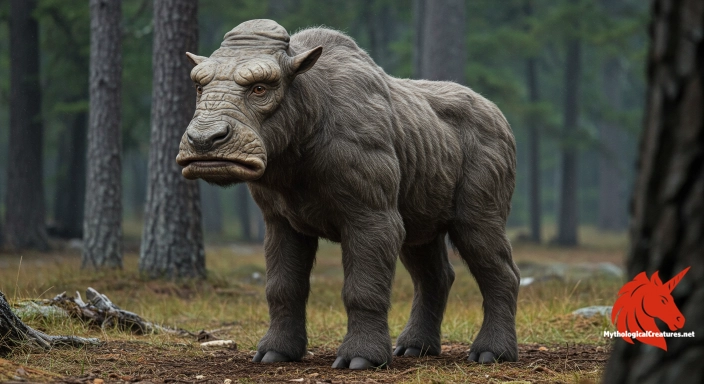
Dare to Meet the Hugag....
The Mythological Creatures Book Series
Yokai, Greek, Norse, Egyptian & Chinese. Five illustrated field guides to the creatures the old stories either warned or told you about.
Curated by the Mythological Creatures Team
Series editor: Mythological Creatures Directory
Primary desk: Hellenic & Ancient Mediterranean Desk
(rev. November 2025)