
Gello: Gello is a female demon from Greek mythology known for her curse that brings infertility, miscarriage, and infant mortality.
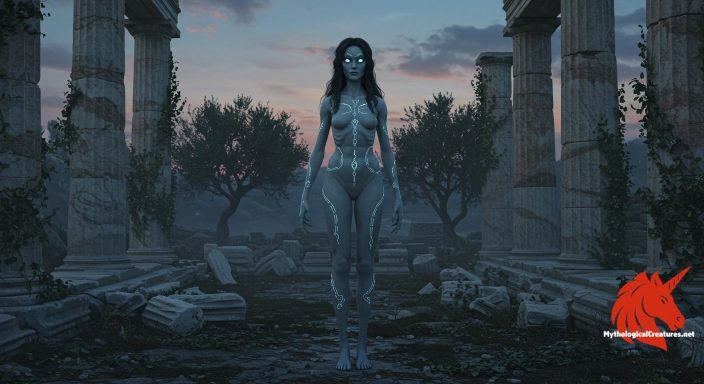
Gello
Gello - Gello represents a supernatural threat to fertility and childbirth, reflecting deep cultural anxieties in Greek and Byzantine folklore.
the legend in five swipes.
the legend in five swipes.
The Origin Story of Gello
Gello is a figure steeped in ancient myth, emerging as a spectral demon whose dread touch was believed to imperil the very essence of fertility. Born from the fears and uncertainties of early Greek society, she came to symbolise the dangers that loomed over childbirth and maternal well‐being. Her narrative is interwoven with early testimonies that paint her as a revenant with a singular focus on disrupting the reproductive cycle. The account of her existence reflects a deep-seated anxiety towards unexplained infertility and the sorrowful loss of infants. Over time, Gello's identity evolved, gaining prominence in various traditions and even being enlisted as part of a wider class of malevolent beings in Byzantine lore. Her presence served as both a warning and a manifestation of the societal stigma surrounding failed fertility and tragedy. Ancient communities perceived her as a concrete threat, serving as the supernatural explanation for otherwise inexplicable medical misfortunes. Tales of her terror underscored the vulnerability inherent in the process of childbirth, resonating with both the living and the spectral. Her enduring myth continues to echo through the ages, a stark reminder of the power of belief in the face of life’s most profound mysteries.
How many versions of the Gello story are there?
Ancient literature provides the primary foundation for the myth of Gello, with various fragments and inscriptions hinting at her malevolent influence. Detailed descriptions appear in a range of texts where she is portrayed as a force that exacts retribution through the affliction of women. Byzantine manuscripts further codify her role, grouping her with other similar spirits and underscoring her feared reputation. In many traditional narratives, the figure of Gello is central to discussions of curses and the supernatural afflictions that beset mothers. Some local folk tales recount specific rituals that communities employed in efforts to stave off her influence, underlining her relevance in everyday life. The diversity in her portrayal is evident in alternative forms of her name, including Gyllou, Gylou, Gillo, and Gelu, each marking subtle regional nuances. These ancient sources demonstrate the melding of literary tradition with oral folklore, producing a character whose origin is as ambiguous as it is evocative. Accounts range from grim warnings in medical treatises to cautionary tales shared in domestic settings, all of which contribute a layered legacy to her myth. Various textual traditions interlace, creating multiple story variants that highlight her complex role in ancient belief systems. Her narrative persists as a testament to the enduring power of myth in explaining the unpredictable trials of human life.
How would you recognise Gello?
Traditional depictions of Gello evoke an image of a spectral woman whose appearance is both beguiling and fearsome. She is often portrayed with a pallid, almost luminescent complexion that casts an eerie glow in the dark. Her eyes, deep and penetrating, seem to reflect a timeless sorrow intertwined with malice. Many accounts describe her long, unkempt hair flowing like strands of shadow, a visual metaphor for the disarray she brings to life. Her facial features are rendered gaunt and angular, suggesting the ravages of a curse that spans beyond the mortal realm. Illustrations and literary descriptions alike suggest that her form, shifting between solidity and mist, remains elusive and unpredictable. Although seldom noted as imposing in size, some variants render her as a more physical spectre whose presence instils an immediate sense of dread. The details of her attire, often depicted as ragged and tattered, symbolise the transient boundary between life and death. Every element of her physical portrayal is imbued with symbolism, designed to evoke both temptation and revulsion in those who behold her.
The Geography of the Gello Legend
The myth of Gello travelled widely, adapting to a variety of cultural and geographical contexts. In classical Greece, she was a direct embodiment of the catastrophic forces that could undermine the sanctity of reproduction. As the myth journeyed into Byzantine realms, her identity became part of an organised array of demonic entities known as gelloudes. In local traditions across the Eastern Mediterranean, her name morphed into variants such as Gyllou and Gelu, reflecting linguistic shifts and regional storytelling styles. Rural communities often infused her tale with local colour, depicting her not just as an external threat but as an embodiment of communal anxieties. The very nature of her curse was adapted to local circumstances, with some regions emphasising the chaos she wrought on family life. These narratives occasionally linked her with other regional spirits, forming a complex tapestry of superstitions about childbirth and feminine vulnerability. Each locale contributed its own nuances, resulting in a rich diversity of interpretations that spanned from outright malevolence to a more symbolic menace. Such regional variations accentuate the myth’s flexibility, as different cultures integrated their own experiences and fears into Gello’s enduring legend.
What parallels exist to Gello in other traditions?
Gello occupies a distinct niche in the realm of mythological beings while also sharing notable parallels with other cultural figures. Her role in disrupting the reproductive process finds echoes in other traditions, particularly in the persona of Lilith, whose lore similarly intertwines with themes of fertility and feminine power. Across disparate cultures, many spirits and demons are invoked to account for unexplained losses and misfortunes in childbirth, placing Gello within a broader archetype of reproductive misfortune. In Celtic lore, for example, banshees serve as omens of death, a role that intersects with the cautionary aspects of her myth. Other near-eastern and Mediterranean traditions also feature spectral women whose vengeful presence mirrors the societal phenomenology of Gello. While the specific attributes and cultural contexts may vary, these figures consistently symbolise the anxiety surrounding the vulnerabilities inherent in the process of birth and regeneration. The comparison highlights a universal impulse to personify the uncertainties and hardships of reproductive life. Moreover, the collective narrative of these entities speaks to a shared human experience of confronting inexplicable loss and disruption. Such cross-cultural comparisons enrich the understanding of Gello, revealing a complex interplay between local superstition and widespread metaphors of feminine mystique and menace.
Gello: Then and Now
Over the centuries, the story of Gello has undergone significant transformation, reflecting the evolving perceptions of both the supernatural and women’s health. In early Greek lore, she was accepted as a literal, dangerous force capable of inflicting grievous harm upon the most intimate stages of life. The transition into Byzantine society saw her myth absorb stricter religious interpretations, aligning her with a pantheon of demons that were rigorously classified and feared. As centuries passed, the literal belief in such spectres waned, yet the symbolic power of Gello endured, offering a metaphorical lens through which to view issues of fertility and maternal suffering. Modern retellings often recast her as a tragic figure, emblematic of the historical struggles faced by women in a turbulent socio-medical landscape. Contemporary interpretations sometimes highlight the gendered dimensions of her myth, inviting discourse on how society projects its fears about infertility onto a single archetypal figure. In literature and visual arts, she reappears as an enigmatic character whose presence questions the interplay between myth and modernity. This evolution from a feared demon to a complex symbol underscores the timeless nature of myth-making, illustrating how ancient fears can be reinterpreted to resonate with new generations. The legacy of Gello remains a powerful reminder of the human need to explain and mythologise the vulnerabilities inherent in life and reproduction.
Interesting Fact
An interesting aspect of Gello’s myth is that her name eventually became a generic term for a class of harmful spirits, highlighting how her feared legacy influenced cultural perceptions of demonic forces in both ancient and medieval societies.
Mythological Treasures
Greek Myths: A field guide to the monsters of ancient Greece
Every monster here earned its place in legend, and each gets a full page of artwork and the story behind it.
Egyptian Legends: A field guide to the gods and monsters of ancient Egypt
Guardians of the living and devourers of the dead, with the role each played in judgement.
Chinese Beasts: A field guide to the dragons and demon kings of Chinese myth
From river dragons to demon kings, with the legends that shaped five thousand years of storytelling.
the legend in five swipes.
Advertising opportunity
Showcase your mythology project
We offer limited sponsor placements for books, courses, games, and creators aligned with our audience.
View partnership optionsQuick Creature Info
Origin:
Features:
Associations:
Our Mythic Legendary Rating:

Also Sometimes Known As:
Habitat:
Supernatural Powers:
Physical Attributes:
Abilities:
Behavior:
Weaknesses:
Lore:
References
Discover Another Mythical Legend You May Not Have Heard Of?
Uncover the mysteries of ancient folklore and expand your knowledge of legendary beings from cultures around the world.
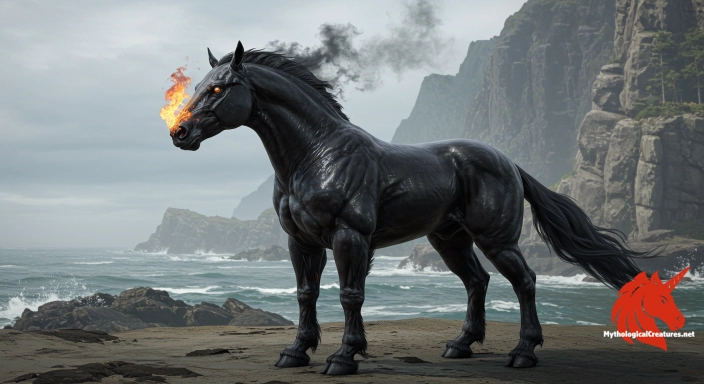
Dare to Meet the Morvarc'h....
The Mythological Creatures Book Series
Yokai, Greek, Norse, Egyptian & Chinese. Five illustrated field guides to the creatures the old stories either warned or told you about.

Curated by the Mythological Creatures Team
Series editor: Mythological Creatures Directory
Primary desk: Hellenic & Ancient Mediterranean Desk
(rev. November 2025)