
Glaðr: Glaðr is a mystical horse featured in Nordic mythology.
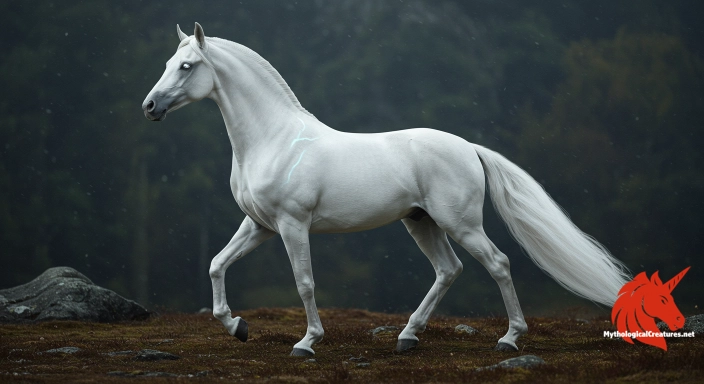
Glaðr
Glaðr - Glaðr exemplifies the cosmic order through its participation in the daily journey of the gods, symbolising the renewal of Day.
the legend in five swipes.
the legend in five swipes.
Where does Glaðr come from?
Glaðr, a notable emblem of Nordic mythology, is celebrated for its radiant and joyful character that has captivated both ancient and modern audiences. Its origins are interwoven with the cosmic tapestry of Norse tradition, where divine steeds were integral to the daily journeys of the gods. This mythic horse is attested in seminal texts such as the Poetic Edda and the Prose Edda, which together form the backbone of Viking Age lore. The creature is depicted as a majestic presence among the Æsir’s chariots, symbolising the luminous aspects of both the celestial and the earthly realms. Its various anglicised names—Glad, Gladr, or Glath—reflect a rich history of interpretation and translation over the centuries. Early narratives portray Glaðr as an embodiment of brightness, whose role extends beyond mere transport to represent the eternal cycle of light and renewal. The horse’s inclusion in tales of the divine journey to Yggdrasil underscores its importance in linking the human with the transcendent. Moreover, its presence in myth serves as a reminder of the ancient Scandinavian understanding of time, light, and cosmic order. By harmonising elements of natural beauty with divine purpose, Glaðr continues to intrigue and inspire as a symbol of hope and brilliance.
Which versions of the Glaðr story survive?
Ancient texts such as the Poetic Edda and the Prose Edda provide our primary glimpses into the lore of Glaðr, even though detailed narratives remain sparse. The Poetic Edda, with its evocative verses, secures Glaðr’s position among the celestial steeds that accompany the gods on their daily odysseys. In contrast, the Prose Edda offers a more explicit account, assigning this noble horse a role linked to the personification of the day alongside figures like Skinfaxi. Various story variants emerging from these sources hint at a dual function: both as a literal conveyance for divine beings and as a symbol for the passage of time from darkness to light. Some manuscript fragments allow for interpretative flexibility, inspiring oral traditions and later retellings that further embellish its mythic attributes. These differing accounts have, over time, cultivated an aura of mystery around Glaðr, with some regional recensions linking it subtly to the cosmic interplay of fate and renewal. The interplay of these sources invites modern scholars and enthusiasts alike to reexamine its symbolic role within the broader corpus of Norse mythology. Ultimately, despite the brevity of its mentions, the accumulated textual evidence has solidified Glaðr’s enduring presence in the mythic narrative of the North.
How powerful did people believe Glaðr to be?
Visually, Glaðr is often portrayed as a majestic steed of sublime beauty, its form a harmonious blend of strength and elegance. Ancient imagery and descriptions suggest that its coat gleams with an inner light, capturing the very essence of daylight in subtle, shifting hues. The horse’s sleek, muscular build signifies both power and agility, befitting a creature tasked with traversing the divine realms. Its flowing mane and tail are depicted as cascading streams of light that evoke the delicate dance of the aurora. Illustrations and carvings frequently emphasise that its eyes sparkle with a luminous quality, reflecting wisdom and a touch of the otherworldly. Detailed artistic renditions highlight every nuance of its form—from the robust curvature of its sinewy limbs to the graceful arch of its neck. In some depictions, ornate tack and runic symbols adorn its person, reinforcing its sacred connection to the Æsir. Contemporary interpretations continue to draw upon these classical features, merging tradition with modern aesthetics to underscore its ethereal presence. Overall, Glaðr is depicted as a creature whose physical characteristics not only command admiration but also symbolise the dynamic interplay of light, nature, and divinity.
Glaðr: Local Variations in the Story
Across the varied landscapes of the Nordic world, the lore of Glaðr has been adapted to reflect local cultural sensibilities. In Iceland, for instance, the steed is sometimes celebrated in sagas as a harbinger of hope during the long, oppressive winters, embodying the promise of returning light. Norwegian ballads, steeped in the mystique of rugged terrain, often portray Glaðr as a silent guide whose presence heralds the advent of dawn. Swedish folkloric traditions accentuate its role as a luminous symbol, interweaving elements of legend with the cyclic patterns of nature. In rural parts of Denmark, local narratives sometimes elevate the horse to a guardian-like status, whose rare appearances are believed to bring both good fortune and spiritual protection. Variations in the creature’s depiction—ranging from subtle differences in the colour of its coat to the style of its ornate bridles—reveal a rich diversity of regional aesthetics. Some communities have even incorporated Glaðr into seasonal rituals and celebrations, aligning its mythic attributes with the solstices and equinoxes. These local adaptations enhance the broader Norse narrative, ensuring that the steed resonates with a multiplicity of cultural identities. This regional diversity not only enriches its mythic portrayal but also underscores the dynamic interplay between shared tradition and local heritage.
Which figures are similar to Glaðr?
When set alongside other divine equine figures from world mythologies, Glaðr emerges as a compelling study in shared symbolism and cultural exchange. Across many traditions, horses are revered as embodiments of power, beauty, and a connection to the divine, much in the same way as Glaðr is in Norse lore. Figures such as Pegasus from Greco-Roman mythology echo similar themes with their radiant presence and their roles as celestial messengers or transports of the gods. In Celtic myths, sacred horses are equally celebrated as guides between the earthly and the mystical realms, underscoring a universal association with transcendence. The intuition of many Indo-European cultures to use equine imagery in expressing the cyclical nature of time and the natural order finds a vivid expression in the character of Glaðr. This shared mythopoetic motif highlights how the motif of a luminous, life-affirming steed transcends geographical and cultural boundaries. Moreover, while each tradition imbues its steed with unique narrative elements and aesthetic characteristics, the common themes of renewal, light, and cosmic harmony remain predominant. Glaðr’s narrative thus contributes to a broader dialogue about the human connection with nature and the cosmos. In comparative terms, its attributes serve as a bridge linking the mythological imaginations of disparate cultures, thereby enriching our understanding of the universal significance of equine symbolism.
Glaðr: Modern Retellings and Reinventions
Throughout the centuries, Glaðr has transcended its original mythological context to become an enduring symbol of light, hope, and cultural resilience. Its initial portrayal in medieval Norse texts laid the foundation for its continued evolution as a beacon of the divine interplay between day and night. During the Romantic era, as interest in Norse mythology experienced a revival, artists and poets reinvented the steed as an emblem of sublime beauty and transcendental power. This reimagining allowed Glaðr to bridge the gap between ancient myth and contemporary artistic expression, capturing the imagination of a new generation. Modern media and fantasy literature have further expanded its mythic repertoire, often portraying it with sleek, futuristic aesthetics while retaining its classic luminescent quality. Cultural festivals and artistic exhibitions in Scandinavia occasionally invoke its image, highlighting its integral place within the region’s rich mythological heritage. Scholars and enthusiasts continue to explore its symbolism as a representation of the eternal cycle of light and dark. The evolution of Glaðr’s portrayal also mirrors changing societal values, where traditional myth is reinterpreted through the lens of modern experience and technological imagination. Each reimagining contributes to a layered and dynamic legacy, ensuring that the steed remains relevant in both historical discourse and contemporary popular culture. In this manner, Glaðr endures as a living symbol, continually inspiring awe, reflection, and a celebration of the mysterious interplay between nature and the divine.
Interesting Fact
An intriguing aspect of Glaðr is its explicit association with Day, which emphasizes how even animals in Norse mythology hold symbolic roles in the cosmic order.
Mythological Treasures
Norse Sagas: A field guide to the beasts of the Viking world
Drawn from the saga accounts themselves, with the powers, weaknesses and doom of each being set out.
Chinese Beasts: A field guide to the dragons and demon kings of Chinese myth
From river dragons to demon kings, with the legends that shaped five thousand years of storytelling.
Japanese Yōkai: A field guide to the spirits and demons of Japanese folklore
Fifteen spirits, with the signs to watch for and what the old tales say to do if you meet one.
the legend in five swipes.
Limited sponsor opportunity
One slot, carefully chosen partners
We only feature a small number of relevant sponsors at any time. If you create serious myth content, we would like to hear from you.
Partner with usQuick Creature Info
Origin:
Features:
Associations:
Our Mythic Legendary Rating:

Also Sometimes Known As:
Habitat:
Supernatural Powers:
Physical Attributes:
Abilities:
Behavior:
Lore:
Related Creatures, Tales or Lore
- SSleipnir
- SSvaðilfari
- SSkinfaxi
References
Discover Another Mythical Legend You May Not Have Heard Of?
Uncover the mysteries of ancient folklore and expand your knowledge of legendary beings from cultures around the world.
Dare to Meet the Pleione....

The Mythological Creatures Book Series
Yōkai, Greek, Norse, Egyptian & Chinese. Five illustrated field guides to the creatures the old stories either warned or told you about.
Curated by the Mythological Creatures Team
Series editor: Mythological Creatures Directory
Primary desk: Northern & European Folklore Desk
(rev. November 2025)