
Glawackus: The Glawackus is a legendary fearsome critter from North American lumberjack folklore, described as a hybrid of bear, panther, and lion with a deadly memory-wiping gaze.
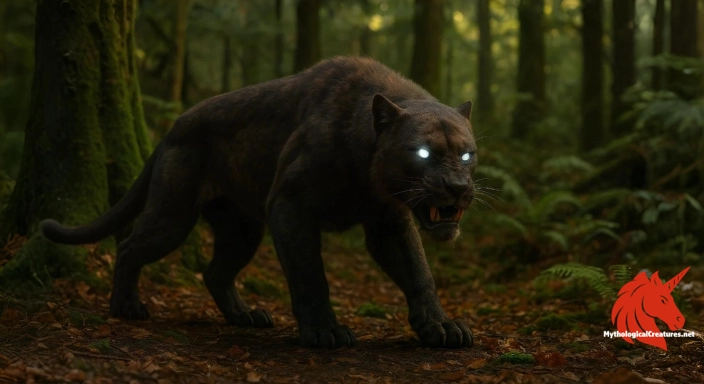
Glawackus
Glawackus - Serves as a legendary warning of the mysterious dangers lurking within the wilderness.
the legend in five swipes.
the legend in five swipes.
The Earliest Known Accounts of the Glawackus
The glawackus emerges as a striking figure in North American folklore, intricately woven into the fabric of 19th and early 20th century lumberjack lore. Born out of the vibrant yet harsh lives of those who toiled in vast, shadowy forests, this creature represented the wild and unpredictable heart of nature. Its myth was nurtured in the chill of the northern woods, where every sound and shadow could hold a secret. Many early storytellers referred to it as the northern devil cat, a name that evokes both dread and fascination. Its reputation as a spirit of the wilderness grew as labourers swapped tales over crackling campfires. The creature’s narrative was not merely a story of terror, but one that symbolised the untamed forces lurking on the fringes of civilisation. Over time, these stories evolved into cautionary anecdotes that bridged mundane life with the mystical unknown. Intriguingly, the legend also incorporates elements of supernatural power, such as its fabled memory-wiping gaze, adding a layer of enigmatic allure to its persona.
In the cultural context of its time, the glawackus served both to entertain and to warn, a dual-purpose figure that underscored the vulnerability of humans in the vast wilderness. Its story continues to resonate, offering a window into the rich, imaginative world of early North American folklore.
Glawackus: Variants Across the Sources
Historical narratives of the glawackus have been passed down through generations of lumberjacks and forest workers, each adding their own nuanced detail to the legend. Many of these accounts originated in remote logging camps, where the isolation of the wilderness sowed the seeds for tall tales and mysterious encounters. Early printed collections of ‘fearsome critters’ frequently featured the glawackus, cementing its place in the pantheon of cryptic beings. Distinct story variants have emerged, with some emphasising its fearsome, hyena-like screech and others focusing on its eerie, memory-wiping eyes. A notable narrative from 1939 in Glastonbury, Connecticut, continues to be cited as an example of its elusive presence. Over time, oral traditions and written records converged, allowing the tale of the northern devil cat to expand in both detail and symbolic significance. Variations in the retelling have allowed the creature to adapt to different audience sensibilities while maintaining its core mystique. The collated sources, ranging from campfire recitations to early folklore anthologies, form a mosaic that keeps the glawackus legend vibrantly alive among enthusiasts of myth and mystery.
This synthesis of multiple accounts ensures that the glawackus remains an ever-evolving narrative, one that is as rich and diverse as the forests it haunts.
What powers did the Glawackus have?
The glawackus is depicted with a striking blend of characteristics taken from a bear, a panther, and a lion, creating an image that is both powerful and surreal. Its body is robust and muscular, suggestive of a creature built for both strength and stealth within the dense, shadowy woodlands. Although described as blind, the creature compensates with an extraordinarily keen sense of smell alongside the ability to interpret sound waves, allowing it to navigate its domain with uncanny precision. Remarkably, its eyes, while not used for sight in the conventional sense, are attributed with a mysterious power capable of erasing memories when met by an unwary onlooker. The fur of the glawackus is imagined as dark and mottled, blending seamlessly into the natural palette of the forest environment. This unique combination of animal traits gives it a silhouette that is at once both familiar and otherworldly. Observers have often described a fusion of feline grace with the brute force typically associated with larger predators, enhancing its enigmatic presence. There is also anecdotal evidence that its size and proportions may subtly vary depending on the retelling, from a bulky mass to a more streamlined, cat-like form. Such a composite design ensures that the glawackus captivates the imagination, symbolising nature’s unpredictable capacity for merging disparate qualities into one formidable entity.
The creature’s additional penchant for emitting a fearsome, hyena-like screech further cements its status as a figure of both beauty and terror in the natural world.
Where was the Glawackus best known?
Regional interpretations of the glawackus illustrate the dynamic interplay between local culture and mythical narrative across North America. In the rugged forests of the Northeast, particularly in areas like Connecticut, the creature is often depicted as a spectral guardian of ancient, untouched wilderness. Storytellers in these regions typically imbue the glawackus with an air of mystery, emphasising its spectral appearance and supernatural abilities. Localised variants frequently highlight the creature’s distinctive, fearsome screech and the uncanny effect of its memory-wiping eyes, thereby creating a more haunting character. In other parts of the continent, adaptations of its legend portray it with enhanced feline attributes, lending a more agile and predatory presence to the myth. Some logging communities regard the glawackus as an omen—a subtle reminder of nature’s indifferent force against human endeavour. The diversity in description, whether stressing its bear-like robustness or the sleek grace of a panther, reflects the rich tapestry of regional folklore. Each retelling adapts the core myth to mirror the environmental and cultural context of the locale. Despite these local variations, the creature’s essential characteristics remain a consistent thread, weaving together disparate regions into a cohesive legendary tradition.
This regional richness reinforces the glawackus as a multifaceted symbol of the wild, one whose story shifts colour with the light of local customs and natural settings.
What makes the Glawackus different from similar figures?
The glawackus stands as a compelling example of mythological hybridity, drawing parallels with other composite creatures found in global folklore. Its amalgamation of features from a bear, panther, and lion invites comparisons with ancient chimeras, whose very nature challenges the boundaries of ordinary life. The notion of a creature whose gaze can obliterate memory is a striking motif that resonates with legends of mystical beings in various cultural traditions. Much like the mysterious entities found in European myth or even the spirit animals revered in indigenous stories, the glawackus blurs the line between the supernatural and the natural world. This enigmatic blend positions it alongside other notorious cryptids, such as the elusive Sasquatch or the spectral werewolf, which symbolize nature’s wild, untamable side. Its unsettling vocalisations further echo stories of creatures whose sounds are believed to portend doom or transformation. By embodying a mixture of characteristics across species, the glawackus encourages a broader dialogue on the fluid boundaries of myth and reality. Such multi-dimensional portrayals serve as a bridge between the rigid natural order and the surreal, dreamlike realms of legend. This cross-cultural comparison highlights how stories of hybrid creatures continue to fascinate and endure, reflecting a universal human impulse to understand the unknown.
The enduring appeal of the glawackus in comparative mythology underscores the timeless allure of tales that challenge conventional definitions of identity and existence.
What happened to the legend of the Glawackus?
Over the decades, the legacy of the glawackus has broadened from a local cautionary tale to an emblem of cryptid lore in modern popular culture. Early accounts, passed down through generations of loggers, have been revisited by enthusiasts and scholars alike, adding new layers of interpretation to its myth. With the march of time and the advent of new media, the creature has stepped from the shadowy edges of folklore into the spotlight of contemporary storytelling. Modern portrayals often incorporate its frightful screech and hypnotic, memory-wiping gaze as symbols of the enigmatic interplay between nature and human memory. The glawackus has inspired artists, writers, and filmmakers, who reimagine its narrative against the backdrop of modern challenges and urban legends. In some local communities, its myth has even spurred tourism and cultural festivals, celebrating the mystery of a creature that once haunted isolated logging camps. The evolution of its legend mirrors broader shifts in how supernatural entities are perceived in a world increasingly dominated by technological rationality. Its transformation from a whispered warning in the wilderness to a celebrated icon in cryptid conventions reflects a broader societal appetite for stories that defy easy explanation. Today, the glawackus continues to capture imaginations, serving as a reminder of an era when the unknown lurked just beyond the treeline.
This enduring myth not only enriches regional folklore, but also invites modern audiences to explore the persistent, magnetic allure of the supernatural.
Interesting Fact
An intriguing aspect of the Glawackus is its ability to erase memory simply through eye contact, a trait that distinguishes it from other legendary creatures.
Mythological Treasures
Chinese Beasts: A field guide to the dragons and demon kings of Chinese myth
From river dragons to demon kings, with the legends that shaped five thousand years of storytelling.
Japanese Yokai: A field guide to the spirits and demons of Japanese folklore
Fifteen spirits, with the signs to watch for and what the old tales say to do if you meet one.
Greek Myths: A field guide to the monsters of ancient Greece
Every monster here earned its place in legend, and each gets a full page of artwork and the story behind it.
the legend in five swipes.
For indie creators
Give your myth project a permanent home
Indie authors, artists, small studios, and makers can secure an annual, non-intrusive sponsor slot that meets readers where they explore.
Obtain more informationQuick Creature Info
Origin:
Features:
Associations:
Our Mythic Legendary Rating:

Also Sometimes Known As:
Habitat:
Supernatural Powers:
Physical Attributes:
Abilities:
Behavior:
Weaknesses:
Lore:
Related Creatures, Tales or Lore
References
Discover Another Mythical Legend You May Not Have Heard Of?
Uncover the mysteries of ancient folklore and expand your knowledge of legendary beings from cultures around the world.
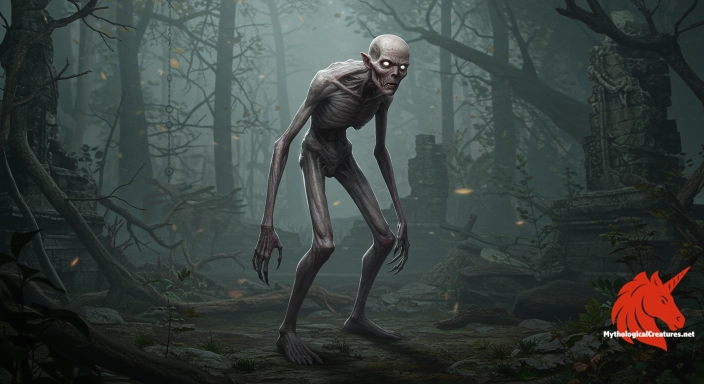
Dare to Meet the Drude....
The Mythological Creatures Book Series
Yokai, Greek, Norse, Egyptian & Chinese. Five illustrated field guides to the creatures the old stories either warned or told you about.

Curated by the Mythological Creatures Team
Series editor: Mythological Creatures Directory
Primary desk: Americas & Indigenous Traditions Desk
(rev. November 2025)