
Gomukha: Gomukha is the guardian deity (Yaksha) of Rishabhanatha in Jain cosmology.
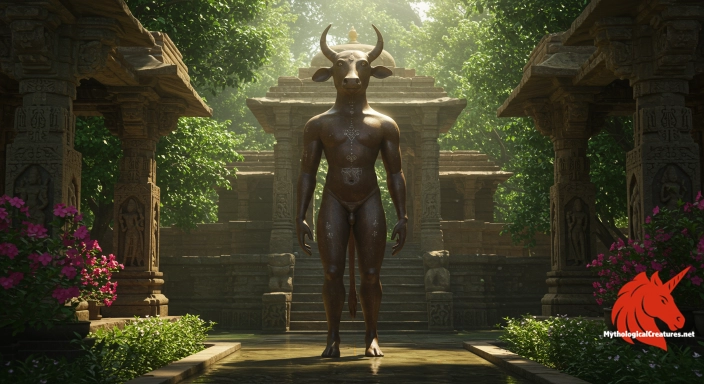
Gomukha
Gomukha - Embodies the protective role of attendant deities in Jain tradition, reinforcing the cosmic order and sanctity of the Tirthankara's teachings.
Origins & First Encounters
Gomukha emerges from the tapestry of Jain cosmology as a venerable guardian deity, celebrated for his unwavering role as the divine attendant of Rishabhanatha, the first Tirthankara. His origins are intertwined with the ancient spiritual narratives that underscore the virtues of protection and righteousness. Over centuries, his presence has come to symbolise the balance between martial strength and compassionate guidance. Early iconographic records in temples and inscriptions attest to a deep reverence for his protective nature. The figure of Gomukha is more than a mythic symbol; he embodies the moral imperatives of ethical living and spiritual guardianship within Jain thought. Cultural practices and ritual ceremonies continue to invoke his power as a safeguard for sacred teachings. His narrative has been a subtle yet essential part of the devotional landscape, reinforcing the sanctity of the Tirthankara’s legacy. Over time, his myth has enriched the philosophical dimensions of Jain practice, reflecting an enduring bond between divine purpose and earthly welfare.
Source Texts & Tale Variants
Ancient Jain scriptures and ritual texts provide the foundational context for Gomukha’s role, even if the details of his character are sometimes understated. Traditional agamas and commentaries have preserved mentions that link his divine attributes with the overarching themes of protection and spiritual integrity. Inscriptions found on temple walls and stone relics offer glimpses into how early practitioners recognised his guardianship. Oral traditions, passed through generations, have also contributed to a multilayered portrait that marries canonical references with folkloric embellishments. Varied narrative strands emerge from different textual sources, each adding subtle distinctions to his myth. Although some versions celebrate him primarily as a benevolent protector, others emphasise a martial aspect that guards the sanctity of the Tirthankara’s teachings. Devotional literature and temple art, spanning the medieval period to more recent times, also echo his significance in ritual practices. This rich amalgamation of literary and artistic sources underscores a dynamic tradition where theological emphasis intermingles with regional storytelling.
Form & Powers
Iconographic representations of Gomukha depict a deity whose impressive stature and refined features convey both regality and a vigilant readiness. His form is often rendered with a robust physique complemented by an aura of calm determination, emblematic of his role as a divine guardian. Artisans have intricately adorned him with richly detailed garments and ornate jewellery, which serve to accentuate his elevated status in the spiritual hierarchy. Variations in his depictions sometimes include multiple arms, each holding symbolic objects that represent virtues such as wisdom, protection, and strength. His facial expressions are carefully carved to balance serenity with an undercurrent of fiery resolve, inviting worshippers to trust in his guardianship. Some carvings reveal subtle bovine features, a nod to the sacred symbolism implied by his name, though these elements vary in prominence. The meticulous detailing found in temple sculptures and metal statues highlights the interplay between artistic tradition and religious symbolism. Every aspect of his portrayal is designed to inspire both awe and comfort, echoing a commitment to safeguard sacred doctrines.
Regional Faces
The portrayal of Gomukha adapts sensitively to regional artistic traditions and cultural contexts, revealing a spectrum of local interpretative nuances. In North India, for example, his image frequently embraces softer facial features and lush decorative motifs that bestow a gentle, inviting presence. Conversely, depictions from South India may lean towards a more austere and valorous presentation, with bold, dynamic postures that suggest readiness for righteous combat. Regional artisans often incorporate indigenous patterns and colours, which not only reflect local aesthetic preferences but also amplify his mythic traits. In areas such as Gujarat and Rajasthan, Gomukha appears in intricately carved temple facades that merge classical iconography with regional cultural symbols. Local festivals and community rituals may also highlight his role uniquely, celebrating him in processions that blend devotional fervour with regional artistry. The diversity of his representation reinforces the idea that divine protectors adapt to the cultural and spiritual sensibilities of the communities that honour them. This regional variation ensures that the essence of his guardianship remains vibrant, resonating with distinct local traditions while preserving core spiritual themes.
Cultural Parallels
A comparative exploration reveals that Gomukha shares many attributes with guardian deities across various mythological traditions, underscoring a universal archetype of divine protectors. His role is reminiscent of the yaksha figures found in Hindu and Buddhist iconographies, where divine attendants similarly safeguard spiritual sanctuaries. While each tradition imbues these figures with distinct cultural signifiers, the central idea of a vigilant helper remains constant. Similar to the role played by certain martial deities in other cultures, Gomukha embodies a duality of benevolence and martial readiness that transcends geographical boundaries. His depictions evoke a sense of both serenity and formidable strength, aspects that can be paralleled in figures such as the Buddhist Vajrapani or even the imposing door sentinels of East Asian lore. This cross-cultural dialogue highlights a shared human philosophy wherein divine protectors symbolise the guarding of moral and sacred spaces. The artistic motifs, narrative elements, and ritual functions of these figures reveal deep interconnections among South Asian religious traditions. Ultimately, Gomukha's overlapping characteristics with similar deities affirm a cohesive symbolic framework in which guardianship is celebrated across diverse mythological landscapes.
Legacy & Modern Evolution
The historical evolution of Gomukha reflects an ongoing dialogue between tradition and modernity, where ancient symbolism continually finds new expression. Early forms of his depiction were often utilitarian, emphasising his protective functions through stark, iconic representation in stone and metal. As artistic conventions evolved during the medieval period, his iconography became more elaborate, mirroring the growing complexity of devotional practices. In contemporary settings, Gomukha has been reimagined in various media, including digital art and modern temple architecture, which incorporate both traditional motifs and innovative stylistic treatments. His enduring presence in rituals and festivals has cemented his role as a timeless symbol of divine protection and moral rectitude. Modern Jain communities continue to celebrate his legacy through narratives that underscore the virtues of guardianship and steadfastness. Scholars and art historians regard his figure as emblematic of the dynamic interplay between historical tradition and cultural adaptation. Today, Gomukha stands as a testament to the enduring power of myth, bridging ancient values with the aspirations of a modern spiritual audience.
Interesting Fact
Gomukha’s association with bovine symbolism and his protective role highlight the intricate interplay between iconography and spiritual guardianship in Jain artistry and theology.
Curated sponsor space
One subtle banner. Thousands of myth lovers.
We offer a small number of curated sponsor spots for relevant books, courses, games, and art. No clutter, just well-matched partners.
Partner with usQuick Creature Info
Features:
Associations:
Our Mythic Legendary Rating:

Habitat:
Supernatural Powers:
Physical Attributes:
Abilities:
Behavior:
Lore:
References
Discover Another Mythical Legend You May Not Have Heard Of?
Uncover the mysteries of ancient folklore and expand your knowledge of legendary beings from cultures around the world.
Dare to Meet the Susanoo-no-Mikoto....

Curated by the Mythological Creatures Team
Series editor: Mythological Creatures Directory
Primary desk: Asian & Pacific Myth Cycles Desk
(rev. November 2025)