
Graoully: Graoully is a legendary dragon-like creature from French folklore, known for its menacing appearance and formidable strength.
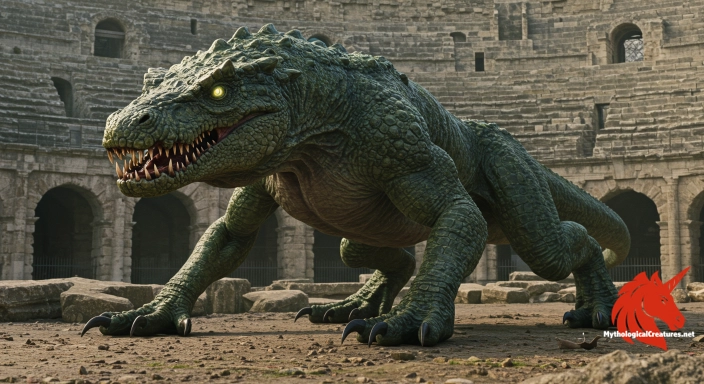
Graoully
Graoully - The defeat of Graoully by Saint Clement of Metz is a potent symbol of the triumph of Christian virtues over chaos in local legend.
Origins & First Encounters
The Graoully emerges from French folklore as a legendary beast whose origins are steeped in the ancient traditions of Metz. It is notably tied to the Roman amphitheatre, where the creature is said to have roamed during a time when myths and history intertwined. Over centuries, its name has appeared in several forms, including Graouli, Graouilly, Graouille, and Graully, each variation echoing the evolving nature of local storytelling. This legendary dragon not only captured the imaginations of early inhabitants but also came to represent a confluence of pagan lore and emerging Christian narratives. Its tale suggests an era of uncertainty and transformation, encapsulating the struggle between untamed natural forces and the order brought by civilisation. The creature’s story is intricately linked to the heroic deeds of Saint Clement of Metz, whose reputed vanquishing of the beast provided a sense of hope and renewal. Layers of meaning have been added over time, transforming the Graoully into a symbol of both dread and symbolic rebirth. The persistence of its legend reflects the deep-rooted desire to explain the unknown, as well as the human penchant for interweaving history with the supernatural. Its transmission across generations underscores a timeless fascination with monstrous forms and epic battles that mark the clash between good and evil.
Source Texts & Tale Variants
Ancient chronicles and local manuscripts provide the earliest hints of the Graoully’s existence, though they often leave as much mystery as clarity. Oral traditions in Metz handed down vivid accounts of the creature’s menacing presence in the Roman amphitheatre, blending fact with imaginative embellishment. Some texts recount detailed encounters that centre on the fabled struggle between the beast and Saint Clement of Metz, whose legendary victory resonates through hagiographic records. Variants of the story have been preserved in scattered ecclesiastical writings and civic accounts, each offering a unique perspective on the creature’s role in local history. There are accounts that portray the Graoully as more than just a terror, sometimes hinting at deeper symbolic interpretations connected to the cycles of life and decay. Multiple retellings have emerged over time, often subtly altered to fit the changing norms and values of the community. Festive plays and artistic expressions in the region have also contributed to preserving these narratives. The convergence of oral and written traditions highlights the fluidity and regional adaptability of the myth. This multifaceted documentation illustrates how the legend has been both a cautionary tale and a cultural identifier over the centuries. The enduring nature of these sources underscores the powerful role of myth in mediating the past with the present.
Form & Powers
The Graoully is described as a formidable, dragon-like creature with a body enveloped in a mosaic of interlocking scales that shimmer with an almost otherworldly quality. Its head is marked by a pair of menacing horns and an intense gaze that seems to pierce through the darkness of its lair. A pronounced snout and a wide, formidable maw lined with sharp, jagged teeth further highlight its predatory nature. Legends often depict it with an elongated, sinuous neck that conveys both agility and the latent power of a mythical beast. In certain portrayals, the creature is even endowed with wings, their spectral span adding to its aura of dread despite the ambiguity surrounding their functionality. Muscular limbs conclude in colossal claws, suggesting both a capacity for swift attack and a physical dominance that has long captured the imagination of storytellers. Variations in its depictions sometimes emphasise an enormous size, intended to evoke a profound sense of awe and terror. Artworks and medieval carvings infuse its image with textures that suggest centuries of battle and mythic tumult. Every physical detail—from the shadowy hues of its skin to the time-worn scars that mark its form—underscores the creature’s enduring status as a symbol of ancient, untamable power. Such layered physical descriptions continue to inspire creative representations in both traditional and modern artistic interpretations.
Regional Faces
While the legend of the Graoully is most intimately connected with the ancient city of Metz, regional variations have added diverse layers to its myth. In Metz, it is revered as a historical spectre that has come to embody the city’s Roman and medieval past. Neighboring areas in Lorraine offer subtle alterations to its narrative, sometimes portraying the creature as a guardian of long-forgotten treasures or a sentinel of mysterious, subterranean realms. In some local traditions, its menacing visage is softened by an air of tragic grandeur, framing it as a relic of a lost era rather than a mere monster. Artistic depictions across the region vary, with some communities choosing to focus on its fearsome attributes and others assigning it symbolic properties reflective of local identity. Folklore festivals in different parts of northern France occasionally recount tales of the Graoully, each retelling enriched by unique regional customs and interpretations. These local adaptations have underscored the dynamic nature of myth, where each community tailors the story to mirror its own experiences and values. While the core of the legend remains consistent, the nuances in its portrayal underline a broader cultural dialogue across regional boundaries. The creature’s evolution in these local contexts reflects an interplay between historical memory and the imaginative impulses of local society. Overall, the regional variations highlight the versatility of myth in serving as a cultural mirror for diverse communities over time.
Cultural Parallels
The Graoully finds its place among a broad tapestry of dragon myths and legendary beasts that permeate European folklore. Comparable to the Welsh dragon, its narrative also intertwines themes of national pride and the eternal struggle between order and chaos. Much like the dragon of Saint George, the Graoully’s defeat by a saintly figure reinforces a global motif where divine intervention triumphs over malevolent forces. It resonates with the mythic qualities of creatures depicted in Germanic and Slavic traditions, where serpentine and draconic images are used to symbolise both natural ferocity and societal transformation. Its battle against Saint Clement echoes similar heroic confrontations found in various cultural legends, thereby linking it to a wider narrative of sanctified warriors combating darkness. The creature’s physical and symbolic attributes align it with other fearsome monsters that have come to embody the uncertainties of their time. Like many dragons, it serves as a metaphor for chaotic natural forces and the human endeavour to harness or defeat them. These cultural parallels extend to artistic, literary, and even architectural expressions across Europe, where dragon motifs are recurrently employed. The comparative analysis of such creatures reveals an underlying universality in the human psyche—a fascination with the struggle against overwhelming odds and the eventual rise of law and order. In this light, the Graoully not only represents a local legend but also partakes in a pan-European mythological tradition that celebrates the hero’s journey in confronting the unknown.
Legacy & Modern Evolution
Historically, the Graoully has evolved from a terrifying spectre of ancient lore into a cherished emblem of local heritage and cultural identity in Metz. Early depictions painted it as a relentless force of chaos, yet over time, its image was reframed by the triumphant narrative of its defeat by Saint Clement. This transformative journey reflects broader shifts in societal attitudes, where fearsome legends are reinterpreted as integral components of communal memory and pride. In medieval art and literature, the beast’s menacing form was gradually softened and imbued with allegorical significance, symbolising both the dangers of the past and the hope for renewal. Modern interpretations continue to reinvent the Graoully, integrating it into festivals, public art, and tourism initiatives that celebrate Metz’s rich historical tapestry. Today, the creature often appears in educational and cultural contexts, serving as a bridge between the mystique of antiquity and contemporary identity. The enduring appeal of the Graoully demonstrates the human capacity to reframe even the most fearsome legends into narratives of community resilience. Inspiring contemporary literature, film, and art, its myth remains dynamic and responsive to modern sensibilities. The legacy of the Graoully is a testament to the adaptive nature of folklore, as it transforms from a symbol of terror into a cherished cultural icon. In doing so, the creature continues to embody a multifaceted dialogue between history, myth, and the ever-evolving narrative of human civilisation.
Interesting Fact
An interesting aspect of Graoully is how its legend not only defines a fearsome beast but also reflects the blending of Roman historical sites with the evolving narratives of medieval French folklore.
Mythology commerce, done carefully
Align your store with our global myth audience
If you sell myth-inspired jewellery, prints, decks, or collectibles, we can feature your brand without overwhelming the reading experience.
Partner with usQuick Creature Info
Origin:
Features:
Our Mythic Legendary Rating:

Also Sometimes Known As:
Habitat:
Supernatural Powers:
Physical Attributes:
Abilities:
Behavior:
Weaknesses:
Lore:
References
Discover Another Mythical Legend You May Not Have Heard Of?
Uncover the mysteries of ancient folklore and expand your knowledge of legendary beings from cultures around the world.
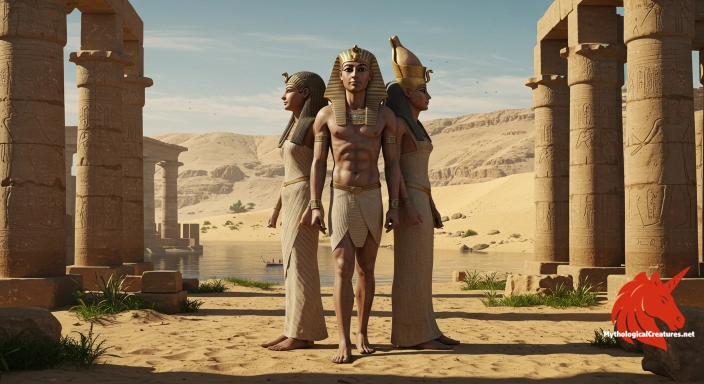
Dare to Meet the Theban Triad....
Curated by the Mythological Creatures Team
Series editor: Mythological Creatures Directory
Primary desk: Hellenic & Ancient Mediterranean Desk
(rev. November 2025)