
Theban Triad: The Theban Triad is a revered group of ancient Egyptian deities, comprising Amun, Mut, and Khonsu, worshipped primarily in Thebes.
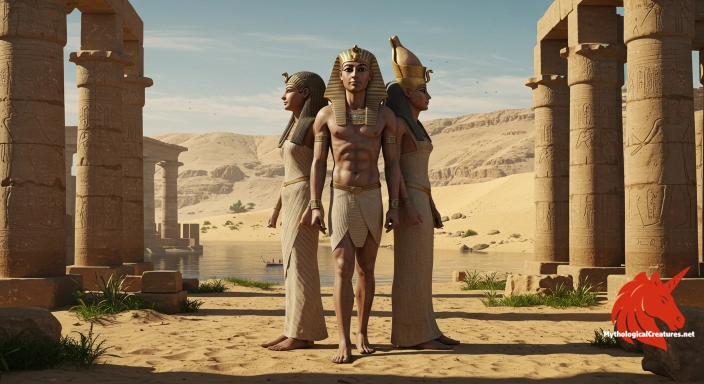
Theban Triad
Theban Triad - The triad played a crucial role in legitimizing pharaonic rule and symbolizing the harmony between celestial and earthly realms
Origins & First Encounters
The Theban Triad stands as a remarkable ensemble of ancient Egyptian deities, whose influence was most acute in the city of Thebes. It brings together the formidable god Amun, his nurturing consort Mut, and their dynamic, enigmatic son Khonsu in a divine family that symbolised the eternal cycles of creation and renewal. Their emergence is linked to crucial periods of cultural transformation in Egypt, notably during the New Kingdom when urban and religious reforms elevated their significance. The interweaving of their mythic roles helped to articulate complex ideas about cosmic order and the cyclical patterns of nature. Monumental inscriptions and temple reliefs attest to their early integration into state-sponsored rituals, emphasising their power and prestige. Their narrative not only highlights individual qualities but also the harmonious interplay that underpinned ancient Egyptian spirituality. The triad’s rites and festivals cemented Thebes as a centre of mystical and royal authority. The legacy of these gods is enshrined in both art and literary texts, which continue to capture the mystique of their divine roles. Their veneration underscored the fusion of local tradition with evolving state ideology, defining a unique cultural identity. Overall, the Theban Triad remains an emblem of divine unity and the enduring spirit of ancient Egyptian belief.
Source Texts & Tale Variants
Ancient temples, tomb inscriptions, and ritual papyri serve as key sources to reconstruct the layered narratives of the Theban Triad. Carvings found at Karnak and other sacred sites vividly portray the interactions between Amun, Mut, and Khonsu, offering insights into their mythic roles. Hieroglyphic texts and detailed reliefs provide multiple accounts that bring forth both canonical and locally adapted versions of their stories. In these records, variations emerge—sometimes highlighting Khonsu’s connection to the lunar cycle while at other times focusing on the protective aspects of Mut. Written records preserved on stone and in sacred papyrus documents exhibit subtle discrepancies that reveal regional adaptations and evolving theological perspectives. Diverse accounts found in oracle texts and temple inscriptions have allowed modern scholars to piece together alternative narratives that enriched the triad’s mythos. Intricate details in these primary sources underscore the importance of ritual practices and the symbiotic relationship the gods had with the people. The evidence compiled from inscriptions and artistic depictions creates a vibrant tapestry of myth that speaks to both communal and royal devotion. Variations in narrative across different periods further illustrate the dynamic interplay between tradition and innovation. Together, these sources form a multifaceted picture that continues to stimulate scholarly debate and creative reinterpretation.
Form & Powers
Artistic representations of the Theban Triad are replete with symbolic detail and careful attention to divine attributes. Amun is typically depicted as a majestic figure crowned with a double plume that reinforces his status as the preeminent deity. Mut is rendered with a distinctive vulture headdress, underscoring her role as a mother goddess and protector, while simultaneously conveying a formidable presence. Khonsu, depicted as a youthful and vigorous figure, often appears with a crescent motif that evokes his celestial connections. These depictions incorporate both human features and idealised symbolic attributes that mark the transition from mortal concerns to immortal divinity. The use of elaborate jewellery, ceremonial garments, and ritualistic emblems further enriches the visual narrative. Variations in scale and proportion emphasize Amun’s overarching authority, while the complementary portrayals of Mut and Khonsu highlight a balanced familial dynamic. Detailed hieroglyphic inscriptions and vibrant temple reliefs attest to the meticulous artistic processes that sought to capture the essence of these gods. Over time, the artistry evolved while remaining true to core symbolic elements, ensuring that the physical embodiments of the deities continued to inspire awe. This confluence of beauty and deep religious symbolism has allowed their images to remain a potent reminder of their mythic heritage.
Regional Faces
Although the Theban Triad was centrally worshipped in Thebes, their influence radiated widely throughout ancient Egypt, adapting to local cultural nuances. In various regions, local deities were sometimes merged with the triad, resulting in a fascinating synthesis that retained traditional themes while reflecting regional preferences. In some areas, artistic expressions accentuated the more vigorous or protective aspects of Mut, transforming her image to meet local expectations. Amun’s depiction could also blend with indigenous creator figures, further enhancing his universal appeal outside of Thebes. Upper Egypt, in particular, saw distinctive ritual practices that integrated the triad with region-specific symbols such as lotus blossoms and the papyrus plant. Khonsu’s lunar attributes were occasionally interwoven with local astronomical beliefs, enriching his profile as a god of the night. Regional festivals and folk traditions added layers of cultural meaning, ensuring that the triad resonated with a wide audience beyond the urban core. Adaptations in temple architecture and inscription style reflect the flexible nature of religious worship across Egypt. These variations allowed each community to harmonise the universal themes of creation, regeneration, and cosmic order with their own cultural heritage. Ultimately, the regional diversity in worship practices helped sustain the triad’s relevance across a vast and varied landscape.
Cultural Parallels
The structure of the Theban Triad invites rich comparisons with other mythological traditions where divine families encapsulate fundamental aspects of the cosmos. In many ways, the triad echoes similar groupings in various cultures, such as the Hindu trinity of Brahma, Vishnu, and Shiva, where each god fulfils a specific role in the cycle of creation, preservation, and destruction. Comparable divine partnerships also appear in Greek and Mesopotamian mythologies, where familial bonds symbolise the balance between opposing cosmic forces. Such parallels underscore a universal human drive to explain the complexities of existence through structured, interconnected deities. The interplay between male and female energies observed in the triad mirrors a common pattern that is seen in many religious narratives worldwide. The nuanced differences in how these deities are portrayed highlight both shared themes and distinctive cultural interpretations. These comparisons reveal how ancient societies across the globe used similar motifs to understand natural phenomena and human existence. The recurring archetype of a divine family speaks to a deep, cross-cultural recognition of unity in diversity. In this light, the Theban Triad offers a distinct yet resonant example of how spiritual communities articulate the interplay of cosmic forces. Such comparative analysis enriches our understanding by demonstrating both the universality and the cultural specificity of divine symbolism.
Legacy & Modern Evolution
The evolution of the Theban Triad from its ancient origins to a modern symbol of mystique and cultural heritage is as compelling as it is complex. In the wake of the decline of traditional Egyptian religion, the enduring images of Amun, Mut, and Khonsu were preserved through art, architecture, and the emerging field of Egyptology. Subsequent eras, including the Renaissance, witnessed a revival of interest, as travellers and scholars rediscovered their potent symbolism in temple ruins and enigmatic artefacts. Modern artistic interpretations have reimagined the triad, often blending ancient iconography with contemporary aesthetic sensibilities. Museums and cultural exhibitions today highlight statues, reliefs, and other artefacts that celebrate the triad’s timeless qualities. In popular culture, cinematic portrayals and literary references continue to evoke the profound mysteries and layered symbolism of these deities. Academic discourse has also evolved, shifting focus toward the triad’s role in articulating concepts of universal order and transformation. This reinterpretation reflects both a respect for their historical roots and an embrace of modern spiritual inquiry. The triad now stands not only as a relic of ancient belief but also as a vibrant symbol that continues to inspire creative and scholarly endeavours. In this way, the enduring legacy of the Theban Triad offers a bridge between the mystical past and the ever-evolving present.
Interesting Fact
The integration of the three deities into a single triadic form symbolised not only familial bonds but also the fusion of political power and spiritual authority in ancient Thebes.
Advertising opportunity
Showcase your mythology project
We offer limited sponsor placements for books, courses, games, and creators aligned with our audience.
View partnership optionsQuick Creature Info
Origin:
Associations:
Our Mythic Legendary Rating:

Habitat:
Supernatural Powers:
Physical Attributes:
Abilities:
Behavior:
Lore:
Related Creatures, Tales or Lore
- CCapitoline Triad
- TTrimurti
- MMemphite Triad
References
Discover Another Mythical Legend You May Not Have Heard Of?
Uncover the mysteries of ancient folklore and expand your knowledge of legendary beings from cultures around the world.
Dare to Meet the Latis....
Curated by the Mythological Creatures Team
Series editor: Mythological Creatures Directory
Primary desk: Hellenic & Ancient Mediterranean Desk
(rev. November 2025)