
Latis: Latis represents a dual deity figure from ancient Celtic polytheism in Roman Britain, manifesting as both a god and a goddess known through isolated inscriptions.
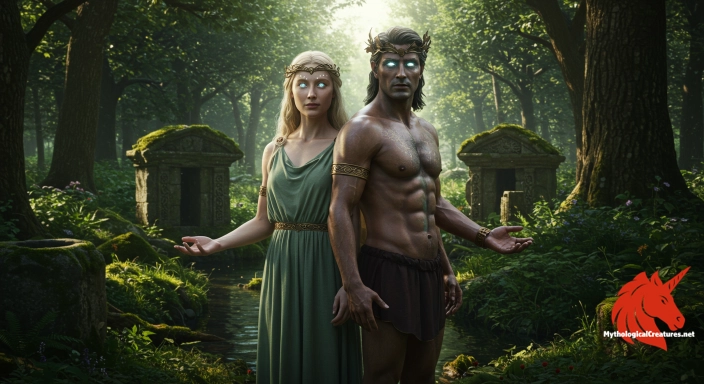
Latis
Latis - The dual aspects of Latis highlight the complexity and balance of divine forces in Celtic religion.
Origins & First Encounters
Ancient Celtic polytheism celebrated the enigmatic pair known as Latis, a divine duo recorded as both a goddess and a god in the context of Roman Britain. They emerged during a time when indigenous beliefs intermingled with the customs introduced by Roman occupiers, resulting in unique local adaptations. Their names, preserved in sparse inscriptions, evoke a sense of mystery and local reverence that hints at a deeper spiritual significance. The dual nature of Latis encapsulates the age-old theme of balance between masculine and feminine forces, reflecting the interdependent aspects of nature and society. This reverence was likely expressed in intimate community rituals that celebrated the cycles of life, death, fertility, and renewal. Although the initial evidence is limited to single inscriptions, these deities seem to have held a critical role in the local pantheon, acting as custodians of both earthly and transcendent realms. Their appearance during Roman Britain underscores the dynamic cultural exchanges that were taking place in the region at the time. The enduring curiosity about Latis highlights how even minimal epigraphic records can open vast windows into an ancient and complex spiritual world.
Source Texts & Tale Variants
The primary evidence for Latis is found in two distinct inscriptions from Roman Britain, each uniquely dedicated to the goddess and the god. These inscriptions, though brief, serve as crucial testimonies to the local cultic practices and the importance of religious duality in early Celtic belief systems. They were typically inscribed on stone monuments or altars that once stood at community gathering sites, inviting both public reverence and private reflection. While the surviving texts do not provide detailed mythological narratives, they suggest that oral traditions might have once elaborated on the roles and attributes of these deities. Variations in the cult’s practices are hinted at by comparisons with similar deities in insular Celtic regions, where the interplay of local myth and Roman influence is evident. The fragmented nature of the evidence has led scholars to propose multiple interpretations regarding the divine functions of Latis. In a broader sense, these inscriptions reflect a strategy of syncretism where Celtic identities were redefined under the auspices of the Roman Empire. This mixture of literary, epigraphic, and archaeological records continues to inspire renewed investigations into the nuanced storylines of ancient deities.
Form & Powers
Although no comprehensive visual depictions of Latis have survived, imaginative reconstructions based on Celtic artistic traditions offer a compelling picture of their iconography. The goddess, often imagined as Dea Latis, is frequently portrayed in flowing robes that symbolise fertility and the nurturing aspects of nature. Her depiction may include intricate designs inspired by natural motifs such as leaves, flowers, or water, which evoke the abundance of the earth. The god, on the other hand, is envisioned with a stately and robust appearance that embodies strength, protection, and the enduring quality of the natural world. Artistic interpretations sometimes suggest that both deities shared complementary features that underscored their inherent duality, with the goddess radiating gentle allure and the god exuding a formidable presence. Their regalia might have incorporated symbolic elements borrowed from indigenous Celtic styles, with hints of Roman influence seen in more structured, formal representations. Despite the limited direct evidence, scholars have pieced together these physical traits to propose that Latis was rendered as a harmonious yet dynamic pair. Such visual depictions continue to fuel debates among historians and artists, adding a rich dimension to our understanding of Celtic religious aesthetics.
Regional Faces
The worship of Latis appears to have been distinctly regional, with these deities holding particular significance in certain communities of Roman Britain. Even though the inscriptions are limited, the cultural imprint left behind suggests that local interpretations of the divine pair varied according to community needs and environmental influences. In some areas, Dea Latis might have been associated with the nurturing aspects of water, fertility, or the earth, while Deus Latis could have been celebrated as a guardian of fields and natural landscapes. Such regional adaptations reflect the propensity of Celtic spirituality to localise and personalise deific attributes. Different communities may have integrated these figures into existing cycles of seasonal rites or agricultural celebrations, tailoring their characteristics to the rhythms of local life. The presence of dual deities in a predominantly polytheistic framework also allowed for an inherent flexibility, accommodating multiple layers of meaning and purpose. These variations underline the fluid boundaries between local legend and broader mythological currents within the Celtic world. Even as Roman administrative structures imposed new forms of religious expression, the adaptable nature of Latis allowed them to remain relevant as symbols of natural and communal harmony.
Cultural Parallels
A comparative exploration of Latis reveals striking parallels with other dual deities found throughout Celtic and Indo-European mythologies. Their dual representation mirrors a common theme of embodying complementary forces such as creation versus destruction or the nurturing aspects of nature against its more formidable elements. This pattern resonates with other divine couples in the Celtic tradition, where deities often symbolise cyclical processes and the delicate balance between opposing energies. Similar to the way figures like the Morrígan or Brigid have been interpreted, Latis encapsulates both ethereal beauty and grounded strength in a manner that speaks to a broader narrative of duality. The blending of indigenous Celtic ideas with imported Roman conceptualisations further aligns Latis with hybrid deific figures present in other parts of Europe. Such cross-cultural comparisons highlight how disparate traditions have consistently employed duality to express complex natural and metaphysical relationships. The shared traits of these dual entities provide a rich tapestry for understanding the universal appeal of complementary divine pairs. Overall, the study of Latis not only enriches our comprehension of Celtic spirituality but also situates it within a wider, interconnected European mythological landscape.
Legacy & Modern Evolution
The historical journey of Latis from obscure inscriptions to figures of modern myth underscores both the fragility and resilience of ancient spiritual traditions. Initially confined to the local cult practices of Roman Britain, these deities gradually receded from prominence as successive waves of cultural and religious change swept through the region. Yet the enigmatic nature of Latis has captured the imagination of modern enthusiasts, spurring a revival of interest in reinterpreting their roles and significance in a contemporary context. Today, both Dea Latis and Deus Latis are embraced by neo-pagan movements and cultural historians as symbols of ancient balance and the harmonious duality of nature. Their rediscovery has prompted a broader re-evaluation of Celtic polytheism, highlighting the dynamic process of cultural adaptation and reinterpretation over time. Modern artistic and literary works have further immortalised Latis, situating them as icons of a forgotten yet compelling spiritual heritage. As museums and cultural institutions revisit these rare inscriptions, Latis continues to inspire new dialogues about the intermingling of myth, history, and identity. The evolving legacy of these deities invites reflection on how even the most fragmentary records can birth enduring myths that resonate across centuries.
Interesting Fact
A notable aspect of Latis is the rare dual-gender manifestation under a single name, which may represent a unique form of divine and complementary balance in Celtic religion.
Support the directory
Promote your myth project and fund more research
Sponsor placements help keep this directory growing and free to use while giving your work a focused, relevant audience.
Learn how sponsorship worksQuick Creature Info
Our Mythic Legendary Rating:

Also Sometimes Known As:
Habitat:
Supernatural Powers:
Abilities:
Lore:
Related Creatures, Tales or Lore
- BBrigid
- LLugus
- CCernunnos
References
Discover Another Mythical Legend You May Not Have Heard Of?
Uncover the mysteries of ancient folklore and expand your knowledge of legendary beings from cultures around the world.
Dare to Meet the Bakeneko....
Curated by the Mythological Creatures Team
Series editor: Mythological Creatures Directory
Primary desk: Northern & European Folklore Desk
(rev. November 2025)