
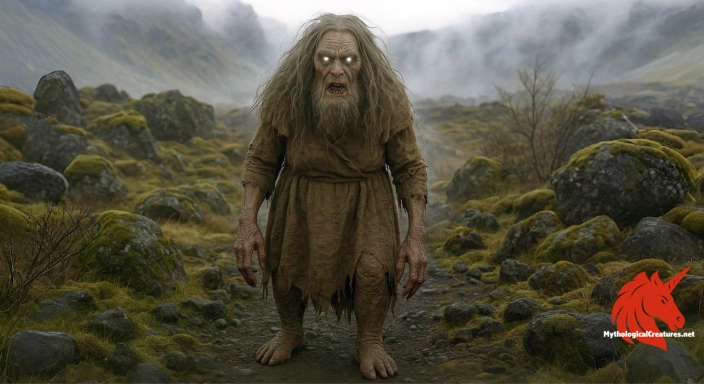
Grýla: Grýla is a fearsome, troll-like crone from Icelandic folklore, known for her grotesque appearance and ominous presence.
Grýla
Grýla - Grýla embodies the fears and moral lessons of folklore, warning against misbehaviour during the festive season
the legend in five swipes.
the legend in five swipes.
When was Grýla first written about?
Grýla stands as a fearsome embodiment of Icelandic myth and legend, her origins deeply rooted in the island’s medieval folklore. Born from a rich tapestry of ancient and oral traditions, she emerges as a symbol of winter’s relentless harshness and nature’s untamed power. Her early appearances can be traced to medieval texts, though it was not until the seventeenth century that her gender and seasonal association were solidly defined. The figure of Grýla soon became intertwined with the chilling aspects of the Christmas season, reflecting societal imperatives and cautionary tales aimed at younger listeners. She is depicted as a hideous, troll-like crone who roams the icy, wild landscapes, embodying the fear of nature’s dangers. Her narrative, steeped in both terror and moral instruction, illustrates the cultural tendency to blend myth with everyday life during the long, dark winters. Over time, her image has both horrified and fascinated audiences, serving as a potent metaphor for the unpredictability of the winter months. The evolution of her tale mirrors the complex interplay between the human need to impose order and the chaotic forces of the natural world.
What are the earliest texts about Grýla?
The earliest mentions of Grýla find their place in medieval manuscripts, where she occupies a shadowy corner of Icelandic lore. Over generations, local storytellers nurtured these fragmented references into a fuller narrative across rural communities. It was in the seventeenth century that more definitive poetic accounts began to shape her image, giving clarity to her association with misbehaving children. These poetic forms cemented her reputation as a relentless pursuer of wayward youth, a theme that underpins much of her myth. Variations in these sources reveal a complex layering of oral tradition and written word, each adding new dimensions to her character. Some accounts focus on her terrifying aspects while others hint at a darker, more nuanced moral allegory. Folk songs, local ballads, and narrative poems have all contributed to the evolving portrait of Grýla, ensuring that her legend is as mutable as it is enduring. The diverse sources reflect the creative impulse of Icelandic storytellers to explain and control the uncertainties of their environment. In this sense, Grýla’s story is not static but a living narrative reinterpreted with each new generation.
What abilities did Grýla have?
Grýla is traditionally portrayed with deeply unsettling physical attributes that capture the imagination and invoke dread. Her face is often described as being covered with deep wrinkles and scars, telling of many years spent braving the harsh Icelandic elements. Wild, matted hair and a pair of icy, piercing eyes further contribute to an appearance both ghastly and commanding. Descriptions frequently mention a hunched posture and an oversized, twisted figure, where features merge the grotesque with the human. The textures of her skin, sometimes rendered as grey and weathered, evoke both decay and the ancient natural world. In some tellings, her hands and limbs are exaggerated in their deformity, emphasising her role as a creature apart from ordinary humanity. Although contemporary renditions may temper these frightening features to better suit modern sensibilities, traditional imagery remains potent and vivid. Each detail, from the ragged garments to the eerie silhouette, reflects not only her monstrous nature but also the brutal beauty of the Icelandic wilderness.
Grýla: The Same Figure in Different Places
While Grýla is intrinsically linked to the remote and rugged landscapes of Iceland, her myth has absorbed regional variations that reflect local cultural interpretations. In the heart of Iceland, she is consistently seen as a wild, untamed spirit, her visage moulded by the relentless winter climate and the stark natural surroundings. Rural narratives frequently adapt her character to mirror localized fears and the unique rhythms of island life. In neighbouring Nordic regions, echoes of her myth surface in tales of other spectral figures who roam the forests and mountains. These variations often adjust her attributes, with some versions portraying her more as a symbolic guardian of the winter season than as a ruthless predator. The adaptability of her story illustrates how communities tailor legends to reinforce local values and traditions. Such regional adaptations ensure that, despite her fixed origins, Grýla’s legend remains flexible and responsive to the cultural context in which it is told. Every retelling reflects a delicate balance between shared mythic themes and the distinctive character of its locale.
Legends Comparable to That of Grýla
Grýla’s myth invites compelling comparisons with similar figures from various European traditions, forging a link between diverse cultural narratives. Much like the menacing Krampus of Central European lore, she is employed as a spectral enforcer, whose very existence serves to deter misbehaviour in children. In the shadowy forests of Eastern Europe, the enigmatic Baba Yaga, with her unpredictable blend of nurturing and terror, offers another striking parallel. These figures, though originating in different cultural milieus, share common thematic elements such as the use of fear as a tool for moral instruction. Both Grýla and her counterparts highlight the importance of cultural taboos associated with the winter months and the passage into a new year. The convergence in their narratives underlines a universal human impulse to personify nature’s perils and to warn of societal transgressions. By examining these cross-cultural connections, one appreciates not only the uniqueness of the Icelandic tradition but also its broader resonance within the European folkloric landscape. This intersection of myths underscores the adaptability of cultural symbols and the shared human fascination with the monstrous.
Who tells the story of Grýla now?
Over the centuries, Grýla has metamorphosed from an unequivocally terrifying antihero into a multifaceted symbol woven into the fabric of Icelandic culture. Her early depictions as a hideous, child-hunting monster have gradually softened as the needs of audiences shifted toward more nuanced, even family-friendly interpretations. Modern portrayals frequently focus on her role as the progenitor of the Yule Lads, thus transforming her image from a source of sheer terror into one with a rich, dual symbolism. This transition mirrors broader trends in popular culture where darker mythological figures are reimagined for contemporary sensibilities. Artistic renditions in literature, film, and public festivities serve to both honour her traditional roots and adapt her narrative for a modern context. Her evolving depiction also speaks to the dynamic nature of folklore, where the essence of myth can be preserved while its form is continually updated. Grýla remains an influential symbol, reflecting both the enduring power of ancient stories and the inevitable influence of societal change. Today, she not only enriches the Icelandic Christmas tradition but also continues to inspire reinterpretations that invite audiences to explore the complex interplay of fear, discipline, and maternal archetypes in myth.
Interesting Fact
An interesting aspect of Grýla is the evolution of her character—from a terrifying monster in medieval folklore to a more nuanced, cautionary figure in contemporary Icelandic culture.
Mythological Treasures
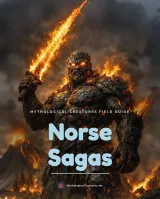
Norse Sagas: A field guide to the beasts of the Viking world
Drawn from the saga accounts themselves, with the powers, weaknesses and doom of each being set out.
Japanese Yokai: A field guide to the spirits and demons of Japanese folklore
Fifteen spirits, with the signs to watch for and what the old tales say to do if you meet one.
Greek Myths: A field guide to the monsters of ancient Greece
Every monster here earned its place in legend, and each gets a full page of artwork and the story behind it.
the legend in five swipes.
For serious mythcraft
Your project belongs among the legends
If your work deepens how people understand, play with, or teach mythology, a sponsor placement here keeps it in front of the right readers all year.
Submit a sponsorship enquiryQuick Creature Info
Origin:
Features:
Associations:
Our Mythic Legendary Rating:

Habitat:
Supernatural Powers:
Physical Attributes:
Abilities:
Behavior:
Lore:
Related Creatures, Tales or Lore
- TTroll (Icelandic Folklore)
- KKrampus (Central European Folklore)
- BBaba Yaga (Slavic Folklore)
References
Discover Another Mythical Legend You May Not Have Heard Of?
Uncover the mysteries of ancient folklore and expand your knowledge of legendary beings from cultures around the world.
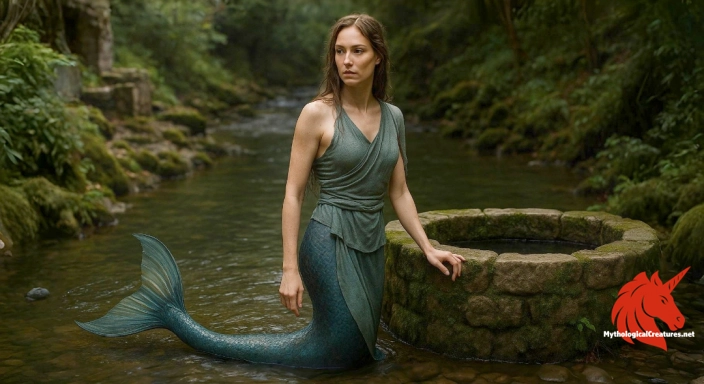
Dare to Meet the Melusine....
The Mythological Creatures Book Series
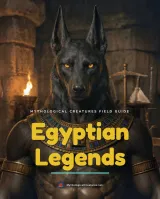
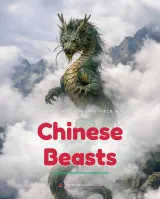
Yokai, Greek, Norse, Egyptian & Chinese. Five illustrated field guides to the creatures the old stories either warned or told you about.
Curated by the Mythological Creatures Team
Series editor: Mythological Creatures Directory
Primary desk: Northern & European Folklore Desk
(rev. November 2025)