
Guajona: The Guajona, also known as Lumia, is a disfigured human female from Cantabrian legend.
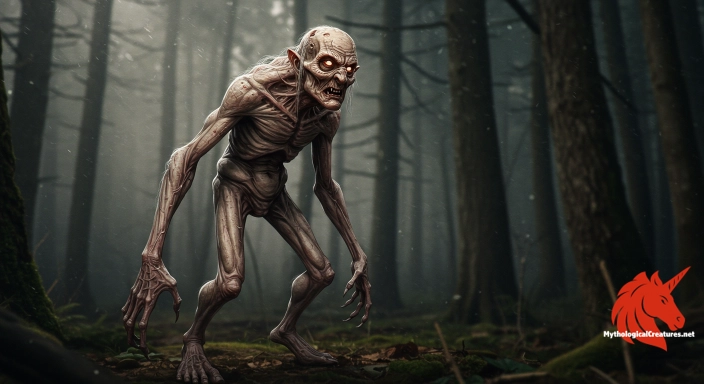
Guajona
Guajona - Serves as a symbol of fear and caution regarding the darker aspects of folklore and witchcraft.
Origins & First Encounters
The Guajona is a compelling and enigmatic figure in Cantabrian lore, often known by the alternative name Lumia. Born from the shadowed recesses of medieval superstition, she embodies the archetype of the disfigured human female, whose very appearance serves as a potent warning against transgression. Emerging in a time when the supernatural was intertwined with everyday existence, her myth provided a tangible representation of society’s anxieties about the unknown. Her story, passed down through generations via oral tradition and local narrative, reflects a complex interplay of fear, morality, and mystery. Over the centuries, she has come to symbolise the blurred boundaries between the natural and the otherworldly, a portrayal that both terrifies and fascinates her audiences. In her distorted visage and spectral presence, the Guajona challenges the viewer to confront societal taboos and the consequences of diverging from accepted norms. The enduring power of her myth lies in its ability to adapt, absorbing elements of local culture and historical context while still preserving its eerie core. Today, she continues to inspire reinterpretations in art and literature, cementing her status as one of Cantabria's most memorable mythological figures.
Source Texts & Tale Variants
Ancient manuscripts and local oral traditions form the backbone of the Guajona’s storied past. Accounts of her existence are scattered across a variety of sources, from codified folklore to the whispered legends of secluded mountain villages. Diverse narrative strands emerge from these sources, with some versions portraying her as a spectral guardian of ancient rites and others depicting her as a malevolent force haunting forlorn pathways. The fluid interchange between the names Guajona and Lumia in early texts hints at a dynamic myth that evolved in response to regional storytelling. In some chronicled tales, her presence is used to caution against moral transgressions, while in others she serves as an embodiment of nature’s retribution on the unworthy. The narrative variations, informed by the local dialect and customs, illustrate how her myth was both a reflection of communal fears and an explanatory tool for unaccountable phenomena. Despite the fragmentary nature of the historic records, the consistency of her portrayal as both eerie and transformative underscores the timeless appeal of her character. This multiplicity of story variants has allowed her legend to grow richer over time, inviting continuous reinterpretation by successive generations.
Form & Powers
The Guajona is frequently depicted as a being whose physical form is as unsettling as it is captivating. Her visage, marked by severe disfigurement, reflects a blend of human frailty and supernatural aberration that has become emblematic of witchcraft in medieval Europe. Her features, whether described as a misshapen face with pronounced lines and scars or as a grotesque distortion of feminine beauty, evoke a deep sense of otherness. Tangled, unkempt hair and hollow eyes add further to the impression of a being caught between life and a cursed existence. Artists and storytellers alike have portrayed her with an elongated neck and twisted limbs that seem to defy the natural order, symbolising the chaos that her presence foretells. In some depictions, her skin appears weathered, as though etched by the passage of both time and suffering, while other accounts emphasise a pallid, almost spectral glow. As her legend evolved, even slight variations in her description provided insights into local cultural attitudes towards the mystical and the monstrous. This blend of human and monstrous attributes creates a formidable appearance that has come to define the Guajona in the collective imagination.
Regional Faces
The portrayal of the Guajona is not uniform across Cantabria, with her myth adapting to the distinct cultural landscapes and geographical nuances of the region. In the rugged interior, remote villages recount her as a solitary wanderer whose presence among ancient paths stokes both awe and dread. Coastal communities have, in contrast, imbued her with qualities reminiscent of the shifting mists and treacherous tides, as if the sea itself had granted her spectral powers. These regional retellings often modify her backstory, intertwining her origins with local legends of curses or mystical retribution. In some localities, she is portrayed as a guardian of forbidden knowledge, while in others she appears solely as a harbinger of misfortune. Her physical appearance, too, is subject to variation; some communities describe a more feral countenance, while others speak of an almost sorrowful distortion wrought by external condemnation. The latitude in her portrayal reflects the diverse social and environmental influences within Cantabria, each contributing to the myth's richness. As a result, the Guajona remains a versatile and deeply regional symbol, continuously adapted to reflect the fears and ambitions of the people who tell her story.
Cultural Parallels
The myth of the Guajona shares many resonances with similar figures across European folklore, particularly those embodying the archetypal witch or hag. Her depiction as a disfigured female figure draws parallels with other cultural spirits that blend elements of allure and repulsion, such as the crones of Celtic myths and the sinister hags of Germanic tales. In many respects, she stands shoulder to shoulder with the spectral figures of the banshee or the wyrd, whose ominous warnings echo throughout various cultural narratives. The recurring theme of a cursed, deformed woman suggests a deep-seated societal anxiety about the divergence from accepted feminine norms. Across Europe, these figures serve a dual role—as agents of retribution and as symbols of the mystery that lurks in the margins of civilisation. The Guajona’s narrative, with its focus on both physical distortion and supernatural empowerment, finds common ground with these cross-cultural archetypes. Such comparisons highlight the universal nature of the themes she embodies, drawing a direct line between medieval superstition and modern explorations of the uncanny. Ultimately, her myth invites a comparative analysis that underscores the shared human instinct to symbolise the abnormal and the feared through the figure of a disfigured woman.
Legacy & Modern Evolution
The evolution of the Guajona’s myth from a fearsome cautionary tale to a more nuanced cultural symbol reflects the broader transformation of folklore in the modern era. In medieval times, her terrifying visage was a stark reminder of moral consequences, a tool employed to enforce societal norms. Over the centuries, however, her narrative has come to embody a broader spectrum of meanings, exploring themes of marginalisation, transformation, and the power of the outsider. Contemporary retellings have reimagined her not solely as an object of dread, but as a complex character whose suffering and defiance invite empathy. Modern artistic and literary interpretations often cast her in a light that challenges traditional binaries, reinterpreting her curse as both a personal tragedy and a commentary on societal exclusion. This shift mirrors changing perceptions of female identity and power, allowing for a more critical exploration of the archetypal witch figure. The enduring appeal of the Guajona is evident in grassroots cultural initiatives and academic discourses that continue to revisit her myth with fresh eyes. In this way, her legacy is not fixed in the past but is continually reshaped to resonate with evolving cultural sensibilities, ensuring her story remains as compelling as ever.
Interesting Fact
Guajona's dual identity as both a cautionary figure and a magical entity reflects the complex portrayal of witches in European folklore, embodying both beauty and horror in a single being.
For myth educators and toolmakers
Built a resource for mythology learners?
If you offer courses, teaching tools, or research platforms focused on myth and folklore, consider a discrete placement on our reference pages.
Introduce your resourceQuick Creature Info
Features:
Our Mythic Legendary Rating:

Also Sometimes Known As:
Habitat:
Supernatural Powers:
Physical Attributes:
Abilities:
Behavior:
Lore:
Related Creatures, Tales or Lore
- BBaba Yaga
- CCailleach
- TThe Bheur Hag
References
Discover Another Mythical Legend You May Not Have Heard Of?
Uncover the mysteries of ancient folklore and expand your knowledge of legendary beings from cultures around the world.
Dare to Meet the Noderabō....
Curated by the Mythological Creatures Team
Series editor: Mythological Creatures Directory
Primary desk: Hellenic & Ancient Mediterranean Desk
(rev. November 2025)