
Noderabō: Noderabō is a Japanese yōkai depicted as a monk with tattered attire, standing beside a temple bell.
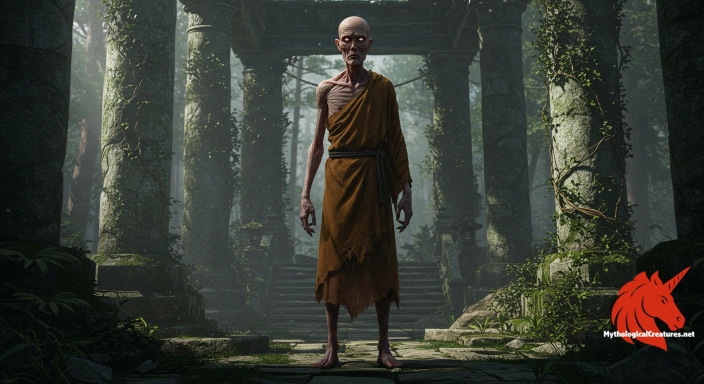
Noderabō
Noderabō - Symbolises the decay of sacred spaces and the lingering grudges of a neglected religious figure, reflecting societal and spiritual neglect.
the legend in five swipes.
the legend in five swipes.
The Beginnings of the Noderabō
Noderabō is a mysterious figure entrenched within Japanese folklore, embodying the spectral presence associated with abandoned temples and fading spiritual institutions. Born from the imaginative vision of Toriyama Sekien in his renowned Gazu Hyakki Yagyō, the Noderabō first emerged during the Edo period as a symbol of neglected sacred spaces. It is depicted as a monk-like apparition whose very presence evokes a blend of melancholy and eerie wonder. The imagery of a lone figure amidst derelict temple grounds stirs a profound sense of isolation and lost spiritual vigour. This yōkai has come to represent not only the physical decay of ancient structures but also the emotional erosion accompanying societal neglect.
Historical narratives have gradually enriched its mythos, portraying the Noderabō as a tragic byproduct of communal disregard for religious institutions. Oral traditions later cast it as a sorrowful entity, born of a chief priest’s rejected aspirations and spiritual injustice. Its legend has been retold as part of a wider cultural commentary on the impermanence of human endeavours. The creature’s enigmatic allure continues to capture the imagination of enthusiasts and scholars alike. In its silent, ghostly manner, the Noderabō reflects a timeless meditation on decay, loss, and the passage of sacred time.
Noderabō: Variants Across the Sources
The earliest recorded depiction of the Noderabō is found in Toriyama Sekien’s Gazu Hyakki Yagyō, where a lone, monk-like figure is rendered with minimal textual explanation. This foundational work provided a visual prompt that has since spurred a multitude of interpretations among later writers and folklorists. During the Shōwa period, literary sources began to expand on Sekien’s enigmatic image by linking the creature to temples abandoned because of dwindling donations. Various texts describe the Noderabō as the vengeful spirit of a chief priest whose temple fell into ruin, thereby imbuing the myth with a tragic narrative. Early printed compendiums and subsequent oral traditions have ensured that this yōkai’s story evolved far beyond its original, sparse description.
Additional sources from regional folklore have introduced alternative nuances, suggesting that the creature might act as a silent guardian of derelict shrines. Some accounts emphasise the eerie phenomenon of a lone bell being rung at midnight, attributed to its restless spirit. Although official texts often leave its true nature ambiguous, the layering of story variants has enriched its overall character. Each retelling, whether brief in print or elaborated in local lore, contributes to a complex, multifaceted portrayal. Collectively, these sources offer a dynamic tapestry of myth that continues to intrigue and inspire contemporary interpretations.
What powers did the Noderabō have?
The physical portrayal of the Noderabō is intricately tied to its representation as a weathered monk, marked by the passage of time and decay. It is most recognisably depicted wearing a tattered kasa, a traditional conical hat that appears worn and frayed at its edges. This humble accessory accentuates the figure’s forlorn nature, suggesting a loss of former dignity. Artistic renditions often place the creature near a temple bell, which stands as a silent testament to once-vibrant spiritual life. The subtle expressions in its eyes and the delicate rendering of its weather-beaten face offer glimpses of sorrow and ineffable mystery.
The figure’s robes, marked by visible wear and tear, evoke the slow disintegration of sacred spaces into entropy. In some portrayals, its size is permitted a slight exaggeration, giving the impression of an imposing presence that hovers between the corporeal and the ethereal. The interplay of light and shadow in these artistic visions heightens the otherworldly quality of its form. Every detail—from the fraying fabric of its garments to the soft, haunting contours of its features—is rendered to evoke a sense of both melancholy and forewarning. Overall, the Noderabō’s physical attributes are meticulously crafted to echo the themes of decay, regret, and the unspoken lament of forgotten traditions.
Noderabō: Local Variations in the Story
The legend of the Noderabō exhibits noteworthy regional variations, with different parts of Japan ascribing subtly distinct characteristics to the enigmatic monk. In some rural areas, particularly in mountainous districts, local lore positions the Noderabō as intrinsically associated with abandoned Buddhist temples and forgotten shrines. These communities often regard the creature as a symbolic reminder of the decay that accompanies the neglect of spiritual heritage. In areas where ancient temple complexes once thrived, the Noderabō is sometimes portrayed not solely as a menace but also as a melancholic custodian of lost rituals. The element of a solitary bell-ringing figure at dusk is a recurring motif that has been adapted to reflect regional histories of communal loss.
Other locales, particularly those with strong Shinto influences, adjust the narrative to blend native spiritual guardians with the somber aesthetics of yōkai lore. Oral traditions in these regions recount eerie encounters and night-time apparitions, thereby adding unique layers to the overall myth. Variations in attire and demeanour between regions underscore how local cultural sensibilities infuse the creature with additional nuance. Despite these differences, the core image of a forlorn monk at a dilapidated temple remains a unifying symbol across regional stories. Such localized adaptations help sustain the Noderabō’s relevance, ensuring its ongoing place in the diverse landscape of Japanese folklore.
Noderabō: Echoes in Other Mythologies
Across diverse mythological traditions, figures similar to the Noderabō emerge, reflecting universal themes of decay and unfulfilled duty. Within Japanese folklore itself, entities such as onryō and other vengeful apparitions share the motif of spirits tethered to places of past suffering and neglect. Comparable to the spectral monk, many cultures recount tales of ghostly clerics or phantom presbyters whose forlorn images serve as allegories for institutional decline. In European ghost stories, for example, phantom figures often haunt abandoned chapels or castles, mirroring the isolation and desolation emblematic of the Noderabō. The juxtaposition of a once-respected religious figure with the erosion of physical and spiritual sanctity is a recurring theme in global myths.
Modern interpretations further highlight these similarities, as both Eastern and Western narratives use such figures to symbolise the consequences of societal neglect. Artistic depictions in various cultures tap into the shared human experience of loss, using spectral figures as metaphors for the past's lingering influence on the present. The Noderabō stands as a testament to this universal intersection between myth and reality, where tradition meets transience. As cross-cultural comparisons reveal, the storyteller’s art frequently transforms elements of historical decay into symbols of haunting beauty and moral reflection. Through these parallels, the Noderabō not only enriches Japanese folklore but also harmonises with a broader, global tapestry of supernatural lore.
How has the Noderabō changed over time?
Over the centuries, the Noderabō has evolved from a fleeting illustration in an 18th-century compendium to a potent modern symbol of cultural and spiritual decay. Its early appearance in Toriyama Sekien’s work provided the spark for an enduring myth that has since been reinterpreted by numerous generations of storytellers and artists. As Japan modernised, the creature’s image became intertwined with broader concerns over the erosion of traditional rural life and the decline of once-sacred spaces. Literary narratives and visual media began to portray the Noderabō as a symbol of lost reverence and the inevitable passage of time. The motif of the solitary, bell-ringing ghost lent itself naturally to discussions about the changing nature of community and the abandonment of historical sites.
In contemporary culture, the Noderabō appears in manga, anime, and even modern art exhibitions, where it is reimagined both as a cautionary figure and a nostalgic emblem of bygone eras. Its continuing allure lies in its ability to conjure images of decay, mystery, and the consequences of neglect. The creature has transcended its original folkloric boundaries, emerging as a multifaceted icon open to various interpretations. Through its persistent presence in modern narratives, the Noderabō challenges audiences to reflect on the balance between tradition and progress. Today, it endures as a symbol of cultural memory, encapsulating both the beauty and the sorrow inherent in the passage of time.
Interesting Fact
Noderabō uniquely represents the transformation of human emotion into a supernatural phenomenon, embodying both the melancholy of lost faith and the eerie beauty of forgotten temples.
Mythological Treasures
Japanese Yokai: A field guide to the spirits and demons of Japanese folklore
Fifteen spirits, with the signs to watch for and what the old tales say to do if you meet one.
Chinese Beasts: A field guide to the dragons and demon kings of Chinese myth
From river dragons to demon kings, with the legends that shaped five thousand years of storytelling.
Greek Myths: A field guide to the monsters of ancient Greece
Every monster here earned its place in legend, and each gets a full page of artwork and the story behind it.
the legend in five swipes.
Partner with Mythological Creatures
Bring your myth-based world into ours
From game settings to narrative worlds, we work with partners who treat myths with care. Share your project for a potential sponsor slot.
Partner with usQuick Creature Info
Associations:
Our Mythic Legendary Rating:

Habitat:
Supernatural Powers:
Physical Attributes:
Abilities:
Behavior:
Weaknesses:
Lore:
Related Creatures, Tales or Lore
- NNoppera-bō
- OOnryō
- TTsukumogami (Temple Bell)
References
Discover Another Mythical Legend You May Not Have Heard Of?
Uncover the mysteries of ancient folklore and expand your knowledge of legendary beings from cultures around the world.
Dare to Meet the Furcas....

The Mythological Creatures Book Series
Yokai, Greek, Norse, Egyptian & Chinese. Five illustrated field guides to the creatures the old stories either warned or told you about.



Curated by the Mythological Creatures Team
Series editor: Mythological Creatures Directory
Primary desk: Asian & Pacific Myth Cycles Desk
(rev. November 2025)