
Hāhau-whenua: Hāhau-whenua is the great fish from Māori mythology that was caught by Māui and transformed into Te ika-a-Māui, the North Island of New Zealand.
Hāhau-whenua
Hāhau-whenua - Hāhau-whenua is a central figure in the Māori creation myth, representing the transformation from a giant fish into Te ika-a-Māui, the North Island of New Zealand.
Origins & First Encounters
The legend of Hāhau-whenua occupies a central place in Māori mythology, serving as both a symbol of creation and a reflection of the intrinsic connection between land and sea. Rooted in the ancient traditions of the Ngāti Hau tribe, this mighty fish was transformed into Te ika-a-Māui, the North Island of New Zealand, through the daring exploits of Māui. The narrative, preserved through generations of oral tradition, offers insight into the Māori worldview, where nature and spirituality are intertwined in every facet of existence. Hāhau-whenua is not merely a creature of flesh and scale, but a living embodiment of the transformative forces that shaped the very geography of Aotearoa. Its story is interlaced with multiple layers of meaning, each revealing how the elements of water, wind, and earth conspire to forge new realities. The myth has been handed down in varied forms, continually evolving to reflect the dynamic relationship between the ancestors and their environment. As a symbol of both fertility and renewal, Hāhau-whenua reflects the reverence indigenous people hold for natural phenomena. The rich imagery and allegorical nature of this legend continue to inspire awe and serve as a reminder of the deep-rooted bonds that connect people to the land they inhabit.
Source Texts & Tale Variants
The earliest known accounts of Hāhau-whenua can be traced to narratives recorded by John White in the late 19th century, which were ascribed to the Ngāti Hau tribe. In these accounts, Māui’s bold endeavour to capture the great fish is recounted with dramatic detail, emphasising both his ingenuity and the creature’s colossal nature. Over time, variations of the myth have emerged, each layering additional symbolic names such as Hāhau-tangaroa and Hāhau-uru alongside Hāhau-whenua. These differing titles not only highlight the multifaceted essence of the creature but also reflect the diverse aspects of nature it represents. Oral renditions across various Māori communities have added new dimensions to the story, ensuring its survival amid cultural shifts and external influences. Some recitations attribute mystical qualities to the fish, endowing it with an almost divine authority associated with creation. Written records and subsequent compilations by folklorists have attempted to capture the fluidity of these traditions, even as versions diverge in subtle yet significant ways. Such variant accounts underscore the adaptability of the legend, reaffirming that the myth of Hāhau-whenua is as much a living tradition as it is a historical narrative.
Form & Powers
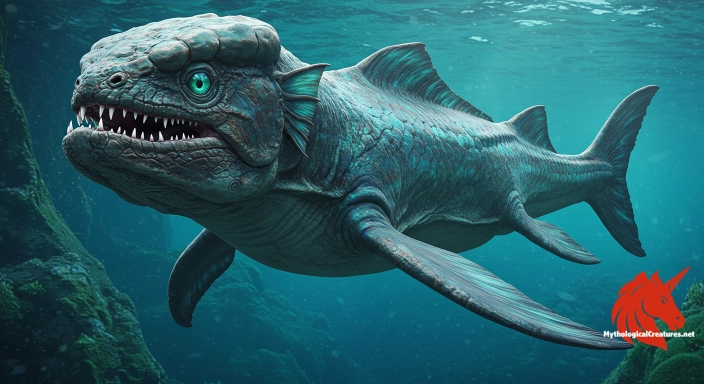
Hāhau-whenua is envisioned as a creature of immense proportions, its physical appearance imbued with a dramatic interplay of aquatic and terrestrial features. It is often described as having an elongated, sinuous body covered in shimmering scales that reflect the changing hues of the ocean. The creature’s head is said to be both fearsome and majestic, with eyes that seem to hold the ancient wisdom of the deep. Powerful, graceful fins ripple along its form, enabling it to navigate the vast expanses of water with effortless majesty. Its robust physique evokes a sense of dynamism that mirrors the forceful origins of an island emerging from the sea. Intricate markings on its flanks are compared to the swirling patterns of ocean currents and the rugged textures of volcanic landscapes. The duality of its design—simultaneously fluid and solid—symbolises the transformative act that brought land forth from the depths. Artistic depictions, whether traditional or modern, consistently portray Hāhau-whenua as a being whose size and striking features defy the ordinary, elevating it to a status that borders on the divine.
Regional Faces
Across New Zealand, the interpretation of Hāhau-whenua varies subtly from one iwi to another, each adaptation reflecting local environmental features and cultural nuances. While the Ngāti Hau tradition centres on the narrative of Māui's catch that formed the expansive North Island, other Māori groups imbue the tale with regional specificities that celebrate local landmarks and natural phenomena. In some areas, the great fish is depicted as not just a singular creature but as a progenitor whose emergence heralded the genesis of smaller islets and coastal features. Regional storytellers often draw parallels between the creature’s vast form and the distinctive landscape of their ancestral lands. Variations may include unique descriptive details, such as differing colourations or embellishments thought to mirror local geological formations. These localized versions serve to highlight the vibrant interplay between myth and place, reinforcing communal identities tied to both history and geography. Such regional adaptations also demonstrate the flexibility of oral tradition, allowing the core myth to evolve in response to the changing perceptions of natural space. Ultimately, the diversity of these versions enriches the overall narrative, ensuring that Hāhau-whenua remains a potent emblem of both unity and regional pride.
Cultural Parallels
In comparing Hāhau-whenua with other mythological creatures, it becomes evident that the motif of a colossal aquatic entity catalysing creation is a recurrent theme in many cultures. In Polynesian traditions, similar narratives recount the feats of Māui, whose heroic interactions with the forces of nature often culminate in the formation of islands and landmasses. This pattern is reminiscent of creation myths found in various indigenous cultures, where the primordial chaos is subdued by a daring hero or divine creature that shapes the world. Though European legends sometimes depict sea monsters or leviathans, these stories are more often focused on chaos rather than the constructive powers exemplified by Hāhau-whenua. Other Pacific cultures share a kinship with this myth, echoing themes of transformation and the interdependence between the ocean and emerging land. This cross-cultural resonance underscores the universal human impulse to interpret natural phenomena through narrative art, blending elements of adventure, spirituality, and environmental stewardship. While each tradition offers its unique perspective, the shared imagery of immense sea creatures that carry the seed of creation highlights a profound, underlying connection between disparate cultural mythologies. In this way, Hāhau-whenua stands proudly among the pantheon of mythic symbols that articulate the deep relationships between life, nature, and the cosmos.
Legacy & Modern Evolution
The legacy of Hāhau-whenua has undergone a rich evolution, reflecting shifts in cultural narratives as well as modern reinterpretations of ancient lore. Initially, the myth was firmly embedded in the classical Polynesian tradition, celebrating Māui’s extraordinary ability to harness nature’s might to forge new landscapes. Over time, the tale has come to represent broader themes of environmental interconnectivity and the delicate balance between human endeavour and the natural world. Contemporary retellings often adopt a metaphorical stance, using Hāhau-whenua as a symbol for ecological transformation and sustainability. Modern artists and cultural practitioners have reimagined the creature through a variety of media, ranging from traditional carvings to dynamic digital illustrations, thereby ensuring that the myth remains accessible to new generations. Its enduring presence in educational programmes and cultural festivals across New Zealand reinforces a collective responsibility towards nature and the preservation of indigenous heritage. The narrative has also served as a touchstone in debates surrounding land use and environmental guardianship, highlighting its ongoing relevance. Thus, the evolution of Hāhau-whenua from a mythic fish to a modern emblem illustrates an enduring dialogue between the past and the present, affirming the timeless power of myth in shaping identity and inspiring sustainable futures.
Interesting Fact
A striking aspect of Hāhau-whenua is its dual identity as both a legendary creature and a foundational geographical entity, illustrating the Māori belief in the sacred and life-giving nature of the natural world.
Partner with us
Sponsor this space
Reach thousands of mythology enthusiasts with a curated placement on our creature pages.
Learn about sponsorshipQuick Creature Info
Origin:
Associations:
Our Mythic Legendary Rating:

Habitat:
Supernatural Powers:
Physical Attributes:
Abilities:
Lore:
Related Creatures, Tales or Lore
- TTaniwha
- JJörmungandr
- TTe Wheke
References
Discover Another Mythical Legend You May Not Have Heard Of?
Uncover the mysteries of ancient folklore and expand your knowledge of legendary beings from cultures around the world.
Dare to Meet the Titivillus....
Curated by the Mythological Creatures Team
Series editor: Mythological Creatures Directory
Primary desk: Asian & Pacific Myth Cycles Desk
(rev. November 2025)