
Hamingja: Hamingja is a female guardian spirit in Norse mythology that embodies luck and fortune.
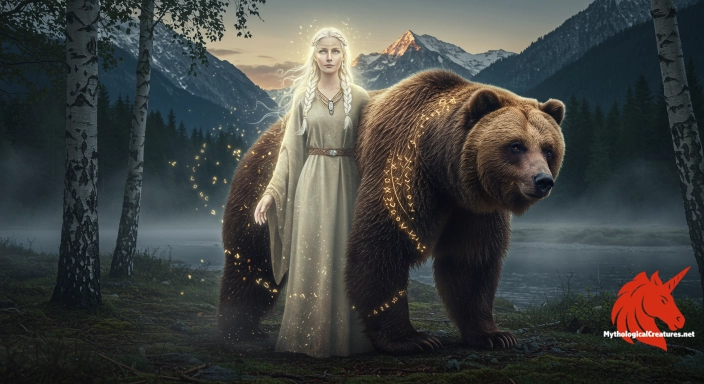
Hamingja
Hamingja - Represents the transfer and preservation of luck and honor across generations.
Origins & First Encounters
The hamingja is a distinctive figure in Norse mythology, revered as a female guardian spirit imbued with the power of luck and fortune. She is regarded as an ever-present force that accompanies an individual throughout life, shaping destiny and ensuring happiness. Her origins are deeply rooted in the ancient oral traditions of the Norse, where myth and superstition merged to explain the mysteries of fate. This guardian spirit is often seen as a personal embodiment of good fortune, intricately linked to the well-being of both individuals and families. Early attestations in medieval sagas portray her as a protector whose influence extends beyond mortal existence. Her role is not confined to a single life but is believed to pass along through generations, intertwining the fortunes of an entire lineage. As a cultural emblem, she highlights the intimate relationship between the person and the unseen forces that govern success and honour. The word ‘hamingja’ has evolved in modern Icelandic to mean happiness, a testament to her lasting influence. Her narrative continues to resonate as it bridges the gap between the spiritual and the everyday, offering insight into the Norse conception of destiny.
Source Texts & Tale Variants
Primary sources on the hamingja emerge from a wide range of medieval texts and sagas that capture the rich tapestry of Norse myth and folklore. The sagas recount vivid tales where this guardian spirit accompanies heroes and common folk alike, often appearing during sleep in animal form. Stories from the saga of Hrólfr Kraki illustrate how the hamingja can manifest as a shape-shifter, blurring the lines between the human and the animal. In other accounts, notable figures such as Olaf II of Norway are depicted as lending their hamingja to allies, highlighting its perceived power over fate. The tradition of transferring one’s hamingja to a family member after death reinforces the concept of an enduring, familial bond that protects successive generations. Despite variations among the texts, the narratives emphasise themes of honour, prosperity, and the capricious nature of luck. Textual fragments and later folkloric adaptations have enriched the original myth, creating multiple story variants that explore its dynamic role. The diversity of these sources underscores both the flexibility and the deep cultural significance of the hamingja. As a result, the spirit has come to symbolize not only individual fortune but also the collective identity of families and communities.
Form & Powers
The physical form of the hamingja is as fluid and elusive as the concept of luck itself. It is most often described as appearing in the guise of an animal, a manifestation that occurs during sleep or in moments of introspection. Vivid depictions in the sagas suggest that she may take on the appearance of noble creatures such as wolves, bears, or even other enigmatic beasts, each chosen to mirror the traits of the individual she accompanies. Some tales describe her as shimmering with an ethereal light, with a majestic aura that is both formidable and benevolent. The animal form is not fixed; accounts indicate that her size and appearance can vary according to the circumstances and the emotional state of her bearer. In certain stories, she appears as a spectral echo of a sleeping person, evolving in form to align with the changing fortunes of that person’s life. This mutable nature imbues her with a constant sense of mystery and dynamism. Every detail, from the glint in her eyes to the graceful flow of her form, symbolises the delicate balance between protection and the unpredictability of fate. Such rich descriptions contribute to an enduring image of a spirit that is as much a part of the natural world as it is a supernatural guardian.
Regional Faces
The legend of the hamingja is primarily rooted in Norse culture, yet its interpretations vary throughout the Scandinavian regions. In Iceland, she is closely associated with family welfare and longevity, embodying both personal and collective fortune. Norwegian traditions often portray her as a powerful, protective presence whose influence extends into the realms of battle and leadership. Across other Norse-influenced areas, the concept sometimes blends with that of the fylgja, highlighting the interconnectedness between personal destiny and ancestral legacy. In some regional adaptations, her role may shift towards a more general symbol of fortune, merging the lines between luck and honour. Variations in storytelling have subtly altered her attributes, reflecting regional nuances in the understanding of fate and spiritual guardianship. Local folklore frequently casts her as an intimate part of everyday life, where even mundane occurrences are seen as touched by her mysterious power. Despite the differences, the core motif of a guiding spirit that safeguards and transmits luck remains a unifying element across the diverse cultural landscapes. These regional adaptations underscore the flexibility of the hamingja myth and its capacity to resonate with varied social and cultural identities.
Cultural Parallels
The role of the hamingja finds many intriguing parallels in the broader world of mythology, resonating with guardian spirits encountered in diverse cultural traditions. Like the Norse fylgja, which mirrors the personal and familial fortunes of its bearer, the hamingja embodies a direct connection between an individual’s destiny and the supernatural realm. Similar to the spirit guides found in Celtic traditions and other European mythologies, she symbolises the intrinsic link between a person’s character and the forces that govern luck and honour. The practice of attributing personal protection to an unseen guardian is a recurring theme that also appears in aspects of ancient Roman beliefs and even in certain indigenous American narratives. These cross-cultural comparisons illuminate a universal human desire to safeguard one’s fate and to recognise unseen influences in daily life. Furthermore, the notion of transferring luck or spiritual power between individuals has echoes in various global myths, reinforcing the idea that fortune is both personal and communal. In comparative analysis, the hamingja stands out for her fluid embodiment as both a tangible animal form and a symbol of inherited bounty. This duality enriches the dialogue between different mythological traditions, highlighting shared human values about protection, destiny, and the mysterious nature of luck.
Legacy & Modern Evolution
The evolution of the hamingja reflects a transformation from a distinctly mythological guardian to a broader symbol of happiness and inherited fortune. In early Norse tradition, her tangible presence as a female spirit was intertwined with the fate of warriors and families, anchoring her firmly in a pre-Christian worldview. As literature evolved through the medieval period, her narrative was reimagined in various sagas, each adding layers of complexity to her role in the interplay between fate and free will. With time, the hamingja became emblematic not only of personal luck but also of the collective identity of kinship and community. Modern interpretations in Iceland and beyond have seen her role expand, with the term itself now meaning happiness, a subtle nod to her ancient origins. Contemporary art, literature, and popular culture continue to draw inspiration from her fluid imagery, often portraying her as a spirit that reflects both the majestic and mysterious aspects of life. This modern resurgence has sparked renewed scholarly interest, wherein the hamingja is examined as a dynamic symbol of resilience and hope. Artistic renditions and cultural festivals revere her legacy, celebrating the convergence of myth, memory, and modern identity. Thus, the hamingja endures as a powerful metaphor for the unseen influences that shape lives and bind generations together, maintaining her relevance through the centuries.
Interesting Fact
An intriguing aspect of the hamingja is its ability to be lent between individuals, demonstrating a unique interplay of personal luck and familial bonds.
For myth educators and toolmakers
Built a resource for mythology learners?
If you offer courses, teaching tools, or research platforms focused on myth and folklore, consider a discrete placement on our reference pages.
Introduce your resourceQuick Creature Info
Origin:
Features:
Associations:
Our Mythic Legendary Rating:

Habitat:
Supernatural Powers:
Physical Attributes:
Abilities:
Behavior:
Lore:
Related Creatures, Tales or Lore
- FFylgja
- DDísir
- GGuardian Angel
References
Discover Another Mythical Legend You May Not Have Heard Of?
Uncover the mysteries of ancient folklore and expand your knowledge of legendary beings from cultures around the world.
Dare to Meet the Tanin'iver....
Curated by the Mythological Creatures Team
Series editor: Mythological Creatures Directory
Primary desk: Northern & European Folklore Desk
(rev. November 2025)