
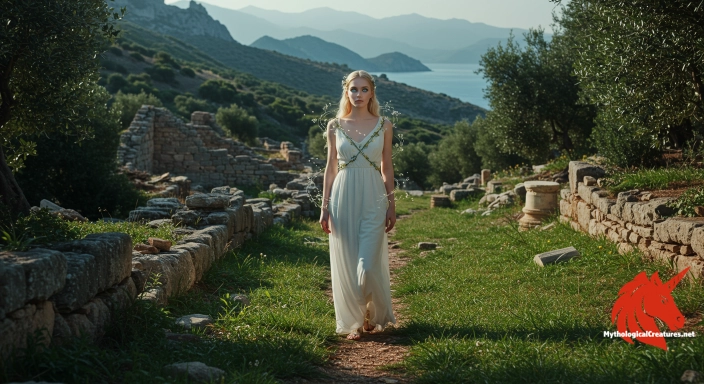
Hegetoria: Hegetoria is a local nymph from Greek mythology associated with the island of Rhodes.
Hegetoria
Hegetoria - Hegetoria is significant for her role in linking divine nature with the royal lineage of Rhodes through her marriage and offspring.
Origins & First Encounters
Hegetoria emerges from the rich tapestry of Greek mythology as a local nymph whose presence was deeply intertwined with the island of Rhodes. Her name resonates with the gentle authority of nature as much as it does with the subtle power of divine lineage. She is most famously known for her matrimonial union with Ochimus, a figure whose narrative is steeped in local dynastic legends. This union produced a daughter who would later become a significant part of the island’s mythic heritage, symbolising the merging of human ambition with divine favour. Early attestations of Hegetoria are found in fragmented local records, suggesting that she was revered not merely as a mythic character but as a spirit representing the natural beauty and bounty of Rhodes. Her story is interlaced with themes of love, rivalry, and the complexity of familial bonds, thereby serving as a cultural mirror to the values of her era. The myth surrounding her is often seen as a reflection of the island’s historical struggles and triumphs, combining both natural and political symbolism. The delicate balance of her narrative provides insight into the ancient Rhodian world, where even minor deities could exert considerable influence over cultural identity. The enduring nature of her myth points to an appreciation of nature’s mystique and the eternal human quest for connection between the mortal and divine.
Source Texts & Tale Variants
The textual origins of Hegetoria’s myth are primarily embedded in local Rhodian sources and later compilations of Greek myth, where her role as a nymph is mentioned in relation to the ruling families of the island. Several ancient sources offer a glimpse into her narrative, though details remain sparse and are sometimes interwoven with other local traditions. In one well-known account, hegetoria is celebrated as the wife of Ochimus and the mother of a daughter who would eventually bridge the familial divide between rival branches of a ruling dynasty. Alternative versions of the story introduce dramatic twists, such as the engagement of her daughter to Ocridion and the subsequent abduction of the bride by Cercaphus, thereby reflecting the fluid nature of myth-making. These variations highlight the mutable quality of local oral traditions and suggest an ongoing reinterpretation of her myth over centuries. Minor references in scholia and lexicographical notes further attest to her cultural significance, despite the absence of a comprehensive primary text. The multiple retellings underscore how the narrative was adapted to serve various social and political purposes over time. Even in later literary sources, echoes of her story can be found subtly influencing depictions of local deities. In summary, while the historical record may be fragmentary, the diverse sources collectively enrich our understanding of her multifaceted role in myth and society.
Form & Powers
Hegetoria is traditionally envisioned with an ethereal beauty that is emblematic of the nymphs, exuding a grace that seems inseparable from the natural world of Rhodes. Artists and storytellers alike have imagined her with flowing, lustrous hair that mirrors the shifting hues of the Mediterranean sea. Her delicate features, including eyes that capture the depth and mystery of coastal waters, have been a recurring motif in artistic depictions. In these portrayals, her visage is rendered with soft, gentle contours that evoke both vulnerability and quiet strength. Classical imagery sometimes associates her with elements of the island’s flora, suggesting that her clothing and adornments might be interwoven with motifs of olive branches and native wildflowers. Though specific details vary, many representations underscore a slender and graceful form that harmonises with the rugged yet beautiful landscape of Rhodes. There are hints that her figure could embody the curves of the island’s coastline, symbolising an intrinsic bond with the natural environment. In temple reliefs and votive offerings, subtle inscriptions and delicate carvings serve as visual allegories to her serene yet commanding presence. The scarcity of a fixed iconography has allowed for numerous artistic interpretations, each echoing the timeless allure and mystique of nature personified.
Regional Faces
Within the cultural landscape of Rhodes, Hegetoria’s myth has been finely tuned to reflect the unique characteristics of the island and its people. Local traditions often portray her as not only a divine nymph but also as a guardian spirit whose essence is interwoven with the natural rhythms of the island. Regional celebrations and festivals have, over the years, elevated her status to that of a symbol of fertility and abundance, mirroring the island’s reliance on nature for both sustenance and spiritual fulfilment. In some variations, her role is expanded to include the protection of local dynastic houses, thereby merging the domains of nature worship and political legitimacy. These narratives differ markedly from the broader pan-Hellenic portrayal of nymphs, as local adaptations imbue her with attributes specific to the environmental and historical realities of Rhodes. Small communities on the island recount her story in local dialects and through customary songs that blend myth with daily life. In remote villages, oral traditions maintain a version of her tale that emphasises restorative rites and seasonal cycles. Even in neighbouring regions, subtle shifts in her character can be detected, reflecting local preferences and the intersection of indigenous beliefs with common Greek mythological themes. The regional diversity found in her narrative illustrates how a mythological figure can evolve differently across geographical boundaries while remaining a core component of local identity.
Cultural Parallels
Examining the myth of Hegetoria invites parallels with numerous nature spirits and minor deities dispersed throughout the ancient world. Much like other nymphs in Greek tradition, she embodies the inherent connection between the divine and the natural environment, a trait shared with figures such as the Naiads and Oreads who also preside over specific aspects of the landscape. Her narrative, which intricately links familial loyalty with the capricious nature of love and power, finds echoes in myths where the divine lineage intersects with human affairs. Comparable in some respects to regional deities in other cultures, she illustrates the timeless motif of nature’s personification that can be observed in early Celtic and Near Eastern traditions. The dynamics of her familial relationships and their political undertones further resonate with stories of other local goddesses who have been employed as legitimising figures in the socio-political arena. While she remains a relatively obscure figure, Hegetoria’s myth is firmly embedded within a wider tradition of nature spirits who transcend the ordinary boundaries between nature and civilisation. Similar cross-cultural themes surface in legends where abduction, contested marriages, and divine interventions play central roles, highlighting a universal narrative appeal. Such comparative analysis not only enriches our understanding of her character but also reinforces the idea that nature deities have long served as a bridge between human experiences and the ever-changing natural world. In essence, her story complements a vast mosaic of mythological narratives that span continents, cultures, and eras.
Legacy & Modern Evolution
The evolution of Hegetoria’s myth offers a fascinating glimpse into how ancient deities adapt to shifting cultural and societal landscapes. Initially revered in local Rhodian cults, her story gradually permeated broader mythological collections, finding a modest yet enduring place in the canon of Greek lore. Over the centuries, her portrayal underwent subtle transformations as the romanticisation of antiquity during later periods rekindled interest in nymph figures. During the classical era, she was essentially perceived as a mediator between the natural world and human endeavours, a role that has since been revisited in various cultural renaissances. Modern artistic interpretations often cast her in a luminous light, merging ancient symbolism with contemporary aesthetics to evoke a sense of timeless grace. Her image has been reinterpreted in literature, theatre, and even digital media, where she symbolizes both the vulnerability and enduring spirit of nature. Cultural festivals on Rhodes occasionally incorporate elements of her myth, contributing to a revival of local heritage that honours its mystical past. In academic circles, she has become a subject of renewed interest, providing insights into the interplay of local traditions and pan-Hellenic myth. As modern sensibilities increasingly look to ancient myths for environmental and cultural inspiration, Hegetoria’s legacy adapts yet again, serving as a reminder of the eternal bond between humanity and the natural world. Thus, her myth functions as a living narrative, continually reimagined to reflect contemporary values while remaining rooted in its storied past.
Interesting Fact
Hegetoria’s myth not only interlaces divine immortality with local royal lineage, but also exemplifies how ancient narratives could vary while maintaining a core testament to nature’s pervasive influence.
Curated sponsor space
One subtle banner. Thousands of myth lovers.
We offer a small number of curated sponsor spots for relevant books, courses, games, and art. No clutter, just well-matched partners.
Partner with usQuick Creature Info
Origin:
Associations:
Our Mythic Legendary Rating:

Habitat:
Supernatural Powers:
Physical Attributes:
Abilities:
Behavior:
Lore:
References
Discover Another Mythical Legend You May Not Have Heard Of?
Uncover the mysteries of ancient folklore and expand your knowledge of legendary beings from cultures around the world.
Dare to Meet the Tefnut....
Curated by the Mythological Creatures Team
Series editor: Mythological Creatures Directory
Primary desk: Hellenic & Ancient Mediterranean Desk
(rev. November 2025)