
Helloi: Helloi are female nature spirits from Meitei mythology, depicted as beautiful young maidens.
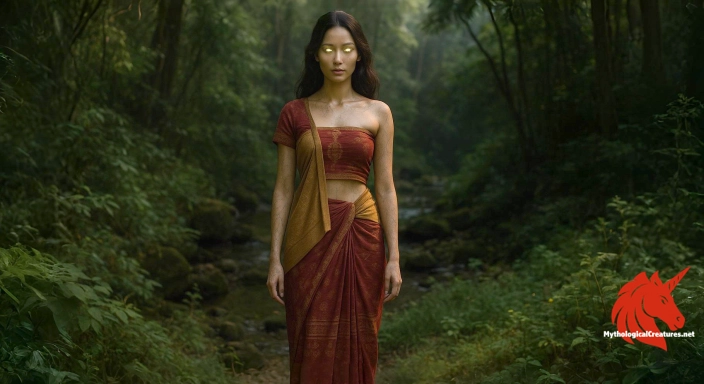
Helloi
Helloi - Represents the dual nature of beauty and danger, emphasizing both ecological balance and the potential harm through disease.
the legend in five swipes.
the legend in five swipes.
Where does the story of the Helloi begin?
In the rich tapestry of Meitei mythology, the Helloi emerge as captivating female nature spirits whose allure and mystique have long fascinated local communities. They are rooted in ancient traditions that blend the natural world with the supernatural realm, offering a multifaceted perspective on both creation and destruction. These spirits first appear in a blend of oral narratives and early folkloric texts that have been passed down through generations in the Manipur region. Their portrayal as both benevolent guardians of nature and dangerous seductresses has evolved over time, reflecting deep cultural ambivalence. As embodiments of nature’s dual power, they combine the delicate beauty of a maiden with the unpredictable forces of the wilderness. The legend of the Helloi Taret, symbolising the seven sister spirits, underscores the significance of familial bonds and collective strength. Their myth has been interwoven with local rituals and seasonal festivals that celebrate the natural cycle. The Helloi continue to operate as a bridge between the human and the divine, mirroring the complex interplay of attraction and repulsion found in nature. Their legacy is interlaced with lessons of caution, reverence, and a profound respect for the natural world. The enduring presence of these spirits in cultural celebrations highlights their timeless role in the Meitei spiritual landscape.
Helloi: How the Tale Was Told and Retold
The story of the Helloi is preserved in a rich array of traditional sources, ranging from ancient manuscripts to vibrant oral traditions. Local bards and storytellers have long recounted their adventures, infusing these legends with the nuances of regional history and ritual practice. Early texts, transmitted across centuries, outline the terrifying beauty and seductive power of these spirits. These accounts have been shaped by the collective imagination of the community, evolving with each retelling. Stories of the Helloi Taret, or seven sister spirits, often emphasise the unity and diversity within this pantheon of female entities. Variants of their myth often highlight different aspects of their character, be it as harbingers of disease or as stewards of ecological balance. Alongside traditional folklore, ritual performances and local celebrations have served as living testimonies of their enigmatic presence. Ethnographic records interwoven with mythic narratives contribute additional layers to their persona, reflecting both community values and natural phenomena. The layering of these sources ensures that the Helloi remain a dynamic and influential element of Meitei culture. Their evolving depiction in a variety of media underlines the adaptability of myth as it moves through time and space.
Helloi: Physical Form and Supernatural Powers
Visual depictions of the Helloi consistently highlight their bewitching beauty and ethereal presence, features that set them apart as one of the most alluring spirit figures in Meitei lore. They are commonly portrayed as beautiful young women whose expressions are at once inviting and enigmatic, drawing observers into their mysterious world. Artistic renditions often include soft, luminescent features, with delicate eyes that mirror the shimmer of moonlit nights in dense forests. Their attire is imagined to be crafted from the very elements of nature, with garments that evoke a harmony between human form and the wild outdoors. This integration with nature is further emphasised by adornments of flora, such as intricately woven leaves or floral accents that seem to dance with the wind. While their size and proportions may vary between accounts, a consistent detail is the graceful fluidity of their movements, suggesting both elegance and an innate, otherworldly power. In some interpretations, a subtle radiance surrounds them, offering hints of their supernatural origins. The juxtaposition of delicate features with an underlying menace reveals the dual aspects of attraction and danger inherent to their character. These detailed physical descriptions not only enhance their mystique but also serve as a visual metaphor for the balancing act between beauty and peril. The enduring image of the Helloi continues to inspire a rich legacy in local art and folklore.
Helloi: One Legend, Many Local Versions
Across the different regions of Manipur, the Helloi take on a variety of roles and expressions that mirror the diversity of local traditions. In some areas, they are celebrated as benevolent protectors of the forest, interlacing their myth with the region's natural beauty and ecological wisdom. Other communities portray them more menacingly, emphasising their power to seduce mortals and unleash calamities such as sudden illnesses. Such regional adaptations are evident in the imagery and symbolism used during local festivals, where the Helloi are both revered and approached with caution. In some rural narratives, offerings are made to appease these spirits, recognising their capacity to influence both the environment and human fortunes. Variations in the legends highlight how each locality adapts the myth to reflect its unique relationship with nature and the wilderness. Traditional arts, including dance and song, often incorporate local colourings of the Helloi myth and enhance the communal experience of the story. The diverse manifestations of the Helloi across regional boundaries exhibit how folklore transforms to accommodate the values and realities of different communities. This multiplicity reinforces the idea that myth is as fluid as the natural elements it seeks to personify. Such regional nuances ensure that the Helloi remain both a unifying and a distinct presence throughout the cultural landscape.
What figures resemble the Helloi?
The Helloi share intriguing similarities with a host of female spirits in various mythologies, symbolising a universal interplay between allure and danger. Comparable to the seductresses found in Western legends, such as the Greek sirens, they similarly use their beauty and charm as powerful tools. Their dual nature, combining the roles of protector and peril, resonates with other nature-linked deities and fae figures in European folklore. Like Celtic faeries or the Eastern dakinis, the Helloi embody the enigmatic qualities of nature: beguiling, unpredictable, and capable of both healing and harm. This cultural parallel extends into the realm of artistic expression, where visual depictions often render these figures with a blend of seductive beauty and ominous intent. Their role as intermediaries between humanity and the natural realm finds echoes in other indigenous mythologies, illustrating a shared symbolic language across cultures. Such comparisons highlight the way many societies perceive the untamed forces of nature through the metaphor of the feminine. The convergence of myth and ecology seen in the Helloi mirrors broader themes found in global folklore, where beauty hides a double-edged sword. This intertextual dialogue enriches our understanding of how myth functions as a bridge between disparate cultural narratives. In comparative mythology, the Helloi serve as a poignant symbol of nature's inherent duality and the complex dynamics of feminine power.
How has the image of the Helloi evolved?
Over time, the depiction of the Helloi has undergone a significant evolution, reflecting both changes in societal attitudes and the reinterpretation of ancient traditions. Initially cast in the mould of enigmatic and potentially dangerous seductresses, they have gradually been reimagined within modern contexts as symbols of natural beauty and resilience. Contemporary renditions often portray the Helloi as more nuanced figures, capable of embodying both empowerment and ecological wisdom. This shift in representation mirrors broader discussions on gender and nature, where traditional narratives are reconsidered for new audiences. Modern artistic interpretations, including paintings, performances, and films, have breathed fresh life into their myth, highlighting a blend of timeless mystique and modern sensibilities. The resurgence of interest in indigenous spiritual figures has led to scholarly and cultural dialogues that reframe their role in the community. Their story continues to influence local festivals, rituals, and environmental narratives, acting as a reminder of the enduring connection between humans and the natural world. Digital platforms have allowed for an expansive reimagining of the Helloi, making them accessible to a global audience while respecting their cultural origins. The evolving legacy of the Helloi underscores the dynamic nature of myth, where ancient lore adapts to contemporary insights without losing its original enchantment. As a result, they remain a potent emblem of both the beauty and the inherent unpredictability of the natural environment.
Interesting Fact
An intriguing aspect of the Helloi is their dual role, as they not only maintain ecological balance but also possess the power to inflict diseases, embodying the paradoxical nature of creation and destruction in folklore.
Mythological Treasures
Greek Myths: A field guide to the monsters of ancient Greece
Every monster here earned its place in legend, and each gets a full page of artwork and the story behind it.
Norse Sagas: A field guide to the beasts of the Viking world
Drawn from the saga accounts themselves, with the powers, weaknesses and doom of each being set out.
Egyptian Legends: A field guide to the gods and monsters of ancient Egypt
Guardians of the living and devourers of the dead, with the role each played in judgement.
the legend in five swipes.
Support the directory
Promote your myth project and fund more research
Sponsor placements help keep this directory growing and free to use while giving your work a focused, relevant audience.
Learn how sponsorship worksQuick Creature Info
Features:
Associations:
Our Mythic Legendary Rating:

Also Sometimes Known As:
Habitat:
Supernatural Powers:
Physical Attributes:
Abilities:
Behavior:
Lore:
Related Creatures, Tales or Lore
- NNymphs
- YYakshinis
- AApsaras
References
Discover Another Mythical Legend You May Not Have Heard Of?
Uncover the mysteries of ancient folklore and expand your knowledge of legendary beings from cultures around the world.
Dare to Meet the Jack o' Kent....
The Mythological Creatures Book Series
Yokai, Greek, Norse, Egyptian & Chinese. Five illustrated field guides to the creatures the old stories either warned or told you about.
Curated by the Mythological Creatures Team
Series editor: Mythological Creatures Directory
Primary desk: Asian & Pacific Myth Cycles Desk
(rev. November 2025)