
Hemann: The Hemann is a ghostly spirit from German folklore renowned for its terrifying, echoing yell that haunts the night.
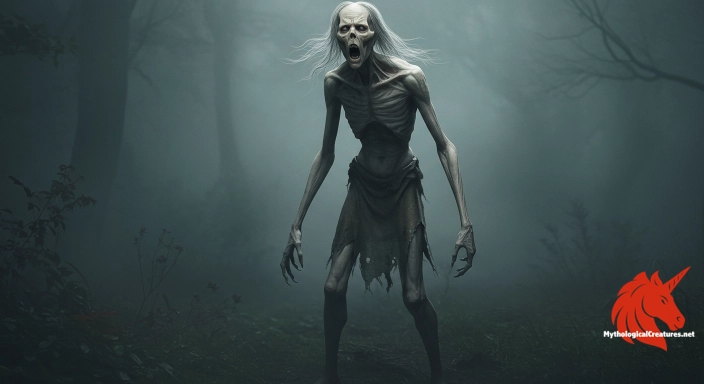
Hemann
Hemann - Represents the enigmatic forces of the night and the cultural expression of fear in German folklore.
Origins & First Encounters
The Hemann is an enigmatic spirit woven into the rich fabric of German folklore, renowned for its unnerving ability to terrify through its piercing nocturnal yells. Its legend emerges from a cultural milieu steeped in rural mysticism and communal lore, where supernatural occurrences explained the unexplained. The creature’s many names—Hemann, Homann, Hoymann, Hoimann, or even Jochhoimann—reflect its multifaceted identity as shaped by generations of oral traditions. Its origins lie in the shadowed corners of former German-speaking regions, where the merging of pagan beliefs and medieval superstitions set the stage for its persistent presence. Stories recount a spirit whose vocal manifestations herald both misfortune and mystery, resonating with communities accustomed to the whims of an untamed natural world. This spectral figure, often invoked in moments of isolation during the long winter nights, embodies both a cautionary warning and a reminder of life’s inherent unpredictability. The Hemann’s first attestations in the folklore of regions such as Bohemia and Silesia have evolved over time, absorbing local colour and significance in the retelling. Its enduring presence in tales and traditions lends the creature a timeless quality that continues to captivate and unsettle those who encounter its myth.
Source Texts & Tale Variants
Many early narratives of the Hemann are preserved in the oral traditions and folk tales of isolated rural communities, where the spirit’s bellowing cry served as a portent of the unknown. Local storytellers meticulously passed down accounts that detail its ghostly outbursts, often recorded in manuscript form by early folklorists. Numerous records from former German-speaking regions, particularly in Silesia and the Upper Palatinate, hint at a mysterious entity whose presence is marked solely by sound. A variety of story variants exist, with some depictions casting the Hemann as a spectral guardian of ancient places, while others portray him as a harbinger of impending doom. Certain texts emphasise the shifting nature of his cry, which takes on a sorrowful or even ironic tone depending on the situation. In Bohemia, where the creature is known as Hejkadlo, the legend intertwines with local rites and ambiguous celebrations of the supernatural. Chronicled anecdotes often describe encounters that occur at the intersection of festivity and fear during seasonal transitions. Collectively, these sources weave a complex tapestry that underscores the Hemann’s multifarious role in the mythological and cultural consciousness of the region.
Form & Powers
While the Hemann is reputed more for his chilling scream than for any concrete form, occasional descriptions in folklore hint at a figure both human and elusive. Eyewitness accounts, rare as they are, describe an indistinct silhouette that dissolves into the night, leaving a lingering sense of trepidation. Some traditional portraits suggest he may appear cloaked in diffused, dark vapours that blur the boundaries between physicality and shadow. There are whispers of a tall, imposing presence with features that shimmer at the edges, as if caught in perpetual motion. In these fleeting glimpses, hints of a grim, chiseled face and wild, unkempt hair have been noted, suggesting a spectral echo of a once-mortal man. His form is often portrayed as shifting and ephemeral, never fixed long enough to be observed fully. Local legends sometimes relate how the environment itself seems to distort around him, reinforcing his intangible nature. This mutable physicality serves not only to heighten the fear he inspires but also to symbolise the elusive nature of the mysterious forces that govern his existence.
Regional Faces
The legend of the Hemann unfolds differently across various German-speaking regions, each locale imparting its own distinct hue to the tale. In the rugged landscapes of the Fichtel Mountains and the dense woodlands of the Vogtland, the spirit is often depicted as a solitary wanderer whose eerie cries resonate amidst nature’s raw beauty. In Westphalia, accounts sometimes soften his terror with hints of playful mischief, where the howls are seen as both warnings and oddly benign tricks of fate. The folklore of Bohemia, where he is known as Hejkadlo, imbues his tale with an exotic twist that reflects the confluence of Germanic and local mythic traditions. In areas like the Upper Palatinate and the fringes around Crailsheim in Baden-Württemberg, the Hemann is embedded within community rituals and seasonal legends that serve to caution as well as entertain. Each variation preserves the central motif of a fearsome cry yet adapts its narrative to address regional anxieties and environmental peculiarities. The subtle divergences across these regions illustrate how local speech, customs, and historical events have shaped his myth. Ultimately, whether a bearer of misfortune or a spectral trickster, the Hemann’s regional interpretations testify to the fluid nature of folklore as a living tradition.
Cultural Parallels
When comparing the Hemann to other mythical entities across Europe, one finds a compelling convergence of themes centered on the power of an ominous cry. The disembodied yell that defines the Hemann is reminiscent of the keening wail attributed to the Irish banshee, even though the banshee is typically portrayed in a different gendered form and cultural setting. Across various traditions, these spectral voices have served as harbingers of change or doom, merging the supernatural with life’s unpredictable cadence. Similar to the enigmatic Wild Huntsman of Northern lore, the Hemann occupies a liminal space between the mortal realm and the spectral unknown. This parallel underscores a broader, pan-European motif wherein nature, through personified figures, communicates both warnings and messages of transformation. His elusive presence and vocal menace are thematic neighbours to other phantasmal guides found in Slavic and Nordic mythologies. The recurrence of such figures highlights a collective cultural need to understand and articulate the uncanny forces of nature. In comparative terms, the Hemann stands as a distinctly German expression of a universal mythic language, bridging diverse traditions with his eerie, vocal manifestations and enigmatic aura.
Legacy & Modern Evolution
Over the centuries, the legend of the Hemann has undergone a fascinating evolution from a cautionary tale recounted in hushed tones to a subject of modern creative enquiry. His terrifying yell, once a common explanation for eerie, nocturnal disturbances, has gradually assumed a symbolic role in exploring themes of isolation and the uncanny in literature and art. Early depictions rooted in the fears of rural communities have given way to more nuanced portrayals that interrogate the boundary between reality and the supernatural. As society has modernised, the Hemann has shifted from a strictly ominous presence to an emblem of nature’s mysterious power and the allure of the unknown. Contemporary artists and storytellers have reimagined his legend in films, digital art, and experimental theatre, presenting him as both a relic of the past and a timeless symbol of human vulnerability. This evolution mirrors the broader trend of reinterpreting traditional myths to reflect modern existential themes. His legacy endures as a reminder of the potent cultural resonance of folklore, capable of capturing diverse human emotions and experiences. Today, the Hemann continues to inspire debate, creative reinterpretation, and a deep-seated appreciation for the enduring mysteries that lie at the heart of myth and memory.
Interesting Fact
An intriguing aspect of the Hemann is that its name is derived directly from the type of yell it emits, linking its identity indelibly with the sound of fear.
For serious mythcraft
Your project belongs among the legends
If your work deepens how people understand, play with, or teach mythology, a sponsor placement here keeps it in front of the right readers all year.
Submit a sponsorship enquiryQuick Creature Info
Origin:
Features:
Our Mythic Legendary Rating:

Also Sometimes Known As:
Habitat:
Supernatural Powers:
Physical Attributes:
Abilities:
Behavior:
Lore:
Related Creatures, Tales or Lore
- PPoltergeist
- NNachtmahr
- KKobold
References
Discover Another Mythical Legend You May Not Have Heard Of?
Uncover the mysteries of ancient folklore and expand your knowledge of legendary beings from cultures around the world.
Dare to Meet the Heimdall....

Curated by the Mythological Creatures Team
Series editor: Mythological Creatures Directory
Primary desk: Northern & European Folklore Desk
(rev. November 2025)