
Hitodama: Hitodama are ethereal, glowing orbs from Japanese folklore, believed to be the souls of the dead that have separated from their bodies.

Hitodama
Hitodama - Hitodama serve as a reminder of the transient nature of life and the spiritual journey of the soul after death.
Origins & First Encounters
Emerging from Japan’s deep well of mysticism, hitodama are renowned as the glowing embodiments of a departed soul adrift in the night. Their origins lie in ancient spiritual traditions that contemplate the persistence of the soul after death, with early folk narratives painting them as both eerie and enigmatic. Historical mentions of these luminous orbs can be traced back to medieval lore, where the boundary between the mortal and spirit worlds was often portrayed as porous and mutable. Witnesses to these spectral lights in quiet graveyards and moonlit landscapes have woven them into stories of warning and wonder. The belief in hitodama was deeply intertwined with traditional practices and the veneration of ancestors in Japanese culture. Over time, they became emblematic of the transient nature of life and the mystery surrounding the afterlife. Their depiction evolved alongside societal rituals and the collective memory of the departed, reflecting shifting cultural attitudes toward death. These apparitions have also served as a bridge connecting the historical and the supernatural, enriching Japan’s mythological canon. The enduring fascination with hitodama underscores humanity’s universal quest to understand the other side of life.
Source Texts & Tale Variants
Ancient texts and oral traditions form the backbone of the hitodama lore, with early narratives embedded in local folklore and classical compilations from various regions of Japan. These luminous orbs have been documented in historical diaries, folk songs, and Edo period woodblock prints, which vividly capture their mysterious glow amid night-time landscapes. Different story variants describe hitodama in divergent lights, ranging from omens foretelling misfortune to gentle reminders of ancestral presence. Some accounts suggest that these souls, once tethered to the corporeal body, escape as fire-like manifestations when death comes unexpectedly. The multitude of primary sources reveals a rich tapestry of interpretations that underscore the fluid nature of spiritual life in Japanese tradition. Alternative narratives, occasionally entwining hitodama with other ghostly phenomena, highlight the adaptability of the myth as it travelled through regions and ages. Oral storytellers and local priests provided further variations, each imbuing the phenomenon with a dose of regional colour and sentiment. As modern storytellers continue to draw on traditional records, hitodama have woven themselves into the fabric of contemporary popular culture as well. These diverse accounts emphasise both the ethereal beauty and the underlying morbidity that have long defined hitodama.
Form & Powers
Visually, hitodama appear as delicate spheres of flame that exude a soft, pulsating luminescence, setting them apart from ordinary fire. The orbs are typically described with fluid outlines, often glowing in warm hues of amber and gold that contrast strikingly against the night sky. In some recountings, hints of blue or green may be observed, lending a ghostly and otherworldly quality to their appearance. Their ephemeral nature is underscored by the way they waver and pulse, almost as if caught between states of existence. Some renditions suggest that these flames vary in size, ranging from tiny motes barely visible to larger, more imposing orbs. Despite their apparent fire-like nature, they lack the heat and destructive force typical of fire, instead emanating an almost hypnotic radiance. Their transient existence is a visual metaphor for the fleeting essence of the human soul, undeterred by the confines of a physical form. Meticulous descriptions in folklore portray them as silent, drifting entities that defy continuous observation, enhancing their mystique. Overall, the physical depiction of hitodama captures a delicate balance between captivating beauty and inherent eeriness.
Regional Faces
Throughout Japan, interpretations of hitodama vary widely, reflecting the diverse cultural and environmental influences across regions. In the countryside of central Japan, for example, these spectral orbs are often viewed as benevolent messengers from the realm of ancestors, guiding souls through dark and uncertain nights. In contrast, remote mountain or coastal areas sometimes regard them with apprehension, interpreting their appearance as an ill omen that heralds misfortune or loss. Local rituals and customs frequently adopt unique attributes for hitodama, with some communities incorporating them into seasonal festivals and rites of remembrance. In certain regions, the phenomenon is interwoven with the lore of other supernatural lights, such as kitsunebi, further complicating its narrative. The interplay of regional beliefs and storytelling traditions has led to a spectrum of interpretations—from symbols of hope and protection to harbingers of impending tragedy. Even within a single prefecture, neighbouring villages may institute distinct names and legends surrounding these glowing spectres. Such variability underscores the adaptability of hitodama legends in resonating with both communal fears and hopeful aspirations. Ultimately, the regional diversity in the portrayal of hitodama mirrors the broader Japanese tendency to blend nature, spirituality, and local identity into a complex mythological narrative.
Cultural Parallels
When examined alongside other cultural phenomena, hitodama share striking similarities with ghostly lights found in different folklore traditions. In European legends, the will-o’-the-wisp manifests as a flickering, elusive light seen over marshlands and swamps, often believed to be the soul of a lost traveller. Much like hitodama, these erratic flames in European lore evoke both fascination and a sense of foreboding. Eastern traditions, particularly in Chinese folklore, recount the appearance of spectral fire that represents the residual energy of departed souls, drawing clear parallels with hitodama’s representation in Japan. These cross-cultural comparisons reveal a recurring motif: the transformation of human essence into a luminous, transient entity that challenges the limits of mortal perception. The deliberate ambiguity in both traditions serves to remind observers of the thin veil between life and death. While the will-o’-the-wisp often carries an air of malevolence or trickery, hitodama are more closely tied to ancestral reverence and the inevitability of spiritual continuation. Despite these differences, the universal imagery of a glowing soul underscores a shared human attempt to symbolise the mystery behind existence. This comparative lens enriches our understanding of hitodama as a global phenomenon that articulates similar existential themes across diverse cultures.
Legacy & Modern Evolution
The legacy of hitodama reflects a vibrant journey from ancient myth to modern cultural icon, embodying enduring themes of the ephemeral and the otherworldly. Their vivid image originally soared through folklore and art during Japan’s feudal and Edo periods, where they served as stark reminders of the soul’s persistence beyond the physical form. As the influence of traditional beliefs has waned in some circles yet flourished in others, hitodama have continued to inspire contemporary interpretations in literature, film, and animation. Modern media frequently reimagines these fire orbs as symbols of both the melancholic beauty and tragic transience of life. This evolution is evident in anime and video game narratives, where hitodama are often depicted with layers of emotional complexity and a distinctive visual flair. Artists and writers have reinvented their mythic qualities to suit the modern mood, blending historical reverence with avant-garde aesthetics. Yet, the core symbolism remains intact—an eternal reminder of the unbreakable bond between the living and the spirit world. Today, hitodama serve as a poignant metaphor for impermanence and renewal, a theme that resonates deeply in both traditional practices and contemporary introspection. Their enduring presence in modern culture underscores a timeless dialogue between the past and the present, inviting continual reinterpretation of what lies beyond life’s corporeal confines.
Interesting Fact
An interesting observation is that the ghostly, flame-like manifestation of hitodama finds echoes in similar phenomena across diverse cultures, highlighting a universal fascination with the ethereal nature of the soul.
Reach myth fans
Connect your myth-driven brand with this audience
Our readers are writers, educators, gamers, and collectors who care about mythology. Enquire about a limited sponsor placement on creature pages.
Enquire about sponsorshipQuick Creature Info
Features:
Associations:
Our Mythic Legendary Rating:

Also Sometimes Known As:
Habitat:
Supernatural Powers:
Physical Attributes:
Abilities:
Behavior:
Weaknesses:
Lore:
Related Creatures, Tales or Lore
- WWill-o'-the-wisp
- OOnibi
- SSt. Elmo's Fire
References
Discover Another Mythical Legend You May Not Have Heard Of?
Uncover the mysteries of ancient folklore and expand your knowledge of legendary beings from cultures around the world.
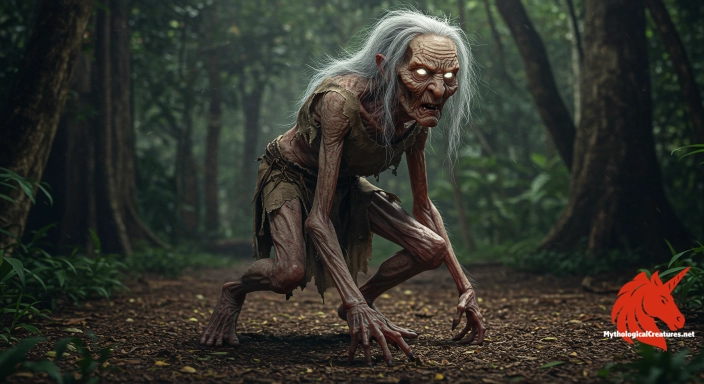
Dare to Meet the Soucouyant....
Curated by the Mythological Creatures Team
Series editor: Mythological Creatures Directory
Primary desk: Asian & Pacific Myth Cycles Desk
(rev. November 2025)