
Hreiðmarr: Hreiðmarr is a dwarf from Norse mythology featured in the Völsunga saga and Prose Edda.
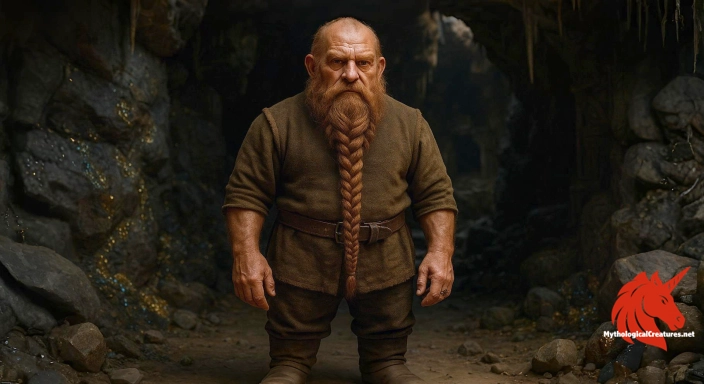
Hreiðmarr
Hreiðmarr - Hreiðmarr’s story serves as a cautionary tale about the destructive consequences of greed and cursed wealth in Norse tradition.
the legend in five swipes.
the legend in five swipes.
Hreiðmarr: First Encounters and Early Records
Hreiðmarr emerges from the depths of Norse mythology as a formidable dwarf whose narrative underpins themes of greed, fate, and the curse of ill-gotten wealth. His legend is woven into the fabric of ancient Scandinavian literary traditions, finding its place in celebrated texts such as the Völsunga saga and Snorri Sturluson’s Prose Edda. Born into a world where dwarfs were revered as master craftsmen and cunning keepers of mystery, Hreiðmarr is depicted not just as a craftsman, but also as a tragic patriarch. His role as a father to Regin, Fafnir, Ótr, Lyngheiðr, and Lofnheiðr cements his importance in the mythic narrative, establishing the generational conflicts and curses that follow. The intertwining of family loyalty with personal downfall in his story adds layers of complexity to his character. Hreiðmarr’s life is emblematic of the fatal allure of riches, as his glittering treasure ultimately leads to his undoing. Paradoxes of creation and destruction converge in his tale, illustrating the timeless tension between divine favour and mortal hubris. His narrative is set against a rich cultural backdrop where myth, morality, and the inevitability of fate coalesce. In every retelling, he stands as a reminder of the delicate balance between prosperity and ruin.
How was the story of Hreiðmarr recorded?
The chronicles of Hreiðmarr’s life are anchored in some of the most influential sources of Norse myth, with the Völsunga saga and the Prose Edda providing detailed accounts of his lineage and tragic destiny. Early medieval manuscripts offer fragmented yet compelling versions of his story, each adding its own flavour to the character’s portrayal. The Prose Edda by Snorri Sturluson records his dealings with the cursed treasure and documents the sequence of events that led to his family’s downfall. In parallel, later oral traditions and skaldic verses have preserved echoes of his tale, blending historical detail with lyrical embellishments. Variations in these narratives illustrate a rich tapestry of interpretations, with subtle differences in the family dynamics and the repercussions of possessing the cursed ring, Andvaranaut. Some texts focus on his role as the unwitting architect of his family’s ruin, while others highlight the pivotal actions of his offspring. The diversity among sources underscores the evolving nature of Norse mythology, where each variant contributes to a broader understanding of his character. In essence, the primary accounts not only document a personal saga of greed and retribution but also mirror the cultural complexities of the societies that revered these myths. The multiplicity of narratives invites readers to explore the interplay between recorded history and myth-making, offering insights into how legends adapt over time. Each source provides a unique lens through which the tragic outcomes of Hreiðmarr’s decisions can be interpreted.
What could Hreiðmarr do?
Hreiðmarr’s physical depiction is emblematic of the dwarven archetype in Norse mythology, characterised by a short and robust stature which reflects the earthy resilience of his kind. His rugged facial features and tightly braided beard suggest a life of labour and timeless craftsmanship, with every line and crease hinting at centuries of accumulated wisdom and weariness. Artists and storytellers often illustrate him with deeply set, penetrating eyes that seem to mirror a soul burdened by both ambition and impending doom. His skin is imagined as coarse and weathered, evoking the enduring essence of stone and earth. In various interpretations, his attire is modest yet functional, adorned occasionally with subtle hints of metalwork that symbolise his intrinsic link to the treasure he once owned. The visual imagery surrounding Hreiðmarr often integrates the elements of craftsmanship, portraying him as someone who has both shaped and been shaped by the very materials he reveres. The deliberate juxtaposition of his stolid appearance with the vibrant glimmer of his wealth creates a contrast that is as striking as it is symbolically rich. His physical presence, heavy with the gravitas of destiny, continues to inspire artists to capture the paradox of a mighty spirit confined within a nondescript exterior. Each portrayal, while varying in stylistic detail, unites the recurring themes of endurance, fatalism, and the inexorable pull of cursed fortune.
Hreiðmarr Across Different Regions
Across the Scandinavian landscape, the figure of Hreiðmarr has been reimagined to align with local cultural nuances and regional storytelling traditions. In Icelandic sagas, for instance, his character is often infused with a sense of tragic inevitability that mirrors the harsh realities of the geographical environment and the isolation inherent to island life. Mainland Scandinavians might depict him with a slightly different emphasis, focusing on his role as a merchant of misfortune, whose possession of glittering wealth is as much a curse as it is a blessing. In parts of the Norse world where oral traditions held sway, his recounting varied with local embellishments that highlighted ethical lessons about greed and the perils of hoarding fortune. While central elements of his myth, such as the cursed ring Andvaranaut, remain consistent, the moral undertones are coloured by regional attitudes towards wealth and fate. Some traditions stress the inevitability of retribution, whereas others invite empathy for the doomed patriarch caught in a web of family loyalty and greed. The local adaptations also offer different visual representations of his dwarven form, sometimes depicting him as more rugged or mystical depending on the storytellers’ emphasis. In this manner, Hreiðmarr becomes not just a mythic figure, but a reflection of the diverse cultural landscapes that shaped Norse legend. His enduring tale thus adapts to the vernacular, ensuring that each layer of regional expression adds depth to his myth.
How does the Hreiðmarr legend compare worldwide?
Hreiðmarr’s tale finds resonance with a wide spectrum of mythological traditions that explore the dual nature of wealth and its underlying curse. His narrative, centred around the possession of a cursed treasure, mirrors themes evident in other cultures where riches are portrayed as both a blessing and a harbinger of misfortune. Comparable to the myth of King Midas, where the allure of gold ultimately brings sorrow, Hreiðmarr’s story highlights the peril of unbridled avarice. In the broader Indo-European context, figures that embody the complex relationship between material wealth and spiritual destruction are a recurrent motif, reinforcing the timeless caution against the unchecked pursuit of fortune. The dwarfs of Norse lore, celebrated as unparalleled artisans, are often juxtaposed against characters in other cultural mythologies who oscillate between brilliance and ruin. Such comparisons reveal a common narrative thread: the hero who, through the possession of a precious item, becomes entangled in a destiny that reflects the corrupting power of desire. The cursed treasure motif is also a common element in later literary works, echoing across borders and epochs. Each cross-cultural parallel enriches the interpretation of Hreiðmarr’s myth, drawing attention to the universal themes of fate, greed, and retribution. As these narratives interlace, they underscore a shared human experience that transcends specific cultural boundaries and resonates with a timeless moral ambiguity.
Hreiðmarr: How the Legend Lives On
Over the centuries, the legacy of Hreiðmarr has been reinterpreted by successive generations, with his myth evolving to reflect both the changing societal values and the enduring fascination with Norse lore. In early medieval literature, his life encapsulated the ominous interplay between cursed wealth and familial strife, a motif that resonated deeply with audiences aware of the dangers of excess. As the myth matured through oral and written traditions, his figure gradually transformed from a mere keeper of treasure to a symbol of inevitable retribution and tragic destiny. In more recent times, modern depictions have painted him as a cautionary emblem, one whose story serves as a mirror to contemporary issues such as unchecked ambition and the perils of material obsession. The cursed artefact, Andvaranaut, continues to captivate minds, inspiring reinterpretations in modern literature, art, and even film. His narrative has also woven itself into academic discussions, where the dynamics of fate, legacy, and the cyclical nature of destruction are debated. Contemporary adaptations often lend a sympathetic nuance to his character, exploring the inherent tragedy of his actions and the heavy cost of his misfortune. Thus, the figure of Hreiðmarr not only bridges ancient myth with modern cultural discourse but also serves as an enduring reminder of the complex interplay between legacy, morality, and human frailty. His story remains a cornerstone in the exploration of mythic tradition, celebrated and reimagined by those who seek to understand the eternal conflicts between desire and destiny.
Interesting Fact
An intriguing aspect of Hreiðmarr's myth is how his personal greed and the obligation to keep a cursed treasure not only sealed his own fate but also precipitated the tragic destiny of his entire family.
Mythological Treasures
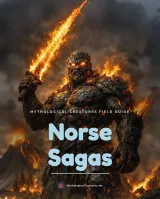
Norse Sagas: A field guide to the beasts of the Viking world
Drawn from the saga accounts themselves, with the powers, weaknesses and doom of each being set out.
Greek Myths: A field guide to the monsters of ancient Greece
Every monster here earned its place in legend, and each gets a full page of artwork and the story behind it.
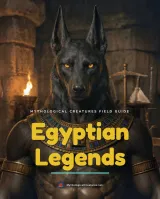
Egyptian Legends: A field guide to the gods and monsters of ancient Egypt
Guardians of the living and devourers of the dead, with the role each played in judgement.
the legend in five swipes.
Limited sponsor opportunity
One slot, carefully chosen partners
We only feature a small number of relevant sponsors at any time. If you create serious myth content, we would like to hear from you.
Partner with usQuick Creature Info
Origin:
Features:
Associations:
Our Mythic Legendary Rating:

Also Sometimes Known As:
Habitat:
Physical Attributes:
Behavior:
Weaknesses:
Lore:
References
Discover Another Mythical Legend You May Not Have Heard Of?
Uncover the mysteries of ancient folklore and expand your knowledge of legendary beings from cultures around the world.
Dare to Meet the Chesma iyesi....
The Mythological Creatures Book Series
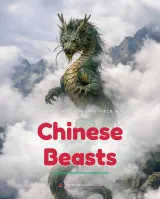
Yokai, Greek, Norse, Egyptian & Chinese. Five illustrated field guides to the creatures the old stories either warned or told you about.
Curated by the Mythological Creatures Team
Series editor: Mythological Creatures Directory
Primary desk: Northern & European Folklore Desk
(rev. November 2025)