
Hrímgerðr: Hrímgerður, also known as Hrimgerd or Hrimgerdr, is a frost giantess from Norse mythology.
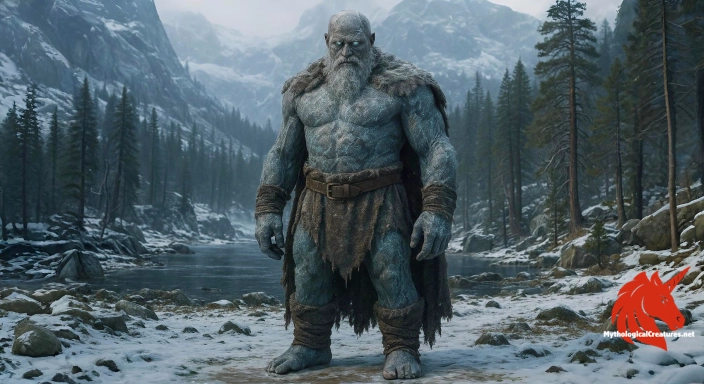
Hrímgerðr
Hrímgerðr - Represents the untamed force of winter among the jötnar and the perennial conflict between order and chaos in Norse mythology.
Origins & First Encounters
Hrímgerðr emerges from the mists of ancient Scandinavian lore as a formidable jötunn steeped in the elemental power of frost. Her name, translating to 'frost-Gerðr', immediately evokes images of bitter winter winds and the unyielding chill of the northern climes. Born of a mythic tradition that blends nature with the supernatural, she occupies a space where the natural world and the divine intersect in tumultuous harmony. Early attestations, though fragmentary, hint at her presence in oral recitations and poetic verses that celebrated the ferocity of winter. The very concept of a frost giantess speaks to the Norse understanding of nature’s wild unpredictability and its capacity for both creation and destruction. Stories of her have been passed down through generations, embodying the awe and trepidation that the harsh winter season inspired. As one of many jötnar, Hrímgerðr reflects a broader cultural heritage that revered the forces of chaos as essential counterbalances to order. Her enduring legacy continues to captivate those who explore the intricate tapestry of Norse myth, reminding us that in the realm of myth, even the coldest forces can possess a vibrant, enigmatic spirit.
Source Texts & Tale Variants
Ancient texts and oral traditions collectively offer glimpses into the enigmatic character of Hrímgerðr, though her mentions are not as extensive as some of her jötunn counterparts. Fragments of skaldic poetry and the scattered verses in Eddic sources suggest that her icy persona was once a well-known motif in the Norse mythic narrative. The primary sources, while sparse, provide a foundation for understanding her role as a symbol of winter’s relentless energy. Variants of her story appear through subtle references in medieval manuscripts, where her association with frost and chill is implicitly acknowledged. Other potential sources include later folkloric retellings where the jötnar often embody nature’s untamed aspects. Some legendary accounts weave her identity into the broader cosmological conflicts between the gods and the forces of chaos. Although detailed narratives of her exploits are rare, these textual hints have spurred interpretations and reconstructions by later mythographers. The enduring allure of such mythic fragments ensures that Hrímgerðr continues to be a subject of scholarly speculation and creative reinterpretation.
Form & Powers
Descriptions of Hrímgerðr have often captured the stark beauty and raw power of the icy north. Her figure is typically portrayed as towering and imposing, a being whose physical presence exudes both elegance and menace. Imagined with skin that seems to shimmer like freshly fallen snow, she is said to possess eyes that mirror the glacial blue of a frozen fjord. Her hair, flowing and silvered like a cascade of icicles, adds to her otherworldly splendour, hinting at both grace and the harshness of winter. Certain renditions suggest that her physique carries traces of both human-like form and the monstrous quality characteristic of jötnar, embodying an interplay between beauty and the brutal forces of nature. Attire described in mythic imagery often includes garments that seem woven from the very mists and snow, reinforcing her elemental bond. Some accounts mention faint traces of frost on her skin, as though she exudes an eternal chill wherever she roams. These visual attributes, though varied, consistently underline a dual essence: one of cold, unforgiving power and an arresting, almost ethereal allure.
Regional Faces
The characterisation of Hrímgerðr shifts subtly as one traverses the ancient Scandinavian landscapes, with each region infusing her legend with unique cultural flavours. In Icelandic narratives, her image is often interlaced with the stark, unforgiving beauty of the local winter, portraying her as both a harbinger of seasonal change and a keeper of ancient natural secrets. Norwegian renditions might emphasise her role in the cosmic balance between the gods and the jötnar, with an added layer of mysticism drawn from the country’s rugged terrains. Danish lore, on the other hand, occasionally softens her depiction, rendering her less as an outright antagonist and more as a personification of nature’s cyclical renewal. These regional variations illustrate how local climatic conditions and cultural attitudes towards nature inform the portrayal of such mythic figures. In areas where winter dominates the landscape, her presence is often seen as both a test of human resilience and a celebration of nature’s might. Despite these differences, the core attributes of Hrímgerðr remain rooted in the transformative power of frost. Thus, her legend not only adapts to the regional milieu but also unites diverse cultural interpretations under the shared symbolism of winter’s reign.
Cultural Parallels
When examining Hrímgerðr alongside similar mythic figures, one uncovers compelling parallels across various cultural traditions. Her role as an embodiment of winter’s ferocity resonates closely with figures such as the Celtic Cailleach, who is also revered as a personification of the harshness and transformative power of the cold season. Like many mythic beings whose origins span multiple traditions, Hrímgerðr is part of a broader narrative where elemental forces are both revered and feared. This interconnection highlights a universal motif: the veneration of nature’s dual capacity to nurture and devastate. Comparative analysis reveals that while the Norse tradition idealises her as a jötunn with both antagonistic and self-regenerative qualities, other cultures similarly depict winter deities or spirits as catalysts for change. In Mediterranean mythologies, one might draw subtle comparisons with the chilling aspects of certain primordial beings whose icy demeanour symbolises nature’s indifferent grandeur. Such cross-cultural reflections underscore that the personification of winter transcends geographical boundaries and reflects a shared human experience. Ultimately, the study of Hrímgerðr in relation to her cultural counterparts enriches our understanding of how societies conceptualise and mythologise the perpetual cycle of seasonal transformation.
Legacy & Modern Evolution
Over the centuries, the depiction of Hrímgerðr has evolved from a fragmentary mythic figure into a potent symbol of nature’s unpredictable force. In medieval times, her icy persona encapsulated the fear and reverence associated with the harsh winter months, serving as a reminder of nature’s capacity to both sustain and challenge humanity. As the modern era approaches, her legacy has permeated contemporary fantasy literature and art, where she appears as a character embodying both beauty and menace in the icy wilderness. Modern reinterpretations often cast her as an enigmatic force, bridging the ancient world of myth with modern concerns such as environmental change and humanity’s place within the natural order. In popular culture, her image is reimagined in graphic novels, films, and digital media, merging traditional mythic elements with innovative, creative aesthetics. The evolution of her character illustrates a broader trend where traditional mythic archetypes are revitalised to address modern themes. Today, Hrímgerðr’s legacy endures as a multifaceted symbol—part historical curiosity, part emblem of nature’s eternal cycle. Her story continues to inspire reinterpretation and dialogue, ensuring that the ancient frost giantess remains a living part of our cultural and imaginative heritage.
Interesting Fact
Despite her relatively brief mention in surviving sources, Hrímgerður’s association with frost has intrigued scholars, prompting further study into the elemental symbolism of jötnar in Norse mythology.
For indie creators
Give your myth project a permanent home
Indie authors, artists, small studios, and makers can secure an annual, non-intrusive sponsor slot that meets readers where they explore.
Obtain more informationQuick Creature Info
Origin:
Features:
Associations:
Our Mythic Legendary Rating:

Also Sometimes Known As:
Habitat:
Supernatural Powers:
Physical Attributes:
Abilities:
Behavior:
Weaknesses:
Lore:
Related Creatures, Tales or Lore
- YYmir
- TThrym
- SSkadi
References
Discover Another Mythical Legend You May Not Have Heard Of?
Uncover the mysteries of ancient folklore and expand your knowledge of legendary beings from cultures around the world.
Dare to Meet the Suttungr....

Curated by the Mythological Creatures Team
Series editor: Mythological Creatures Directory
Primary desk: Northern & European Folklore Desk
(rev. November 2025)