
Ionides: The Ionides are a sisterhood of water nymphs from Greek mythology.
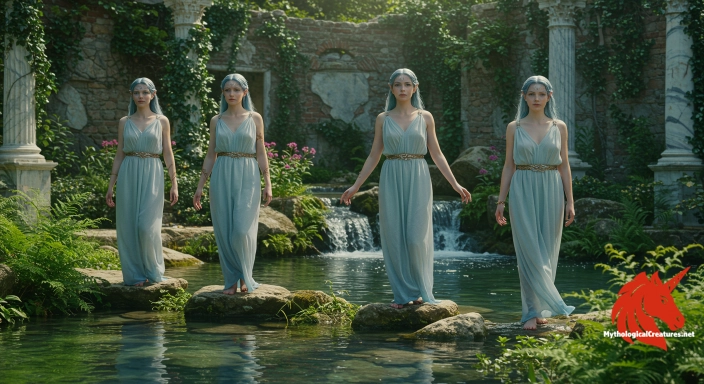
Ionides
Ionides - They represent the nurturing and life-sustaining aspects of water and are revered as divine custodians.
Origins & First Encounters
The Ionides emerged in ancient Greek myth as a revered sisterhood of water nymphs whose presence symbolised the life-sustaining and healing properties of water. Their origins, though shrouded in the mists of early myth, are firmly rooted in the landscape of divine natural forces, where water was both a literal and metaphorical source of renewal. They are first attested as divine entities in fragments of classical literature and local rituals that celebrated the sacredness of springs and streams. Each member—Calliphaea, Synallasis (or Synallaxis), Pegaea, and Iasis—bore a name that hinted at her unique contribution to the collective mystique of the group. The Ionides were not merely water spirits but also emblems of nature’s gentle power and its capacity to heal and nurture. Their story resonated within a cultural context that elevated natural elements to the status of gods, integrating human experience with the eternal rhythm of nature. The enduring appeal of these nymphs is reflected in artistic and literary traditions where they continue to epitomise beauty, grace, and the restorative essence of water. Their myth offers a vivid glimpse into ancient Greek reverence for the natural world and continues to captivate modern imaginations with its blend of mysticism and vitality.
Source Texts & Tale Variants
Ancient literary fragments and local cult inscriptions offer the primary glimpses into the myth of the Ionides, even though detailed narratives are relatively scarce. Several early sources, though brief, hint at their association with sacred springs and the healing properties that water symbolised in the ancient world. Variations in the spelling of Synallasis versus Synallaxis across these texts underscore the fluid nature of oral tradition and regional interpretation. Some classical commentaries and scholiasts noted their existence in passing, leaving a legacy that invites further imaginative reconstruction by later generations. Despite the paucity of exhaustive tales, ritual practices and votive offerings indicate that these water nymphs held significant local spiritual roles during certain cultic observances. Over time, storytellers and artists expanded upon these early mentions, adding layers of symbolism that intertwined the ideas of purity, rejuvenation, and divine femininity. The Ionides appear sporadically in ancient pottery decoration and temple dedications, each depiction contributing to a mosaic of myth that is as fragmented as it is evocative. Diverse story variants emphasise their role as intermediaries between the human realm and the mysterious world of elemental forces. In this way, the scant yet striking references serve as a platform for the creative imagination to fill in the gaps, ensuring that their legacy endures.
Form & Powers
Artistic representations of the Ionides capture an ethereal beauty that reflects the shimmering quality of water under sunlight. Their depictions characteristically include long, flowing hair that cascades softly like the gentle fall of a spring, connoting both elegance and the unfettered movement of water. The nymphs are invariably shown with delicate, refined features and luminous skin that seems to gather the soft glow of dawn, reinforcing their otherworldly nature. In traditional iconography, they are clad in diaphanous robes that mimic the transparency of water, with subtle hints of blue, green, and iridescent hues that evoke the spectrum of a clear, reflective pool. Their eyes are often rendered as deep, captivating mirrors of aquatic mystery, inviting onlookers to contemplate the unfathomable depths of nature. Each figure carries small attributes—such as water plants, droplets, or hints of flowing streams—that underscore her intrinsic connection with natural waters. While their portrayal is unified by the theme of water, individual variations in posture and expression provide a unique sense of character and purpose to each nymph. Their overall physicality is a delicate blend of strength and fragility, encapsulating the dual nature of water as both a gentle sustainer and a powerful force of change. Such detailed physical portrayals serve not only as a celebration of aesthetic beauty but also as a symbol of the divine energy that courses through natural water sources.
Regional Faces
Regional interpretations of the Ionides reveal a rich variety in how these water nymphs were integrated into local religious life and artistic expression. In certain areas of the ancient Greek world, especially within the Aegean islands and coastal communities, the Ionides were revered as local custodians of vital freshwater sources and springs. Their depiction in regional art is often imbued with unique stylistic elements—a tapestry of local flora, distinctive water motifs, and subtle variations in attire—that highlight the customs and natural environment of each locale. Some local cult practices celebrated the Ionides not just as water spirits but also as supernatural agents capable of bestowing healing and prosperity on the community. In other regions, their names and associated legends were slightly altered to resonate with regional dialects and cultural nuances, reflecting the diversity of myth-making across the Greek world. Localised traditions sometimes cast these nymphs as ancillary deities who assisted more prominent gods in the pantheon, thereby enhancing their importance within the local religious hierarchy. Artistic mediums such as vase painting, mosaic work, and temple reliefs have captured these regional distinctions, offering a glimpse into how different communities visualised the interplay between the human, the divine, and nature. The regional diversity in the portrayal of the Ionides underlines the universal human reverence for water, while simultaneously celebrating the particularities of local natural landscapes and cultural identities. As such, the regional adaptations of these nymphs serve as a testament to both the shared and varied ways in which ancient societies revered the elemental power of water.
Cultural Parallels
The myth of the Ionides finds cultural parallels in the wider tradition of water nymphs and associated deities throughout the ancient world. Their role as custodians of life-giving water aligns closely with that of the Naiads and Nereids, whose benevolent influence spans various strands of classical mythology. Similar to their Greek counterparts, Roman deities and even certain Celtic water spirits share the theme of purity and healing that the Ionides embody. The recurring motif of water as a source of regeneration and mystery finds echo in diverse cultural narratives, suggesting a universal recognition of water's sacred qualities. In comparative terms, the Ionides represent a specialized manifestation of a broader archetype—one that is recurrent in the mythology of many cultures, where water is both a nurturing force and a symbol of the divine. Their mystique and ethereal beauty serve as a common thread linking them to other water-associated figures, yet their distinct sisterhood formation grants them a unique position within this pantheon of nature’s divinities. Modern artistic interpretations continue to draw on these ancient parallels, often blending traditional imagery with contemporary themes of environmental stewardship and renewal. The cross-cultural similarities between the Ionides and other water deities underscore the deep-seated human connection to water as a universal symbol of life and transformation. This comparative analysis not only illuminates the shared mythological heritage but also reinforces the enduring appeal of water deities as icons of both natural beauty and mystical power.
Legacy & Modern Evolution
Over the centuries, the Ionides have transitioned from the realm of fragmented ancient texts to becoming enduring symbols of nature’s vitality and restorative power. Early depictions, often confined to local cult practices and brief literary mentions, laid the groundwork for a myth that would later be elaborated in art, literature, and imaginative reinterpretation. During the Renaissance and Romantic eras, their ethereal beauty and thematic association with water healing were reimagined and celebrated in a variety of artistic forms, from painting to poetic expression. Modern cultural narratives have further adapted the Ionides, casting them as environmental guardians whose presence evokes both nostalgia for a mythic past and a call to protect natural resources. Contemporary artists, writers, and filmmakers frequently draw on the enduring symbolism of these water nymphs to explore themes of renewal, sustainability, and the mystical qualities of nature. Their evolution mirrors the broader shift in societal attitudes toward the natural world, where ancient myths are reinterpreted as allegories for modern environmental concerns. The Ionides, though originally obscure, now feature in a diverse array of modern media, offering inspiration to those who seek to connect with the ancient wisdom of nature. Their legacy is celebrated not only as a repository of myth but also as a living reminder of the ethereal beauty and ongoing relevance of the natural world. Today, they continue to captivate audiences with a timeless charm that bridges the gap between antiquity and contemporary ecological ideals.
Interesting Fact
The Ionides are one of the few documented sisterhoods of water nymphs in Greek mythology, and their individual names evoke distinct aspects of the life-giving essence of water.
Advertising opportunity
Showcase your mythology project
We offer limited sponsor placements for books, courses, games, and creators aligned with our audience.
View partnership optionsQuick Creature Info
Origin:
Associations:
Our Mythic Legendary Rating:

Habitat:
Supernatural Powers:
Physical Attributes:
Abilities:
Behavior:
Lore:
References
Discover Another Mythical Legend You May Not Have Heard Of?
Uncover the mysteries of ancient folklore and expand your knowledge of legendary beings from cultures around the world.
Dare to Meet the Julemanden....

Curated by the Mythological Creatures Team
Series editor: Mythological Creatures Directory
Primary desk: Hellenic & Ancient Mediterranean Desk
(rev. November 2025)