
Ipos: Ipos is a powerful demon and Prince of Hell who commands 36 legions of demons.
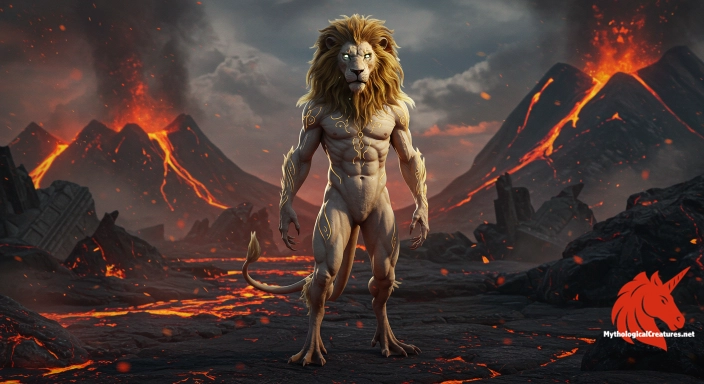
Ipos
Ipos - Ipos is regarded as a powerful demon whose abilities to disclose esoteric knowledge and influence human attributes render him a significant, though inherently malevolent, figure in demonology.
the legend in five swipes.
the legend in five swipes.
Ipos: Origins and First Sightings
Ipos emerges as one of the more enigmatic figures within the realm of demonology, a being whose origins are entwined with both celestial grandeur and infernal authority. His earliest appearances in grimoires and occult manuscripts mark him as an Earl and a powerful Prince of Hell, sometimes even noted as a Duke, with a lineage that hints at an ancient hierarchy of demons. The lore surrounding him has been shaped by centuries of mystic tradition where his dominion over thirty-six legions lends him an impressive stature. Many accounts reveal that Ipos is not merely a symbol of malevolent power, but also one who possesses the ability to enlighten men with wit and valour, a duality that makes his myth all the more compelling. His narrative is embedded in a cultural context that spans medieval ceremonial magic and later Renaissance occult practices, blending the sacred with the profane. Throughout history, he has been central to discussions of hidden knowledge and the perilous balance between light and darkness. His presence in demonological works has often served as a bridge linking the esoteric with the everyday quest for insight and courage. The complexity of his character, caught between divine insight and demonic ferocity, continues to captivate both scholars and practitioners interested in the intricate tapestry of myth and mysticism.
Ipos: How the Tale Was Told and Retold
The narrative of Ipos is drawn from a diverse array of ancient texts and grimoires that have preserved his legend over the centuries. Several medieval and early modern manuscripts, including influential works within the Lesser Key of Solomon tradition, recount his might and peculiar characteristics in extensive detail. In some versions of these texts, his knowledge is portrayed as boundless, revealing all that was, is, and might be, while other accounts restrict his prophetic insight solely to the future. Variants in his title, ranging from Earl to Prince—and occasionally Duke—reflect the fluidity with which early demonologists approached his identity. Among the story variants, certain manuscripts highlight his capacity to inject bravery and keen intellect into men, presenting him as a benefactor of exceptional qualities rather than only an agent of chaos. There are also narrative retellings where Ipos is depicted in more aggressive forms, aligning with the inherent dangers of his infernal lineage. The eclectic nature of these sources suggests that his character was adapted by various authors to suit the needs of their particular occult traditions. Over time, this multiplicity of versions has enriched his myth, ensuring that Ipos remains a dynamic and multifaceted symbol in demonological lore.
Ipos: Size, Shape and Strange Features
Ipos is vividly characterised by a unique anatomical composite that marries elements of both the ethereal and the beastly. Widely depicted with the body of an angel, his form is imbued with an eerie, celestial grace that contrasts sharply with his more bestial features. The lion head he bears radiates a regal ferocity, crowned with a mane that accentuates his authoritative presence and displays intense, discerning eyes. Complementing this majestic visage is the tail of a hare, a detail that adds a curious sense of agility and caprice to his overall appearance. His feet, resembling those of a goose, inject an unexpected lightness and terrestrial awkwardness amid the otherwise imposing symbolism. In certain rare depictions, Ipos is rendered with a full-bodied lion form, amplifying his connection to raw, animalistic power. Even more uncommon is the portrayal of him as a vulture, a transformation that invokes themes of decay and scavenging associated with the underworld. Every element of his composite form appears to be meticulously chosen to reflect the inherent contradictions in his character—between divine wisdom and untamed force. This rich visual amalgamation provides a fertile ground for artistic interpretation and invites observers to ponder the layered symbolism embedded in his form.
Ipos: One Legend, Many Local Versions
The depiction of Ipos varies notably across different regions and cultural traditions, each adding its own interpretative flair to his myth. Rooted primarily in European demonological texts, his characteristics have been modified by local folklore and the evolving practices of occult traditions. In Southern European contexts, the emphasis often falls on his capacity to reveal hidden truths and secrets of destiny, aligning him with a more prophetic role. Conversely, in Northern European accounts, his martial qualities and the association with bravery tend to be more pronounced, reflecting local valorisation of courage in battle. Linguistic adaptations have also led to variations in his name, with appellations such as Aiperos and Ipes becoming common in different regions. Some local traditions accentuate the delicate balance between his luminous angelic traits and his more fearsome animalistic aspects, thereby crafting a version of Ipos that resonates with indigenous symbolic systems. These adaptations may also reflect regional attitudes toward the supernatural, where the interplay of light and dark, order and chaos, is interpreted in context-specific ways. Thus, although the core attributes of Ipos remain consistent, the nuances of his portrayal across various cultures underscore the dynamic and adaptable nature of his myth.
Do other traditions know Ipos by another name?
The multifaceted nature of Ipos invites comparisons with numerous hybrid creatures that populate mythologies around the world. His unusual combination of a lion’s head, angelic body, hare’s tail, and goose’s feet echoes the archetypal motif found in composite beings, where disparate elements are merged to symbolise the convergence of opposing forces. Similar to the ancient chimera, Ipos embodies a synthesis of beauty and terror, evoking both divine mystery and savage instinct. Such composite imagery is also seen in other demonological figures who often bridge celestial and terrestrial realms, highlighting a shared symbolic lexicon across different traditions. In various Eastern mythologies, for instance, hybrid creatures serve as guardians of sacred knowledge much like Ipos, who imparts insights into the past, present, and future. The thematic resonance with these cross-cultural figures underscores a common human fascination with entities that defy simple categorisation, serving as metaphors for the complex nature of existence. This interplay between multiple animal forms and supernatural power situates Ipos within a broader context of myth-making where the boundaries between the natural and the supernatural are intentionally blurred. Comparative analysis reveals that while the specific attributes may differ, the underlying narrative of uniting opposites remains a unifying thread in global mythological traditions.
Ipos: Then and Now
Throughout the centuries, the figure of Ipos has undergone a significant evolution, adapting to shifting cultural and intellectual landscapes while retaining the core elements of his myth. In early demonological treatises, he was firmly established as a fearsome presence within the infernal hierarchy, often cited for his dominion over legions of demons and his uncanny ability to command destiny. Over time, as occult studies and mystical philosophies evolved, his persona was reinterpreted to encapsulate not only dread but also enlightenment and the emergence of hidden wisdom. Modern occult practices and neo-esoteric traditions have often embraced Ipos as a symbol of transformation, representing the paradoxical potential for both destruction and creative insight. His composite form, rich in symbolical detail, has inspired contemporary artists, writers, and filmmakers who explore themes of duality and metamorphosis. As a cultural icon, Ipos has transcended his original grim narrative to become a powerful metaphor for the inner conflicts that define the human experience. The evolution of his portrayal—from a stark demon of ancient texts to a multifaceted figure in modern occult literature—reflects broader social and spiritual shifts. His legacy endures in modern occult circles and in the visual arts, where his image continues to stimulate debate and inspire reinterpretation. In an age of digital media and renewed interest in myth, Ipos stands as a testament to the enduring allure of the mysterious and unknowable aspects of the supernatural world. The continual reinvention of his character underscores the dynamic nature of myth, where ancient symbols are ever capable of shedding new light on the complexities of human existence.
Interesting Fact
Unlike many demons known solely for their malice, Ipos is uniquely noted for his ability to confer wit and bravery on men, adding a multifaceted dimension to his otherwise sinister reputation.
Mythological Treasures
Japanese Yokai: A field guide to the spirits and demons of Japanese folklore
Fifteen spirits, with the signs to watch for and what the old tales say to do if you meet one.
Greek Myths: A field guide to the monsters of ancient Greece
Every monster here earned its place in legend, and each gets a full page of artwork and the story behind it.
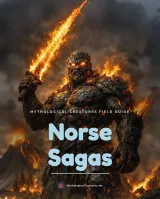
Norse Sagas: A field guide to the beasts of the Viking world
Drawn from the saga accounts themselves, with the powers, weaknesses and doom of each being set out.
the legend in five swipes.
For myth educators and toolmakers
Built a resource for mythology learners?
If you offer courses, teaching tools, or research platforms focused on myth and folklore, consider a discrete placement on our reference pages.
Introduce your resourceQuick Creature Info
Features:
Associations:
Our Mythic Legendary Rating:

Also Sometimes Known As:
Habitat:
Supernatural Powers:
Physical Attributes:
Abilities:
Behavior:
Lore:
References
Discover Another Mythical Legend You May Not Have Heard Of?
Uncover the mysteries of ancient folklore and expand your knowledge of legendary beings from cultures around the world.
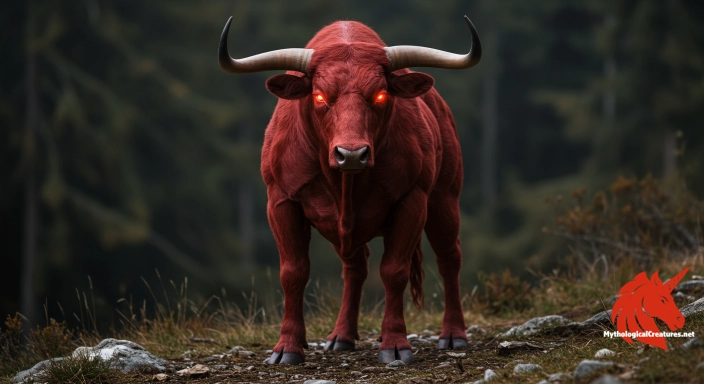
Dare to Meet the Aatxe....
The Mythological Creatures Book Series
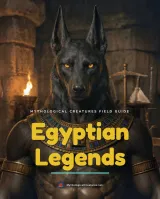
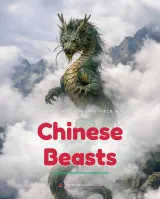
Yokai, Greek, Norse, Egyptian & Chinese. Five illustrated field guides to the creatures the old stories either warned or told you about.
Curated by the Mythological Creatures Team
Series editor: Mythological Creatures Directory
Primary desk: Hellenic & Ancient Mediterranean Desk
(rev. November 2025)