
Ispolin: Ispolin are legendary giants from Bulgarian mythology known for their enormous stature.
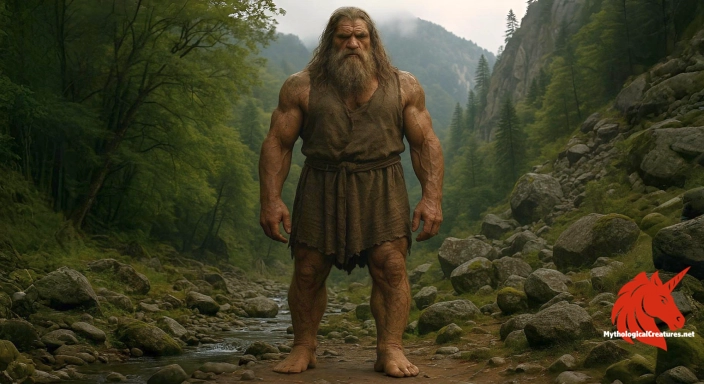
Ispolin
Ispolin - Ispolin represent the ancient, mythic era of the Earth before the advent of humans, symbolising raw natural power and the primordial state of nature in Bulgarian folklore.
Origins & First Encounters
The Ispolin emerges as one of the most imposing figures in Bulgarian mythology, a giant whose legend stretches back to a time before human civilisation. Its existence is woven into the fabric of ancient myth, with stories passed down through generations that celebrate a world ruled by primordial forces. The creature’s colossal stature and mysterious origin have rendered it a symbol of nature’s overwhelming power and the mysteries of an untamed earth. Local lore recalls the Ispolin as a guardian of ancient realms, whose presence signalled a time when the land was wild and unspoiled by human influence. Over centuries, the narrative of the Ispolin has evolved, absorbing regional colour and a sense of enigmatic grandeur. The giant is portrayed as both a harbinger of nature’s Fury and a keeper of ancient wisdom, inspiring awe and respect among storytellers. Its myth stands at the crossroads of pagan tradition and cultural identity, resonating with those who seek to understand the roots of natural and societal order. By embodying the raw, elemental forces of the world, the Ispolin continues to captivate imaginations and underscore the deep historical consciousness of the Bulgarian people.
Source Texts & Tale Variants
Ancient manuscripts and oral recitations form the main reservoir of accounts that bring the Ispolin to life in mythic literature. Texts compiled over the centuries intermittently mention this giant, offering varied glimpses into its nature through poetic and symbolic language. Early written records, though sparse, hint at a creature whose existence predates familiar human history, intertwining celestial phenomena with earthly myth. Diverse storytellers have recorded narratives in which the Ispolin appears alongside other enigmatic beings, further enriching its legend. Variants of the tale reveal a creature who sometimes protects sacred natural sites and at other times challenges the encroaching order of humankind. Folktales from remote villages often recount dramatic encounters with the giant in forms that adapt to local customs and seasonal celebrations. The multiplicity of these narratives—preserved both in the written word and in vibrant oral tradition—presents a layered picture of the Ispolin. Subtle differences in its portrayal across texts underscore the dynamic evolution of myth, where each retelling contributes fresh dimensions to its character. The enduring variety in these sources solidifies the giant’s place in the mythic canon of Bulgarian culture.
Form & Powers
The physical description of the Ispolin is as monumental as the myth itself, with accounts often depicting it as a being of extraordinary size and strength. Its towering form is frequently described in terms that evoke the immense power of the natural world, reminiscent of a living mountain. Some traditions characterise the giant with a robust, muscular build, where rippling strength is visible beneath skin weathered by the passage of millennia. Vivid portrayals suggest that its eyes shine with an inner light, a reminder of ancient wisdom and elemental might. Additional details include imagery of wild, unkempt hair and a thick, tangled beard, which further enhance the creature’s otherworldly allure. The Ispolin’s features are rendered in a blend of human familiarity and mythic exaggeration, with hands as large as boulders and a form that seems carved out of the very earth. Variations in different accounts add layers of complexity, with some emphasising an almost rocky, stony texture to its skin while others highlight a fluid, almost ethereal quality to its silhouette. The interplay between the colossal scale and fine details in its depiction serves to evoke both admiration and a sense of the sublime mystery surrounding this ancient giant.
Regional Faces
Regional interpretations of the Ispolin reveal a rich tapestry of local belief and regional adaptation within Bulgarian myth. In one part of the country, the giant is celebrated as a gentle yet formidable custodian of the old forests and untamed landscapes. Elsewhere, local narratives imbue the Ispolin with a fiercer mien, portraying it as a relentless force connected to the harsh elements of rugged terrain. The nuanced differences in its portrayal often reflect the geographical and cultural diversity of the communities that recount its tale. Local festivals and traditional ceremonies sometimes include references to the Ispolin, using the legend as a means to express respect for the natural world and its untapped power. Distinctive regional features, such as descriptions of the giant’s eye colour or particular markings, highlight the localised nature of its myth. Communities have embraced the Ispolin as a symbol of both continuity and change, adapting its character to reflect evolving cultural needs and environmental realities. This regional plurality ensures that the myth remains vibrant and flexible, capable of resonating with different audiences and traditions across the country.
Cultural Parallels
Across the world, giant figures have long been emblematic of humanity’s efforts to explain the unfathomable forces of nature, and the Ispolin is no exception. Similar to the titans of Greek myth and the fierce jotnar of Norse sagas, this Bulgarian giant embodies primordial power and forms a bridge to a time when the earth was raw and unmanicured by human innovation. Its myth mirrors universal themes that appear in diverse cultural narratives, where enormous beings both challenge and inspire humankind. Unlike some giants who are portrayed solely as antagonistic forces, the Ispolin carries a dual aspect of enigmatic guardianship alongside sheer, imposing strength. Comparisons with other ancient myths reveal that giants often serve as metaphors for nature’s overwhelming presence, a role that the Ispolin fulfils with particular resonance. This comparative approach highlights shared motifs—of creation, destruction, and the enduring mystery of nature—across different cultural landscapes. Art and literature from various traditions echo these themes, interweaving the story of the Ispolin with a global tapestry of giant lore. Such cross-cultural connections underscore the universal human fascination with formidable beings that inhabit the outskirts of mortal comprehension and reality.
Legacy & Modern Evolution
The evolution of the Ispolin’s myth reflects a journey from ancient oral tradition to its reimagined presence in contemporary culture. In historical retellings, the giant was depicted primarily as a formidable and sometimes fearsome embodiment of nature’s raw power. Over time, artists and writers have reinterpreted its image, softening or even ambiguating its role to resonate with modern sensibilities. In today’s literary and artistic realms, the Ispolin is often cast as a symbolic bridge between the untouched past and a rapidly modernising world. Modern portrayals have infused the creature with layers of emotional depth, exploring narratives that consider the consequences of human progress and the forgotten voices of nature. Cultural festivals and revitalised local performances have also revived the legend, presenting the Ispolin as an enduring icon of Bulgaria’s mythic heritage. The giant’s role in contemporary fantasy and visual arts testifies to its lasting power to inspire creativity and provoke thought on the natural world. By continuously evolving, the myth of the Ispolin offers insights into both collective memory and the dynamic nature of cultural symbolism. This modern legacy ensures that the ancient giant remains an influential figure—a testament to the enduring allure of myth and the human spirit’s quest for connection with the primeval forces of existence.
Interesting Fact
Ispolin are often considered remnants of a primordial age, symbolising the raw, untamed forces of nature that once ruled the Earth.
For publishers and studios
Your next readers are already here
Many of our visitors are looking for books, campaigns, and resources that deepen their journey into myth. Position your title or setting here.
Discuss a placementQuick Creature Info
Features:
Associations:
Our Mythic Legendary Rating:

Also Sometimes Known As:
Habitat:
Supernatural Powers:
Physical Attributes:
Abilities:
Behavior:
Lore:
Related Creatures, Tales or Lore
- FFomorians
- CCyclopes
- TTitans
References
Discover Another Mythical Legend You May Not Have Heard Of?
Uncover the mysteries of ancient folklore and expand your knowledge of legendary beings from cultures around the world.
Dare to Meet the Snow Lion....
Curated by the Mythological Creatures Team
Series editor: Mythological Creatures Directory
Primary desk: Northern & European Folklore Desk
(rev. November 2025)