
Ittan-momen: Ittan-momen is a mysterious yōkai from Kagoshima Prefecture, Japan, depicted as a long, rolling bolt of cotton that floats through the night air.
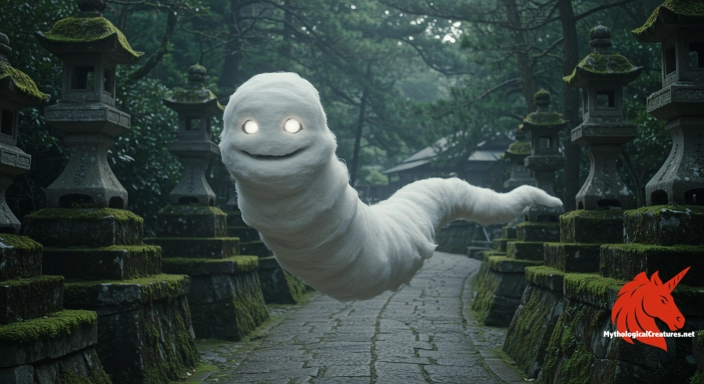
Ittan-momen
Ittan-momen - Embodying the enigmatic and whimsical qualities of yōkai, Ittan-momen has remained a captivating figure in Japanese folklore
the legend in five swipes.
the legend in five swipes.
How old is the legend of Ittan-momen?
Ittan-momen is a captivating yōkai whose name, meaning 'one bolt of cotton', immediately evokes an image of a long, flowing strip of cloth drifting mysteriously through the night. Born from the rich tapestry of Japanese folklore in Kagoshima Prefecture, this enigmatic spirit has its roots deeply embedded in the rural traditions of the Kimotsuki District. Its earliest attested legends reveal a creature that appears unexpectedly along quiet country roads and in secluded rural settings. The folklore surrounding Ittan-momen interweaves elements of natural beauty with an undercurrent of eerie supernatural power. Over time, it has become symbolic of the delicate threshold between the everyday and the unworldly. Local storytellers have passed down detailed and often cautionary tales in which this spectral bolt of cotton both mesmerises and bewilders its witnesses. It possesses an unsettling blend of charm and menace, reflecting the traditional Japanese belief in the coexistence of beauty and danger in the unseen realm. This myth encapsulates the spirit of an era when the natural and the supernatural were experientially intertwined. Its continuing allure reminds us that even the most mundane of materials, like a simple bolt of cotton, can be transformed into a powerful emblem of mystery and awe.
How did the story of Ittan-momen change over time?
The primary sources for Ittan-momen’s legend are rooted in the oral traditions of southern Japan, where local elders recounted eerie encounters during long winter nights. Over successive generations, these narratives were preserved through local folklore and later recorded in regional compendia of yōkai legends. Some accounts emerged during the Edo period, where manuscript records and art served to memorialise its surreal exploits. Variants of the story appear in travelogues and local histories, lending a degree of fluidity to its myth. Storytellers would sometimes emphasise the creature’s playful yet perilous nature, layering the myth with both caution and amusement. In modern times, anthologies of Japanese folklore have revisited these tales, contributing to a more nuanced understanding of its origins. Minor textual discrepancies and regional embellishments have added to its mystique, resulting in several competing versions of its behaviour and purpose. The evolving records not only underscore the local significance of Ittan-momen but also highlight the broader cultural practice of myth-making in Japan. Such sources continue to serve as a valuable window into the historical mindset of communities that once saw the everyday world as permeated by the supernatural.
Ittan-momen: Size, Shape and Strange Features
Ittan-momen is typically depicted as a long, ethereal roll of white cotton that seems to glide on an unseen current. Its appearance is deceptively simple, yet the unfurling fabric captivates due to its weightless, almost spectral quality. Witnesses describe the entity as possessing a fluid motion, akin to a flag caught in a gentle breeze, though its movement is often imbued with an eerie undercurrent. Although primarily pure white, some accounts whisper of a faint luminescence that occasionally tinges the cloth with silver or moonlit hues. The texture of the mysterious fabric has been portrayed both as delicately soft and as possessing a toughness that belies its appearance. It is said that the substance of Ittan-momen can vary in length and breadth, sometimes extending far enough to wrap around its unsuspecting victims. The creature’s fluidity allows it to twist, contort, and even mimic vague features resembling a face, though such details are as fleeting as they are puzzling. Its form both defies and challenges the constraints of normal matter, leaving behind an impression of something both vulnerable and formidable. The dynamism of its physical presence continues to evoke wonder, rendering it one of the more visually arresting figures in Japanese folklore.
What regional forms of Ittan-momen exist?
While the heart of the Ittan-momen legend beats strongest in Kagoshima, its narrative has permeated various regions of Japan with localized distinctions. In some rural communities beyond Kimotsuki, the creature is regarded as a benign spirit that occasionally aids lost travellers rather than inflicting harm. Other areas infuse the myth with an undercurrent of dread, warning that the rolling cotton spirit might wrap itself around an unwary passerby. Variations in its portrayal can be linked to the diverse cultural and environmental contexts that shape local folklore. Some villagers interpret its sudden appearance as an auspicious sign, signalling changes in fortune or foretelling significant events. In contrast, more superstitious locales view its ephemeral movement as an ill omen, precipitating caution and avoidance of deserted paths. These regional adaptations highlight the flexibility of its myth, which has been reshaped to resonate with local customs and seasonal cycles. The dynamic interplay between similarity and divergence in the lore illustrates the influence of community identity in myth-making. Each retelling, whether festive or foreboding, underscores the dual nature of Ittan-momen as both a playful trickster and a portent of the unknown.
What figures resemble Ittan-momen?
Across cultures, there exists a fascination with spectral entities that embody the transformation of ordinary materials into vessels of the supernatural. Ittan-momen, with its resemblance to an unassuming bolt of cotton turned eerie apparition, finds a parallel in legends where common objects take on otherworldly properties. Comparisons may be drawn with certain European myths in which everyday fabric assumes a life of its own, hinting at a universal human tendency to see the mysterious in the mundane. Similar to other Japanese yōkai such as the will-o’-the-wisp, the creature blurs the line between natural phenomena and the capricious realm of spirits. Its ambiguous nature echoes themes common to various mythologies, where beauty and peril are intertwined in beings that defy ordinary explanation. Certain Native American and Celtic tales also celebrate the uncanny personification of elements like mist or wind, reflecting cultural expressions of life beyond the physical world. The motif of transformation—from the commonplace to the mystical—is a recurring theme, reinforcing the idea that the hidden power of nature often lies in unexpected forms. Ittan-momen thus stands as a bridge between local legend and global myth, offering a comparative insight into how societies interpret and symbolise the unseen forces that surround them.
Why does Ittan-momen still matter?
Over the centuries, the myth of Ittan-momen has evolved in tandem with Japan’s own social and cultural transformation. In early accounts, the creature was a natural extension of a world steeped in spiritual awe and mystery, its presence a tangible reminder of nature’s unpredictable forces. As modernity advanced, its image was gradually reshaped—from a figure that elicited both fear and respect into one that inspires a sense of nostalgic intrigue. Contemporary portrayals in manga, animation, and film often highlight both the playful and menacing facets of this spectral entity, serving as an emblem of the enduring appeal of yōkai in modern pop culture. Artistic reinterpretations have allowed Ittan-momen to transcend its original localised context, becoming a broader symbol of the uncanny lurking beneath everyday life. Its depiction in modern media has introduced the legend to an international audience, where it is celebrated both as a cultural curiosity and as a work of imaginative storytelling. This progressive evolution reflects the dynamic dialogue between traditional folklore and modern expression, enabling the myth to adapt while retaining its essential enigmatic charm. Today, Ittan-momen occupies a revered yet playful niche, illustrating how ancient stories continue to inform and enrich the modern cultural landscape.
Interesting Fact
The unique form of Ittan-momen—a seemingly ordinary bolt of cotton with a life of its own—has spurred a wide variety of interpretations, making it one of the more memorable and enigmatic figures in Japanese yōkai lore.
Mythological Treasures
Japanese Yokai: A field guide to the spirits and demons of Japanese folklore
Fifteen spirits, with the signs to watch for and what the old tales say to do if you meet one.
Egyptian Legends: A field guide to the gods and monsters of ancient Egypt
Guardians of the living and devourers of the dead, with the role each played in judgement.
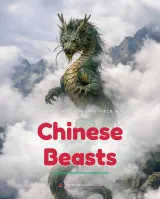
Chinese Beasts: A field guide to the dragons and demon kings of Chinese myth
From river dragons to demon kings, with the legends that shaped five thousand years of storytelling.
the legend in five swipes.
Mythology commerce, done carefully
Align your store with our global myth audience
If you sell myth-inspired jewellery, prints, decks, or collectibles, we can feature your brand without overwhelming the reading experience.
Partner with usQuick Creature Info
Associations:
Our Mythic Legendary Rating:

Also Sometimes Known As:
Habitat:
Supernatural Powers:
Physical Attributes:
Abilities:
Behavior:
Lore:
Related Creatures, Tales or Lore
- KKarakasa-obake
- NNurikabe
- HHitodama
References
Discover Another Mythical Legend You May Not Have Heard Of?
Uncover the mysteries of ancient folklore and expand your knowledge of legendary beings from cultures around the world.
Dare to Meet the Piru....
-21a85ab8-a955-483b-9b65-7b5c0a01d523_small.webp "Depiction of Piru")
The Mythological Creatures Book Series
Yokai, Greek, Norse, Egyptian & Chinese. Five illustrated field guides to the creatures the old stories either warned or told you about.

Curated by the Mythological Creatures Team
Series editor: Mythological Creatures Directory
Primary desk: Asian & Pacific Myth Cycles Desk
(rev. November 2025)