
Izanami: Izanami is a primordial Shinto goddess who embodies the dual forces of creation and death.

Izanami
Izanami - Izanami is central to the Shinto creation myth and the origin of many deities, as well as being a symbol of the dual nature of life and death.
the legend in five swipes.
the legend in five swipes.
Izanami: Where the Legend Started
Izanami emerges as one of the most pivotal figures in Japanese myth, embodying the intertwined forces of creation and death. Her narrative is not merely a tale of divine genesis but a profound testament to transformation and the inevitable cycles of existence. She stands at the heart of the early Shinto cosmogony, where her union with Izanagi lays the foundation for the formation of the Japanese archipelago and the birth of numerous deities. The myth encapsulates the delicate balance between life and demise, offering a rich tapestry of symbolism that continues to resonate with cultural and religious significance. Her status as a mother goddess extends beyond the natural world to influence both the living and the departed, highlighting the duality inherent in her character. Over time, her legend has been interwoven with themes of beauty, tragedy, and the inexorable flow of time. The ancient stories and rituals surrounding her have helped shape the spiritual landscape of Japan, cementing her role as a divine progenitor. Even now, her myth endures as a central narrative in the exploration of life’s transient nature and the mystery of human existence. Her timeless legacy speaks to a world where creation and dissolution are part of one continuous cycle.
Izanami in the Historical Record
The chronicles that first gave voice to Izanami’s myth are steeped in antiquity, with texts like the Kojiki and Nihon Shoki offering varying glimpses into her divine origin. Multiple ancient narratives portray her story with nuanced differences, enriching the tapestry of Japanese myth rather than confining it to a single version. Some traditions detail the splendour of her creative powers, while others focus on the sorrowful aftermath of her descent into the realm of the dead. These texts often recount the fateful events that led to her separation from Izanagi, a tale that has captivated audiences for centuries. Over time, oral traditions and local legends have further diversified these canonical sources, infusing her story with regional colour and interpretative layers. The multiplicity of sources reflects the dynamic evolution of her myth, encouraging continual reinterpretation and reimagining in a range of artistic forms. Alternative variants of the story highlight different aspects of her personality, from nurturing benevolence to the austere embodiment of death. These rich accounts continue to inform contemporary understandings of her divine persona, underscoring the layered complexity of her role in the cosmic order. In every retelling, the core themes of creation and mortality remain central, ensuring that her legacy endures across generations.
Izanami: Size, Shape and Strange Features
Artistic depictions of Izanami reveal a figure of otherworldly splendour, often rendered with an ethereal beauty that captivates the viewer. Her form is envisioned as both graceful and formidable, embodying the dual nature of nurturing life and presiding over death. Traditional images portray her with flowing, elegant garments that merge soft hues with striking accents, symbolising the harmony between vibrancy and melancholy. Her features are typically rendered with a serene, yet mysterious expression that hints at a deep-seated sorrow and immense wisdom. The detailed portrayal of her long, flowing hair serves as a visual metaphor for the continuum of life, gracefully transitioning into the realm of decay. Some representations even imbue her with a radiant aura, suggesting her divine status and the luminous power inherent in her creation. The stylistic variations found in shrine carvings and paintings capture the paradox of her existence—both delicate and imposing. These visual traditions invite observers to contemplate the interplay of beauty and impermanence that defines her legend. Each brushstroke and chiseled detail works to convey the profound mystery and eternal grace that she epitomises.
Izanami: Regional Differences in the Legend
The figure of Izanami has been embraced and reinterpreted in manifold ways across Japan, leading to a vibrant spectrum of regional variations. In historically significant regions near ancient capitals, she is predominantly revered as a nurturing force and a benevolent mother goddess whose influence radiates through the natural and spiritual worlds. Conversely, more remote areas tend to accentuate her ominous connection with death, portraying her as a spectral guide to the underworld. Local shrines and festivals often reflect these differing emphases, blending the themes of fertility and demise in unique and culturally specific ways. Some communities celebrate her story through elaborate rituals that evoke both the celebration of life and the solemnity of its inevitable end. The iconography she inspires can differ markedly from one region to another, with variations in colour schemes, motifs, and ceremonial rites reflecting the local environment and historical context. These adaptations ensure that her myth remains relevant to a wide array of cultural narratives. In some areas, narratives about her journey to Yomi are interwoven with local legends that incorporate regional natural landmarks and historical events. This rich diversity in interpretation underscores the adaptability and enduring significance of her myth, as each region finds its own meaning in the eternal dance between creation and death.
Izanami: Shared Themes in World Myth
A cross-cultural examination of Izanami’s myth reveals striking parallels with other global deities who navigate the delicate balance between life and mortality. Much like the Greek Persephone, her dual role as a nurturer and a harbinger of death places her at the threshold of contrasting realms. Similar to the Celtic Morrigan, her narrative interweaves themes of fertility with the inexorable pull of fate and transformation. In many traditions, deities embodying both creation and dissolution serve as metaphors for the cyclical nature of existence, a theme that surfaces powerfully in Izanami’s story. Like the Egyptian Isis, whose myth integrates elements of life, death, and rebirth, Izanami’s legend resonates with a universal symbolism that transcends cultural boundaries. Her portrayal often brings to mind other multifaceted divine figures, reflecting the human fascination with the mysteries of birth and decay. The similarities observed in these cross-cultural archetypes enrich the understanding of how ancient societies grappled with the dualities inherent in life. This comparative perspective not only highlights the shared motifs among various mythologies but also magnifies the unique narrative texture that defines Izanami. Through this lens, her myth invites a broader dialogue about the nature of existence, uniting disparate traditions in a common appreciation of life’s ephemeral beauty and inevitable end.
Izanami: From Folklore to Pop Culture
Through the passage of time, Izanami’s myth has undergone a profound evolution, adapting to the shifting cultural and social landscapes of Japan. Once confined to ancient texts and shrine rituals, her story now finds new life in modern literature, art, and multimedia portrayals, ensuring its relevance even in contemporary discourse. The themes she embodies—creation, decay, and the cyclical nature of existence—continue to resonate deeply with modern audiences, bridging the gap between ancient wisdom and current spiritual explorations. In the modern era, artists and writers have reimagined her duality as a metaphor for transformation and renewal, often highlighting her as a symbol of both resilience and the inescapable passage of time. Contemporary reinterpretations frequently explore her legacy in the context of female empowerment, drawing parallels between her myth and modern narratives of strength in the face of adversity. Shrine festivals and cultural events across Japan still honour her, testifying to the enduring power of her myth in mediating between the realms of the sacred and the mundane. Her image has appeared in modern theatre, films, and even digital art, each recontextualising her ancient persona to speak to a new generation. The persistent allure of her story lies in its ability to encapsulate the full spectrum of human emotion—from the joy of creation to the poignancy of loss—making Izanami a timeless emblem of the eternal cycle of life and death. Ultimately, her evolving legacy continues to inspire introspection and creative expression, uniting the past and present in a celebration of life’s impermanence.
Interesting Fact
Izanami is uniquely revered as both the benevolent creator of life and the harbinger of death, embodying the essential balance that defines the Japanese understanding of existence.
Mythological Treasures
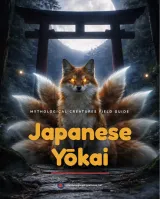
Japanese Yokai: A field guide to the spirits and demons of Japanese folklore
Fifteen spirits, with the signs to watch for and what the old tales say to do if you meet one.
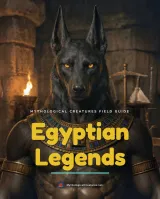
Egyptian Legends: A field guide to the gods and monsters of ancient Egypt
Guardians of the living and devourers of the dead, with the role each played in judgement.
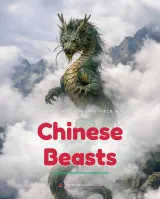
Chinese Beasts: A field guide to the dragons and demon kings of Chinese myth
From river dragons to demon kings, with the legends that shaped five thousand years of storytelling.
the legend in five swipes.
Advertising opportunity
Showcase your mythology project
We offer limited sponsor placements for books, courses, games, and creators aligned with our audience.
View partnership optionsQuick Creature Info
Our Mythic Legendary Rating:

Also Sometimes Known As:
Habitat:
Supernatural Powers:
Physical Attributes:
Abilities:
Behavior:
Lore:
References
Discover Another Mythical Legend You May Not Have Heard Of?
Uncover the mysteries of ancient folklore and expand your knowledge of legendary beings from cultures around the world.
Dare to Meet the Hamadryas....
-a402b7a8-b77a-4987-be7b-794a295761d0_small.webp "Depiction of Hamadryas")
The Mythological Creatures Book Series
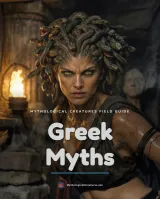
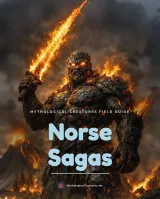
Yokai, Greek, Norse, Egyptian & Chinese. Five illustrated field guides to the creatures the old stories either warned or told you about.
Curated by the Mythological Creatures Team
Series editor: Mythological Creatures Directory
Primary desk: Asian & Pacific Myth Cycles Desk
(rev. November 2025)