
Jason: Jason is an ancient Greek mythological hero best known for leading the Argonauts in their quest for the Golden Fleece.

Jason
Jason is an ancient Greek mythological hero best known for leading the Argonauts in their quest for the Golden Fleece.
the legend in five swipes.
the legend in five swipes.
The First Records of Jason
Jason is a renowned hero who occupies a central place in ancient Greek mythology, celebrated for his courageous quest and royal lineage. Born as the son of Aeson, the rightful king of Iolcos, he embodies the duality of noble birth and daring endeavour. His life is immortalised through the legendary mission to retrieve the Golden Fleece, a journey that intertwines divine influence with human ambition. Early attestations of his myth emerge from both epic poetry and classical drama, reflecting a blend of historical reverence and mythopoetic invention. Throughout his narrative, the themes of leadership, sacrifice, and the inevitable interplay of fate and free will are richly explored. His adventures capture the imagination of those who long for the heroic ideals of a bygone era, resonating deeply within the cultural fabric of ancient Greece. The myth of Jason not only provided a framework for the heroic journey but also symbolised the aspiration to transcend mortal limitations through courage and intellect. Over time, his story has expanded beyond simple adventure to reveal a complex character whose successes and failures mirror the multifaceted nature of human experience. This enduring legend continues to fascinate, offering insight into the societal values and dreams of ancient civilisation.
Which books and scrolls describe Jason?
The primary literary source for Jason’s myth is Apollonius of Rhodes’ epic poem, the Argonautica, which provides a detailed account of his perilous voyage with the Argonauts. His tale is also intricately explored in the tragedy Medea, where the dramatic dimensions of his personal life and relationships are brought to the fore. Additional classical texts, including works by other Hellenistic authors and later Roman adaptations, have enriched the multifaceted narrative surrounding his character. Marginal scholia and commentaries from antiquity contribute subtle nuances to his heroic exploits and choices. Diverse story variants in regional oral traditions have further nuanced the myth by incorporating local customs and symbolic interpretations. Some accounts focus on his virtuous determination as a leader of seafarers, while others emphasise the moral ambiguities inherent in his decisions. The layered nature of these texts has allowed later authors to reimagine aspects of his character to suit differing literary and cultural agendas. Moreover, the evolving retellings have ensured that each era finds a new resonance in his adventurous feats and personal trials. In synthesising these abundant sources, Jason’s myth stands as a testament to the dynamic nature of storytelling where multiple voices converge to shape a timeless hero.
Did Jason have any weaknesses?
Descriptions of Jason in ancient art and literature convey an image of an exceedingly handsome and athletic figure, emblematic of the Greek ideal of beauty and strength. He is often portrayed with a balanced and symmetrical face, marked by sharp features and a strong jaw, which underscore his royal origins. Artistic depictions typically show him with a well-proportioned physique, suggesting both nobility and the rigour of physical training. His hair is commonly rendered in a style that combines both elegance and vitality, enhancing his charismatic appeal. In various vase paintings and sculptures, he is seen adorned in traditional Grecian armour, a symbol of his readiness for the myriad challenges of his quest. His stance and expression convey both determination and a reflective quality, hinting at the inner turbulence wrought by his heroic responsibilities. Some portrayals even imbue his appearance with a subtle air of melancholy, reflecting the personal losses and moral dilemmas that marked his journey. Variations in his depiction across different media reveal an evolving interpretation, from a youthful adventurer to a more seasoned leader whose visage carries the weight of his experiences. The visual legacy of Jason thus captures a harmonious blend of physical prowess and the nuanced character traits that define his myth.
Jason: The Same Figure in Different Places
The myth of Jason has experienced a rich tapestry of regional reinterpretations, each shaped by local cultural values and artistic traditions. In his native Iolcos, he is venerated as the rightful heir and a symbol of local pride, with his narrative underscoring themes of justice and rightful sovereignty. In broader Greek tradition, his story is often adapted to highlight different aspects of his character, ranging from his indomitable bravery to the more tragic consequences of his personal decisions. Certain Ionian sources present him as a more conflicted figure, whose moral ambiguities are as significant as his heroic feats. In Anatolia and other parts of the ancient Mediterranean, the quest for the Golden Fleece is interwoven with indigenous ritual symbolism and regional mythic motifs that offer a unique interpretation of divine favour and destiny. Hellenistic art and literature, while preserving the core elements of his legend, have been known to emphasise the local virtues of honour and resilience. Later European adaptations, influenced by the chivalric and romantic traditions, transformed his journey into an allegory of noble quests and internal conflict. In some regions, the focus shifts to his relationship with Medea, reflecting local values around love, betrayal, and retribution. These varied regional adaptations underscore how the story of Jason is not fixed but rather a living myth that adapts to the social and cultural contexts of each era. Ultimately, the regional variations of his tale enrich the myth by intermingling universal themes with local colour and nuance.
Jason: Parallels in Other Cultures
The myth of Jason offers a fascinating parallel to other heroic narratives across various cultures, providing a unique window into the universal archetype of the questing hero. Comparable figures in Greek mythology such as Heracles and Perseus share aspects of extraordinary strength and divine favour, yet Jason’s story is distinguished by its focus on a perilous voyage and the intricate interplay of human and supernatural elements. His quest for the Golden Fleece has often been likened to other legendary searches, such as King Arthur’s pursuit of the Holy Grail, symbolising the timeless nature of transformative journeys. The complexity of his character, particularly his troubled alliances and personal follies, invites comparisons with the tragic heroes of other cultural lore. His narrative echoes themes found in the Norse sagas, where heroes confront both external adversaries and inner demons in their quests for glory. In analysing these parallels, one can observe how the motif of a fraught journey serves as a means to examine the human condition in diverse mythological contexts. The cadence of Jason’s adventures—with its mix of triumph, betrayal, and sorrow—resonates with the broader tradition of epic storytelling. His myth also serves as an allegory for the conflicts between duty and desire, a central theme found in many heroic narratives worldwide. Through these similarities, Jason’s saga becomes a conduit for understanding how different cultures process the ideals of leadership, sacrifice, and redemption. In this light, his story is both distinct in its Greek origins and universally recognisable as part of the global mythology of heroism.
Where does Jason appear in films and games?
Over the centuries, Jason’s myth has undergone a profound evolution, transitioning from an ancient tale of heroic endeavour to a multifaceted symbol of both aspiration and human frailty. In classical antiquity, his adventures were recited as exemplars of noble pursuit and the precarious balance between destiny and choice. During the Renaissance, artists and writers revisited his story, imbuing it with the sophistication and allegorical depth that characterised the era’s reawakening of classical themes. Modern adaptations in film and television have recast him as a daring adventurer whose exploits continue to capture the imagination of contemporary audiences. Iconic productions, such as the 1963 film Jason and the Argonauts, have cemented his image as both a mythic figure and a compelling narrative of triumph and tragedy. Literary reinterpretations often focus on the moral complexities within his character, particularly his fraught relationship with Medea, reflecting evolving societal values. His enduring legacy is evident in academic discourse, popular culture, and even political imagery, where his journey is invoked as a metaphor for the pursuit of transcendent goals. Today, Jason stands as a timeless testament to the enduring power of myth, bridging ancient heroic ideals with modern sensibilities. His story continues to inspire debates on leadership, morality, and the cost of ambition, ensuring that his myth remains both relevant and resonant in a continually changing world. The evolution of his narrative from classical texts to contemporary media illustrates the dynamic interplay between tradition and innovation in the retelling of legendary quests.
Interesting Fact
An intriguing aspect of Jason’s myth is how his legendary voyage not only symbolizes the pursuit of a tangible goal—the Golden Fleece—but also represents the timeless human quest for identity, glory, and redemption in the face of overwhelming odds.
Mythological Treasures
Greek Myths: A field guide to the monsters of ancient Greece
Every monster here earned its place in legend, and each gets a full page of artwork and the story behind it.
Norse Sagas: A field guide to the beasts of the Viking world
Drawn from the saga accounts themselves, with the powers, weaknesses and doom of each being set out.
Egyptian Legends: A field guide to the gods and monsters of ancient Egypt
Guardians of the living and devourers of the dead, with the role each played in judgement.
the legend in five swipes.
For myth educators and toolmakers
Built a resource for mythology learners?
If you offer courses, teaching tools, or research platforms focused on myth and folklore, consider a discrete placement on our reference pages.
Introduce your resourceQuick Creature Info
Type:
Origin:
Features:
Our Mythic Legendary Rating:

References
Discover Another Mythical Legend You May Not Have Heard Of?
Uncover the mysteries of ancient folklore and expand your knowledge of legendary beings from cultures around the world.
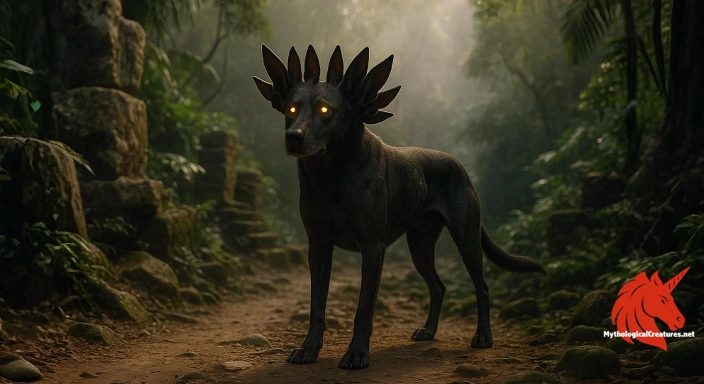
Dare to Meet the Nine-Eared Hound....
The Mythological Creatures Book Series
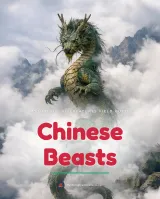
Yōkai, Greek, Norse, Egyptian & Chinese. Five illustrated field guides to the creatures the old stories either warned or told you about.

Curated by the Mythological Creatures Team
Series editor: Mythological Creatures Directory
(rev. November 2025)