
Jumbee: The Jumbee is a malevolent spirit or demon from Caribbean folklore, particularly prevalent in Colombia and Venezuela.
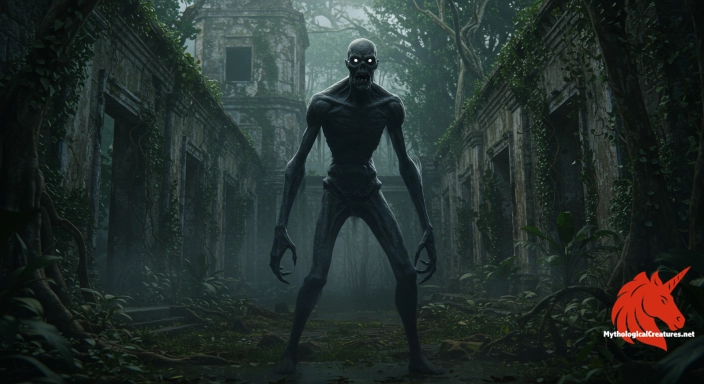
Jumbee
Jumbee - Jumbees embody the notion of cursed souls becoming malevolent spirits in death, serving as a cautionary symbol in Caribbean folklore.
Origins & First Encounters
The lore of the jumbee occupies a fascinating and multifaceted role in Caribbean folklore. Born from an intricate tapestry of indigenous tradition and colonial influence, these entities intertwine African, Amerindian, East Indian, Dutch, English, and Chinese mythologies into one cohesive narrative. Their origins are steeped in the belief that a life steeped in malevolence inevitably leads to a cursed existence beyond mortal life. Legends portray jumbees as manifestations of unrighteous deeds, spectral echoes left behind as a consequence of moral failings. Local narratives have long suggested that these spirits emerge from the darkest corners of human misbehaviour, embodying the inescapable presence of retribution. Early attestations in oral traditions and colonial documentations offered vivid portrayals of these shadowy figures. Over the centuries, the jumbee has evolved into a symbol of caution and a reminder of the consequences of one's actions. The enduring significance of these spirits highlights the Caribbean’s rich past and the intermingling of varied cultural beliefs. Their dark, enigmatic presence continues to inspire both fear and captivating curiosity in the hearts of those who hear their tale. The jumbee remains an emblematic figure that reflects a timeless struggle between light and shadow.
Source Texts & Tale Variants
The jumbee tradition is preserved through a mosaic of primary sources that span written records, oral histories, and vibrant cultural performances. Historical manuscripts from the colonial era occasionally recount mysterious encounters with these malevolent spectres. Colourful travellers’ diaries and local folktales offer additional layers of detail, often interweaving moral lessons with supernatural intrigue. Many of these early accounts depict jumbees as shadowy agents of retribution, reinforcing local ethical codes in communities. Folklorists have noted that variations in these accounts mirror the diverse ethnic and cultural influences of the Caribbean region. Some written sources describe them in terms that resonate with African and Amerindian spiritual beliefs, while others hint at European demonology. Oral traditions play an equally significant role by passing the lore from generation to generation through storytelling events and community rituals. The textually sparse yet symbolically rich narratives invite multiple interpretations, each coloured by local experience. These diverse sources contribute to a polyphonic narrative, where each version adds depth and nuance to the understanding of jumbees. The multiplicity of accounts ensures that the jumbee legend remains a dynamic and evolving element of Caribbean cultural heritage.
Form & Powers
Descriptions of jumbees evoke images of dark, shifting shapes that are both terrifying and elusive. Witnesses often claim that these beings appear as shadowy silhouettes, with forms that defy precise description and seem to vanish into darkness. Many accounts suggest that their eyes burn with an intense, almost otherworldly gleam that adds a sinister edge to their presence. Their physical appearance is marked by a mutable quality, sometimes oscillating between the vague outline of a human figure and formless darkness. Some narratives describe an eerie coldness that envelops the area, as if the very air is tainted by their presence. Variations in size have been noted, with some stories depicting them as towering apparitions while others present them as smaller, more insidious presences. This inherent ambiguity in their appearance only serves to heighten the sense of dread and mystery surrounding them. Artistic depictions, though rare, often emphasise the contrast between human decay and supernatural vigour. The mix of human features with spectral, shifting qualities distinguishes jumbees from more conventional ghostly apparitions. Overall, the physical portrayals of jumbees capture the unsettling interplay between corporeal existence and the ineffable realm of spirits.
Regional Faces
The interpretation of the jumbee varies considerably across the Caribbean and adjoining regions, with local cultures adapting the myth to reflect regional beliefs. In Colombia and Venezuela, for instance, the creature is often known as mendo or chongo, each name imbued with unique local characteristics. Communities nearer to African cultural influences frequently accentuate the jumbee’s role as an agent of ancestral retribution, merging indigenous spiritual practices with newer mythological elements. In other parts of the Caribbean, the jumbee takes on shades of European folklore, adopting aspects of demonology and supernatural punishment seen in older colonial narratives. These regional adaptations have led to subtle differences in emphasis, from the creature’s physical appearance to its underlying moral symbolism. Some islands portray the jumbee as a restless spirit with mutable intentions, while others firmly cast it as a malevolent force that exacts punishment. Dialogue between oral and written traditions across regions further enriches the jumbee myth, with storytellers adapting details to better suit local ethos. Cultural festivals and local lore in diverse communities have each added layers of interpretation that reflect contemporary social concerns. This diversity ensures that the jumbee remains a fluid and evolving figure, responsive to the changing needs and values of its people. The regional versatility of the legend ultimately highlights the cross-cultural nature of Caribbean storytelling, where myth adapts to the environment in which it thrives.
Cultural Parallels
The jumbee shares intriguing similarities with a range of mythological beings from various cultural traditions, offering rich ground for comparative analysis. Much like the elusive djinn of Arabic lore, jumbees possess a dual nature capable of both enigmatic benevolence and malevolent retribution. Their shadowy, amorphous depiction is reminiscent of spectral figures in European ghost stories, where the blurred edges of their forms symbolise the uncertainty of death and the beyond. Similar to revenants in other cultures, the jumbee emerges as a consequence of past misdeeds, seamlessly blending moral warning with supernatural presence. The thematic parallel of transformation from human fault to ghostly punishment resonates across multiple mythologies, underscoring a universal caution against evil acts. Both African and Asian folklore echo these themes, where supernatural beings are often regarded as the inevitable embodiment of karmic justice. The intermingling of differing cultural elements within the jumbee myth enhances its complexity, reflecting lives touched by diverse influences. Observations of similar shadow-like apparitions in various traditions highlight a shared human fascination with the unknown and the afterlife. Such parallels serve to remind us that while the creature is distinctly Caribbean, its narrative shares common ground with global spiritual archetypes. This web of cross-cultural connections reinforces the idea that the struggle between good and evil is a timeless motif etched into the human experience.
Legacy & Modern Evolution
The legacy of the jumbee has transformed over time, evolving from a simple embodiment of moral caution to a symbol rich with layers of cultural complexity. In earlier periods, the jumbee represented a potent warning to those who strayed from ethical paths, serving as a stark personification of retributive justice. As societal norms shifted and colonial influences receded, the creature began to assume additional meanings, reflecting a broader anxiety about identity and heritage. Modern artistic portrayals have infused the jumbee with psychological depth, inviting interpretations that explore themes of guilt, redemption, and the human condition. Its representation in literature, film, and visual arts has transformed the jumbee into a multifaceted figure that straddles the line between horror and human tragedy. Contemporary storytellers often present the jumbee as an inevitable result of historical and social injustices, a reminder of the lingering effects of a turbulent past. Festivals, theatrical productions, and local legends continue to celebrate and reinterpret the creature, ensuring its relevancy in modern discourse. The evolution of the jumbee myth illustrates how folklore can adapt to reflect contemporary societal concerns while maintaining a powerful connection to tradition. As modern audiences seek to understand the paradoxes of identity and morality, the jumbee endures as a compelling symbol linking past transgressions with present dilemmas. Ultimately, its legacy serves as a living narrative, bridging ancient superstitions and modern anxieties in a dynamic, ever-evolving myth.
Interesting Fact
Jumbees uniquely amalgamate diverse cultural mythologies, reflecting the rich and complex heritage of the Caribbean and its diasporic influences.
Partner with us
Sponsor this space
Reach thousands of mythology enthusiasts with a curated placement on our creature pages.
Learn about sponsorshipQuick Creature Info
Associations:
Our Mythic Legendary Rating:

Also Sometimes Known As:
Habitat:
Supernatural Powers:
Physical Attributes:
Abilities:
Behavior:
Weaknesses:
Lore:
References
Discover Another Mythical Legend You May Not Have Heard Of?
Uncover the mysteries of ancient folklore and expand your knowledge of legendary beings from cultures around the world.
Dare to Meet the Malakbel....
Curated by the Mythological Creatures Team
Series editor: Mythological Creatures Directory
Primary desk: Americas & Indigenous Traditions Desk
(rev. November 2025)